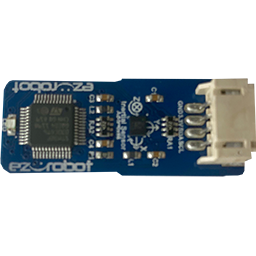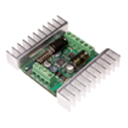
Dual-axis I2C magnetic sensor for EZ-B robots enabling magnetic direction sensing; requires short 2-3 in wiring. Third-party hardware.
 Windows
How to add the Dual-Axis Compass robot skill
- Load the most recent release of ARC (Get ARC).
- Press the Project tab from the top menu bar in ARC.
- Press Add Robot Skill from the button ribbon bar in ARC.
- Choose the I2C category tab.
- Press the Dual-Axis Compass icon to add the robot skill to your project.
Don't have a robot yet?
Follow the Getting Started Guide to build a robot and use the Dual-Axis Compass robot skill.
How to use the Dual-Axis Compass robot skill
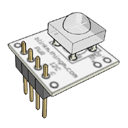
The Dual-Axis Compass skill in Synthiam ARC works with the Sure Electronics DC-SS503V100 I2C dual-axis magnetic sensor. When connected to the I2C port on your EZ-B, this sensor lets your robot detect the direction of the Earth’s magnetic field (similar to a compass), so it can determine headings such as “north,” “east,” “south,” and “west.”
What you need
- EZ-B controller with an available I2C port
- Sure Electronics DC-SS503V100 dual-axis magnetic sensor
- Short I2C wiring (recommended)
Wiring and connection notes (very important)
Connect the sensor to the I2C port of the EZ-B. I2C uses multiple wires (power, ground, and data lines), and the quality/length of the wiring can greatly affect reliability.
- Keep wires short and secure to avoid loose connections.
- Route sensor wires away from motors, motor controllers, and high-current battery wires (these can create electrical noise and magnetic interference).
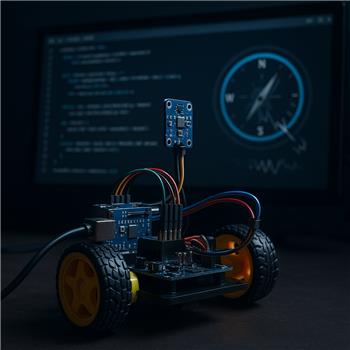
- Mount the sensor away from speakers, magnets, and large metal parts when possible, as these can affect compass readings.
Using the sensor in ARC (beginner overview)
- Power on and connect to your EZ-B from ARC.
- Add the Dual-Axis Compass skill.
- Configure the skill to use the correct I2C connection (depending on your EZ-B model and ARC configuration).
- Verify that the skill is receiving values and that the heading changes when you slowly rotate the sensor or robot.
Troubleshooting quick checks
- No readings / sensor not detected: Re-check the I2C wiring and make sure the sensor is powered.
- Unstable or jumping readings: Shorten the wires, move the sensor away from motors/magnets, and secure connections.
- Heading is consistently wrong: Rotate the robot in place and confirm the sensor orientation/mounting; consider calibration.