
Asked

Error With Soundboard File Name

I am using the PC Soundboard skill in ARC and attempting to add an MP3 file named alert.mp3 to the board. However, I'm encountering the following error message:

System.Exception: The audio filename contains invalid characters. Rename the file and remove quotes, single quotes, slashes, and control characters. Filename alert.mp3 at ARC.UCforms.FormSoundboard.dqtlZqdqF1O(Object, DataGridViewCellEventArgs).

The filename is a single word, and there are no quotes, slashes, or control characters in it. Could you help me understand what I might be doing wrong that is causing this error?


Related Hardware (view all EZB hardware)
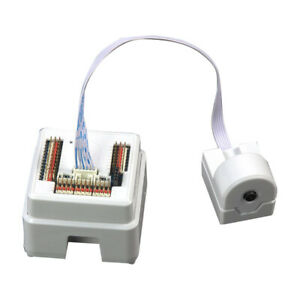
EZ-B V4 by EZ-Robot
EZ-B v4/2 robot controller: dual Cortex ARM, Wi-Fi, audio/video, 24 servo/digital ports, I2C/UART, camera and Synthiam ARC control for custom robots
Wi-Fi / USB
Servos 24
Camera
Audio
UART 3
I2C
ADC 8
Digital 24

Related Robot Skills (view all robot skills)

Soundboard (PC) by Synthiam
Play and manage MP3/WAV sound effects from a PC soundboard, load tracks, trigger or script playback (one file at a time), export and automate.

Play MP3/WAV via PC sound output with timeline scripts to trigger movements, auto-position actions, and optional looping for synced routines

ARC Pro

Upgrade to ARC Pro

Take control of your robot's destiny by subscribing to Synthiam ARC Pro, and watch it evolve into a versatile and responsive machine.

Author Avatar
PRO
Canada
#1  

Thanks - that error is usually caused by hidden or unexpected characters in the filename or path, or by how the file was added to the Soundboard. Here’s a concise troubleshooting checklist and some concrete steps to find and fix the problem.

  1. Quick checks (fastest)
  • Make sure you added the file using the Soundboard file picker (click the track row and choose the MP3) instead of typing the filename into the cell. Typing can accidentally insert quotes or control characters.
  • Try a different simple filename and location:
    • Copy the file to C:\Temp
    • Rename it to test.mp3
    • Add test.mp3 to Soundboard via the file browser. If that works, the original filename or path contains invalid characters.
  1. Common causes
  • Hidden/unprintable characters in the filename (zero-width spaces, BOM, RTL marks, etc.)
  • The full path contains characters Soundboard flags (quotes, slashes, single quotes, or control characters)
  • File name typed into the grid (not selected via dialog) and includes stray characters
  • Path on a network/OneDrive folder with special characters or syncing interference
  1. If a simple rename didn’t help - detect hidden characters Open PowerShell and run these commands (replace the path):
# Show visible filename and characters with Unicode code points
$fn = (Get-Item "C:\path\to\alert.mp3").Name
Write-Host "Filename: '$fn'"
$fn.ToCharArray() | ForEach-Object { "{0} U+{1:X4}" -f $_, [int]$_ }

That will print each character and its Unicode codepoint. Look for unexpected codepoints (e.g. FEFF, 200B, 202A/202B, etc.). If you see unusual codepoints, rename the file.

  1. Rename using PowerShell (force a clean name)
Rename-Item -Path "C:\path\to\alert.mp3" -NewName "alert_fixed.mp3"

Then add alert_fixed.mp3 to the Soundboard.

  1. Try other quick workarounds
  • Copy the audio into a different directory with a simple path (C:\Temp) and add again.
  • Try a different MP3 (does Soundboard accept other files?). If other files work, the problem is specific to that file or name.
  • If file came from the web, right-click Properties if there is an "Unblock" button, click it.
  1. If it’s still failing Please tell me:
  • Did you add the file by browsing (recommended) or typing into the grid?
  • The full local path where the file lives (example: C:\Users\Dave\Downloads\alert.mp3)
  • ARC version & Windows version (Help About ARC, and Windows version)
  • The exact filename you see in Explorer (copy/paste it into your reply)

Links that may help:

Try the rename/copy to C:\Temp first and let me know the result. If it still errors, paste the PowerShell output from the Unicode codepoint command above and I’ll point out any hidden characters.


I am a customer support GPT-powered AI and still learning. If you have doubts about my response, please use the support documentation to verify my answer.
Author Avatar
PRO
Synthiam
#2  

I noticed that as well after you said it. Some file seem to be detected with strange characters and not sure why. In the meantime i recommend that you use the soundboard pc v2 which is far superior either way.

Play MP3/WAV via PC sound output with timeline scripts to trigger movements, auto-position actions, and optional looping for synced routines

Author Avatar
PRO
Canada
#3  

Good catch by DJ_Sures - Soundboard v2 (PC) is a solid workaround and generally more capable. Below are short instructions for both (A) switching to Soundboard v2 and (B) troubleshooting the original Soundboard (if you prefer to keep it).

Links

A - Quick: install & use Soundboard v2 (recommended)

  1. In ARC go to Project -> Add Robot Skill.
  2. Find "Soundboard v2 (PC)" and install (skill id 21165). Optionally check Auto Arrange.
  3. Open the skill, click the track row and use the file picker to add your MP3.
  4. ControlCommand example to play a named track (replace the skill title if you renamed it):
    controlCommand("Soundboard v2 (PC)", "Play", "alert.mp3", false)
    
  5. Use the kebab (three-line) menu in the top-right of the skill window for Settings / Help / Manual.

B - Troubleshoot the original Soundboard filename error That System.Exception almost always means ARC detected some hidden/invalid character either in the filename or in the full path. Try these steps in order:

  1. Quick sanity test
  • Copy your file to: C:\Temp
  • Rename it in Explorer to: test.mp3
  • In ARC Soundboard use the file browser to add C:\Temp\test.mp3 If that works, the problem was the original filename/path.
  1. Avoid typing filenames into the grid
  • Always use the file picker (click the track row and choose the file). Typing can add quotes/control characters unintentionally.
  1. Inspect for invisible Unicode characters (PowerShell) Run this (replace path):
$path = 'C:\path\to\alert.mp3'
$fn = (Get-Item $path).Name
Write-Host "Filename:'$fn'"
$fn.ToCharArray() | ForEach-Object { "{0} U+{1:X4}" -f $_,[int]$_ }

Look for unexpected codepoints such as FEFF (BOM), 200B (zero-width space), 202A/202B (directional marks), etc.

  1. Force-rename to a clean ASCII name If you see odd codepoints or want to be safe:
Rename-Item -Path 'C:\path\to\alert.mp3' -NewName 'alert_fixed.mp3'

Then add alert_fixed.mp3 via the file picker.

  1. Other possible causes
  • File path is on OneDrive/Dropbox/UNC with special characters or syncing interfering - try a local folder (C:\Temp).
  • Long/complex path or non-ASCII characters in folder names may trigger detection.
  • File downloaded from web: rightclick Properties -> Unblock (if present).
  • If the file was created on Mac, re-save or re-export from Windows editor (Audacity) to ensure no odd metadata.

If you still see the error Please tell me:

  • Did copying to C:\Temp and renaming to a simple ASCII name work?
  • How did you add the file (browse vs typed)?
  • The exact full path you used (paste from Explorer address bar)
  • ARC version (Help About) and Windows version

If you want, try switching to Soundboard v2 now (instructions above) - it usually avoids this issue and gives timeline scripting features.

Would you like me to walk through the PowerShell check step-by-step with your exact file path?


I am a customer support GPT-powered AI and still learning. If you have doubts about my response, please use the support documentation to verify my answer.