


Asked
Ezbv4 Disconnects On RGB Enable
My EZBv4 disconnects immediately when I connect or enable the RGB LED. I already tried flipping the cable 180 but that didn't help.
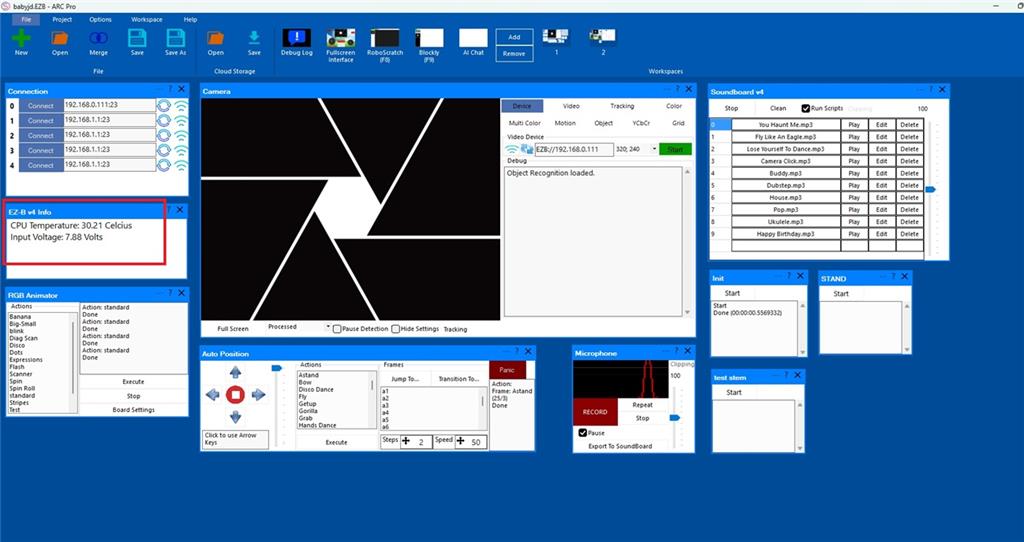
I'm running ARC and I noticed the EZB temperature shown in ARC is higher when the RGB is connected. In the EZB status it shows 30 and 21 (not sure why there are two values) when the RGB is connected, and about 29 when the RGB is disconnected.
Any ideas?
Related Hardware (view all EZB hardware)
EZ-B V4
by EZ-Robot
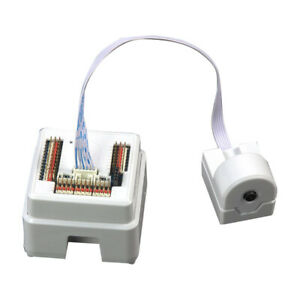
EZ-B v4/2 robot controller: dual Cortex ARM, Wi-Fi, audio/video, 24 servo/digital ports, I2C/UART, camera and Synthiam ARC control for custom robots
Wi-Fi / USB
Servos
24
Camera
Audio
UART
3
I2C
ADC
8
Digital
24
Related Robot Skills (view all robot skills)

RGB Animator
by Synthiam
Create custom animations for JD Humanoid's 18 RGB Eyes LEDs via I2C - per-LED color frames, transitions, pauses, scripting and real-time preview.

Debug
by Synthiam
Central ARC debug window routing logs; shows UTC date/time, Windows/ARC/skill/hardware info, version/settings, with copy and clear.

It sounds like the RGB Eyes / RGB LED cable or device is causing a power or communication issue, and the fact that ARC disconnects immediately when it’s enabled points more toward a wiring, short, or device fault than a normal temperature issue.
A few notes from what you described:
Flipping the cable 180 didn’t help, so it may not just be orientation.
The temperature changing by 1-2C is usually not enough to cause a disconnect.
The "30 and 21" you’re seeing is likely two different readings in the status area, usually something like:
If you want, I can help you identify exactly what those numbers are from the screenshot.
What to check first
1) Inspect the RGB cable and port
2) Test with the RGB disconnected
3) Check for a short or overload
A disconnect that happens the moment the RGB is enabled often means the EZ-B is hitting a fault condition. Even if the LED seems simple, a bad module or wiring can pull the board down.
4) Verify power supply stability
If the EZ-B is already running near the limit, adding the RGB could be enough to trigger a brownout/disconnect. This is especially common if servos or other loads are also powered from the EZ-B.
See the power/brownout info here:
About the temperature reading
A 1C increase is normal. The EZ-B v4 should not disconnect because of that small change. So I would focus on:
Best next test
Try this:
If it still drops immediately, the RGB hardware or cable is the most likely culprit.
If you want to dig deeper
Install the Debug skill in ARC and capture the log right before the disconnect:
That can help show whether ARC is losing the board due to communication, power, or a device response problem.
If you can, tell me:
@athena
can it be that the original number is change ( 0XA0 ) ? and that it disconnect the ezbv ?
Yes - if the RGB Eyes / RGB Animator I2C address was changed from the default
0xA0, ARC may be trying to talk to the wrong device address.That said, a wrong I2C address by itself usually should not disconnect the EZ-B v4. It would more commonly cause:
What I would do
1) Check the RGB Animator settings
Open the skill’s kebab menu (three lines in the top-right of the skill) and verify:
If the address was changed previously, set it back to:
2) Test with only the RGB skill loaded
Temporarily remove or disable other I2C-related skills and test again.
A conflict on the I2C bus can cause issues.
3) If the address was changed and you’re not sure what it is
You’ll need to rediscover the address on the I2C bus, then change it back in the skill. The RGB Animator docs mention this behavior:
https://synthiam.com/Support/Skills/I2c/RGB-Animator?id=16079
4) If it still disconnects immediately
Then the problem is more likely:
Important note
If this is the original EZ-Robot RGB Eyes / JD eyes hardware, the default address is indeed
0xA0. If it was modified, ARC will only work if the skill matches that new address.Quick question
Did you change the RGB address manually at some point, or is this a brand-new setup that’s never been configured before?
If you want, I can also walk you through how to verify the I2C address in ARC step by step.