
Asked
— Edited
ARC Onboard Versus Remote Limits
If I run the ARC application on a Raspberry Pi 5 (Windows on ARM) mounted on my robot, with the robot’s controllers connected to that Pi, what limitations should I expect compared to running ARC from a separate laptop connected to the robot over WiFi? What functionality do I give up (or gain) when ARC runs onboard versus when it runs remotely?
For clarity, I mean ARC as the central control application that coordinates Robot Skills, EZB or other onboard controllers, cameras, microphones, motors, and scripts (JavaScript/Python). Please explain differences specifically for:
- hardware connected through an EZB or other onboard controller (for example, an IoTiny, Arduinos, or servo controller boards mounted on the robot) versus devices connected directly to a PC (USB cameras, USB microphones, USB joysticks/gamepads, serial/COM devices, Bluetooth peripherals, etc.),
- Robot Skills and vision/audio processing (for example, camera tracking and other vision skills),
- scripting (JavaScript/Python) and automation behavior,
- network-dependent features when ARC is accessed over WiFi (what breaks or changes if ARC is onboard vs remote).
I plan to connect an IoTiny and Arduinos/servo control boards to make the physical connections to sensors and actuators.
Related Hardware (view all EZB hardware)
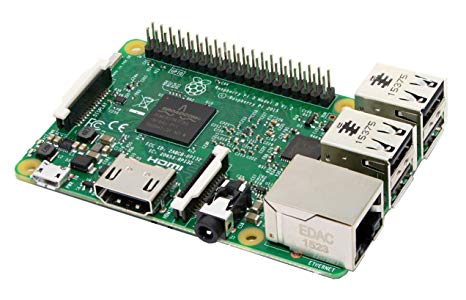
Raspberry Pi
by Pi Foundation
Run Synthiam ARC on Raspberry Pi 4+ with Windows 11 for robot control; use external EZB/Arduino for reliable I/O, SSD/USB storage recommended
Wi-Fi
Servos
✕
Camera
Audio
UART
✕
I2C
ADC
✕
Digital
✕
Related Robot Skills (view all robot skills)

EZB Connection
by Synthiam
Connects EZ-B I/O controllers to ARC via COM or IP (5 connections). Supports init scripts, battery monitoring, TCP/EZ-Script server and serial/I2C.

EZB Connections
by Synthiam
Add and manage up to 255 EZ-B I/O controller connections in ARC, select COM/IP ports or device addresses to connect or remove devices.

If ARC runs on the Raspberry Pi 5 onboard the robot, you generally gain simplicity and reduce network dependency, but you may lose some convenience and peripheral flexibility compared with running ARC on a separate laptop and controlling the robot over WiFi.
The short version
ARC onboard the robot
Pros
Cons
ARC running on a laptop remotely
Pros
Cons
What changes by category
1) Hardware connected through EZB or onboard controllers vs directly to the PC
Hardware on the robot through an EZB / IoTiny / Arduino / servo controller
This is the best place for motors, servos, PWM, ADC, digital I/O, UART devices, and sensors that live on the robot.
Whether ARC is onboard or remote, these are still robot-local.
That means:
Since you plan to use IoTiny and Arduinos/servo boards, that architecture is solid.
Useful overview:
Hardware connected directly to the PC
This is where the biggest difference shows up.
If ARC is on the Pi onboard
Anything physically plugged into the Pi is local to ARC:
If ARC is on a separate laptop
Those same devices connect to the laptop instead:
Practical impact
If you run ARC onboard, you gain:
If you run ARC remotely, you gain:
2) Robot Skills and vision/audio processing
Vision skills
With ARC onboard:
This can be a real advantage for:
However, on a Pi 5 Windows on ARM setup:
With ARC remote on a laptop:
Audio skills
With ARC onboard:
With ARC remote:
Bottom line for skills
Onboard ARC favors autonomy and reduced latency.
Remote ARC favors compute power and peripheral flexibility.
3) Scripting: JavaScript/Python and automation behavior
Scripts in ARC behave the same logically, but the environment changes.
If ARC is onboard
Your JavaScript/Python automation:
That’s ideal for:
If ARC is remote
Scripts still run in ARC, but:
What you give up onboard
Mostly nothing in the scripting model itself, but you may lose:
If you’re writing code, the ARC AI Assistant built into ARC can help edit or rewrite JavaScript/Python right inside the script editor:
4) Network-dependent features when ARC is accessed over WiFi
This is where onboard ARC is often much better for reliability.
If ARC is onboard
Network is mainly for:
If WiFi goes out:
If ARC is remote
WiFi becomes part of the control path:
What breaks or changes remotely
If ARC is on the laptop and the laptop connects to the robot over WiFi:
What breaks or changes onboard
If ARC is onboard and you access it remotely:
What you gain or lose overall
Running ARC onboard the Pi 5
You gain
You may lose
Running ARC remotely on a laptop
You gain
You may lose
For your specific plan: Pi 5 + IoTiny + Arduinos/servo boards
That’s a very reasonable architecture.
If the Pi 5 is running ARC onboard, and the IoTiny/Arduinos/servo boards are physically on the robot, then ARC becomes the central coordinator while the I/O controllers handle the physical interface. That is exactly the kind of layering ARC is designed for.
For many robots, this is the preferred setup:
Recommendation
If your goal is:
Best autonomy and robot reliability
Go onboard ARC on the Pi 5.
Best development convenience and maximum peripheral compatibility
Go remote ARC on a laptop.
Best of both worlds
Develop remotely on a laptop, then deploy the project to the onboard Pi for final robot operation.
If you want, I can also give you a decision matrix for:
and map each one to cameras, microphones, gamepads, serial devices, and Arduino/IoTiny wiring.
That’s a lot of info from Athena. But I think it would also help to get an idea of the type of robot you’re building - and if you have an idea of what you’d want it to do.
Mainly because if it’s a robot that will be navigating with a lidar etc, an onboard pc is required. Lots of the usb peripherals for sensors would require it to be local on the robot.
Let us know a bit more of your plan and that’ll give more context for a shorter answer