

Just a quick question. What does the 10 kg bit mean? Does it mean they can push a weight of 10 kg?

Jaychadw
United Kingdom
Asked
— Edited
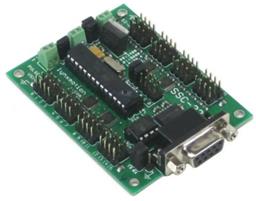 SSC-32 Servo Controller V2
— Bridge ARC to Lynxmotion SSC-32: maps V0-V31 to SSC-32 channels for reliable, high-performance serial control via USB, EZB/Arduino UART.
Try it →
Just a quick question. What does the 10 kg bit mean? Does it mean they can push a weight of 10 kg?
Torque determines the maximum amount of rotational force the servo can apply. This specification is measured in ounces per inch (oz-in) or in kilograms per centimetre (kg-cm). The larger the number, the more force the servo can exert.
So what exactly does 10kg per centimetre mean?
If you had a servo arm that was ten centimetres long on your servo it would be able to produce 1Kg of pull or push force at the end of the servo arm before stalling. If you had a 5 centimetre servo arm you have 2Kg of force. A 20 centimetre arm, 0.5Kg of force. You get the idea...
Both speed and torque specifications are usually given for the two common voltages used. 4.8 volts and 6.0 volts. The 6.0 volts give slightly higher speed and torque ratings.
To calculate what torque is required you could do it the hard way, or you could just use the robot arm calculator
The tutorial section is your friend: https://synthiam.com/Tutorials/Hardware.aspx?id=4
:)
Excellent thank you for helping clear that up very helpful as usual