




Asked
— Edited
Ez Robot At Intel Idf16
As in tomorrow? Fellas a little heads up on these huge announcements.. I would have flown down to see this!
 Sound Servo (EZB)
— Map EZ-B audio volume to servos; multi-servo mirroring, scalar range control, invert/min-max, waveform feedback to sync mouth motion.
Try it →
Sound Servo (EZB)
— Map EZ-B audio volume to servos; multi-servo mirroring, scalar range control, invert/min-max, waveform feedback to sync mouth motion.
Try it →
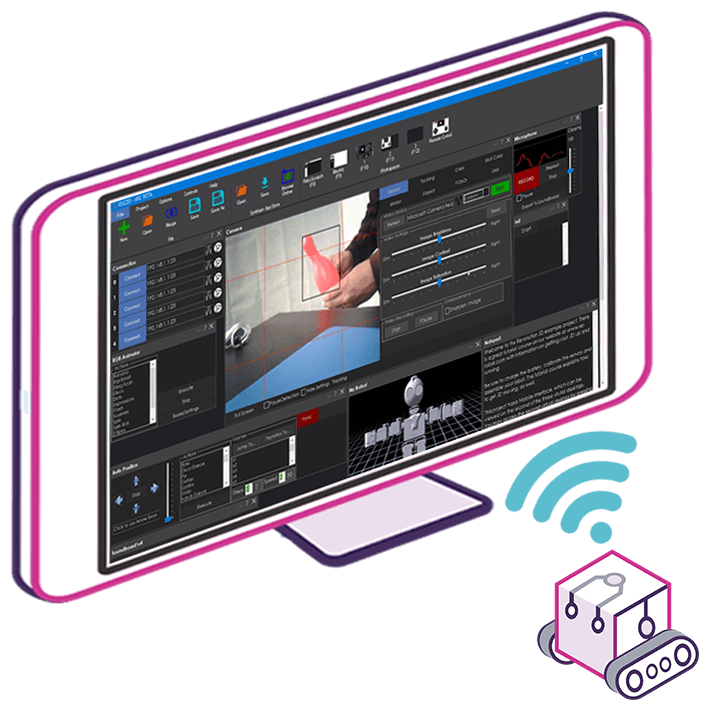
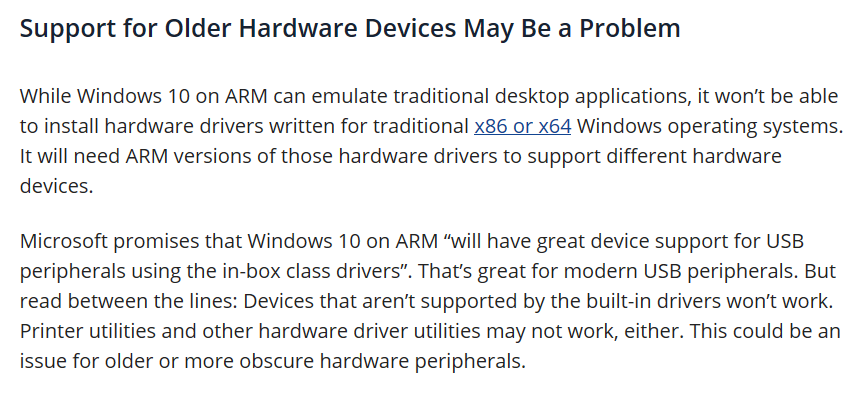
Windows 10s is out now. According to their documentation, you are promoted to upgrade when a regular application is attempted to be installed. This means trying to install ARC will prompt to upgrade windows pro.
Why they upgrade to pro and not home was a mystery until now. It's because pro unlocks the virtualization features of the operating system.
Home has no virtualization.
Right and pro would also be good because you can RDP into the device which isnt an option without additional software on Home.
Here is an article on the differences between Windows 10s and Windows 10 on ARM
https://www.techradar.com/news/a-closer-look-at-windows-10-s-windows-10-on-arm-and-windows-10-iot#
Frank - that's a fantastic article. Thanks for sharing!
I'm having trouble understanding this paragraph.. It says there is one restriction, but i don't seem to see the restriction in the paragraph....
Am i reading this wrong? What's the restriction? Good news here - because ARC is 32bit That's why ARC cannot be an app for Windows 10 S@dj I think the problem is that the author did not state the restriction until the next paragraph... i.e. no x64 software
Which, as you stated, not an issue for ARC... great news
So ARC on an arm based system seems like a possibility with win10 ARM. Good to here for those trying to put Raspberry pi's in there robots!
I doubt raspberry pi will be a target for windows 10. It's super underpowered. I believe the instruction set that snap dragon uses for microsofts arm emulation has more hardware instructions for emulation than Broadcom'a chips. Many companies license the arm instruction set, but also add to it. I believe that's why snapdragon leads performance in arm cpus.
Have you tried an x86 emulator on a pi running windows? If you shut down all host OS services, I wonder how it performs
Doesn't look like you have a lot of options. But some virtualization can be assisted by isolating a core: https://blog.flexvdi.com/2015/03/17/enabling-kvm-virtualization-on-the-raspberry-pi-2/
Out of the box, doesn't seem the pi kernel has any kvm optimization.