

jstarne1
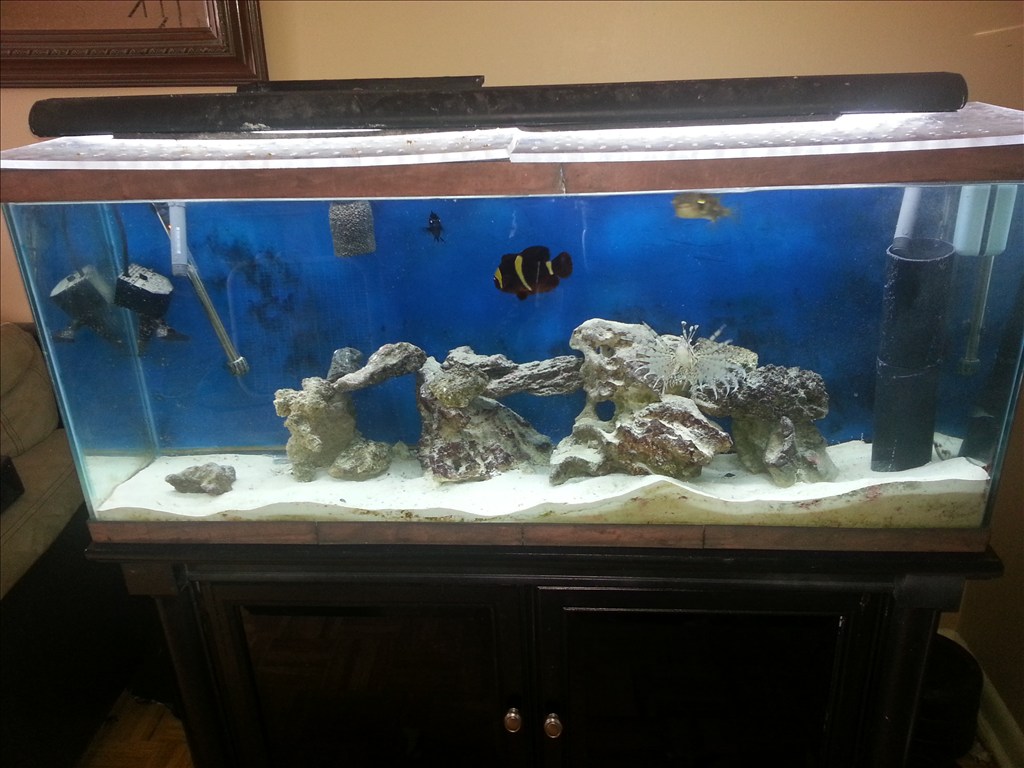
Meet The Smart Saltwater Aquarium Powered By Ez Robot
Ez Robot community I wanted to introduce my latest application of this system. Some members hear already know I keep two salt water aquariums one coral which unfortunately died off and my predator tank. Sea life needs delicate balance maintained in their little ecosystem. Things like light spectrum , temperature, ph balance , current of water , nitrate and ammonia levels and calcium levels. These things take a practiced hand to maintain. I am building a new system and using ez b to monitor salinity, nitrates and ammonia, temp , water current flow and the ph. The ADC ports are useful for these and EZ board can control the current and switching to a backup power supply ( a apc for computers inside the cabinet to keep ezb and pumps powered). Also the ezb can turn on and off night , morning , day , and evening lighting settings. With a custom injection device im designing ezb can provide nutrients , calcium and even medicine if levels are out of wack. I started the build today and I am very excited!
YouTube video https://www.youtube.com/watch?v=RreB8RKv3Oc&feature=youtube_gdata_player
looks nice and neat wiring,thats what i do alot at work wiring thats neat thats care of many problems ,makes it easyto fix,also high voltage wire (ac 120) should not be near low voltage ,ac produces some noise or hum idea you should use is on the base wire going to each TIP120 you should place it away from the AC lines.like under the board or between the TIP120
https://www.youtube.com/watch?v=DUZ_dF9DDag&feature=youtube_gdata_player
Ok here is a short manual demonstration of the control unit using the manual override switches. Three sets of lights are controlled here. We will add an 18000k purple light for dawn and dusk and two wave generators next. Now I get to see if I can manage a good connection directly above on the second floor to the computer.
Despite safety precautions I still shocked myself twice lol. It was not equipment that caused it just accidentally brushed a connection. At that point I descided to tape up each connector with color coded tape. Green -ground , red 5v pos , Yellow-12v pos, white-110v AC live , Black 110v AC Neutral. I also covered the barrier strip with tape but I think I will cover it with a piece of plexiglass and 4 standoffs in the near future. Safety first kids! Don't do this project alone just in case you make a mistake and always triple check connections with a meter before applying live power. -Josh Starnes
safety iswhat i have to do to all my work projects ,because of ISO9001 INSPECTION ,using interlocks plus special circuits when board is tested there is no pwer and then switched on
JOSH you are near water you should have GFI built in to your box,,another item having that computer cabinet is next to water,if there is a leak or something else you will have a big big problem
On the wiring of AC YOU HAVE THE COLORS WRONG green is ground,dark is HOT (BLACK) and neutral is always WHITE i got shock a few times ,mostly fixing TV'S LONG TIME AGO ,800 volts boost voltage,gives you a burn mark and build circuits up to 4000 volts to check a special sensor at work,that was a hard tester to make is safety for production and pass the ISO 9001 standards
That's backwards to over here, brown is live, blue is neutral, green/yellow is earth/ground, it used to be red live and black neutral, so certainly not dark is hot.
Is it a good idea to twist cables? I was always taught it was bad practice and not to twist, not only because you can break the wires but either eddy currents or harmonics (or something along those lines, I forget what exactly)
Ive always twisted them. Pc manufacturers twist them. Networking companies twist the connectivity wires, rc equipment manufacturers twist them as well. Its just something to do to keep them neat. The labeling inside the case is meant to make it easier to repair and expand in the future. I am not at all worried about official color codes because im mixing industry types both household electronics , pc electronics and ezb microcontroller/ rc standards. Im putting a guide on the inside of the case to be sure the color coding is not mistaken in the future. Here in America mcep and ase technitions are taught to twist wires as well.
in every project ,for work or my robots i twist the wire,its very common practice ,it blocks eddy currents for noise,if you look at network cable all wires are twisted for same reason AT work i made a machine to twist wires,and programable for production