The Robot’s Body Is a Spreadsheet (And That’s Its Superpower)
Your robot’s arm is not an arm. It’s a row that maps a virtual port to a servo ID, and that quiet lie lets ARCx give robots stable minds on changing bodies.
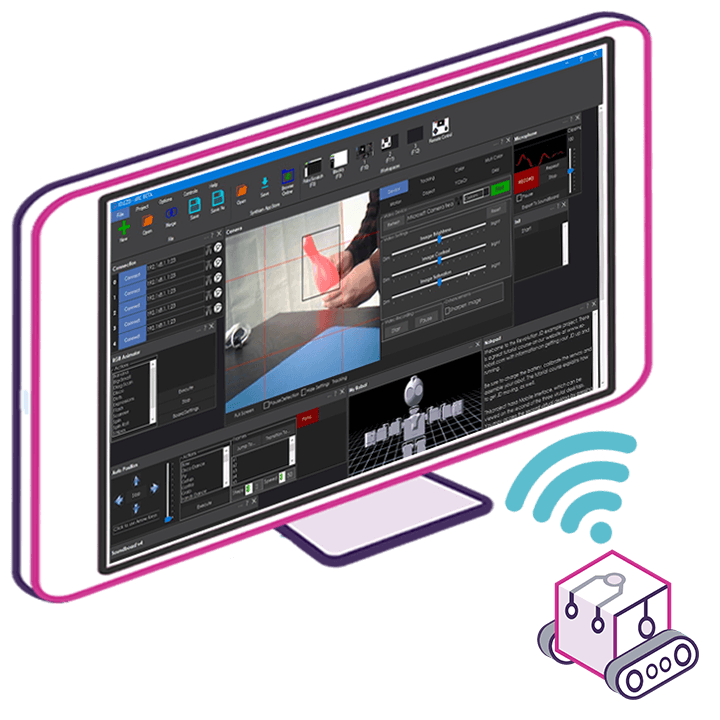
With Synthiam ARCx running headless on Windows 10/11 or Ubuntu 24.04 LTS (x64/ARM64, including Raspberry Pi), you program the robot from a browser. Add the Dynamixel Servo Driver, and suddenly V1 isn’t a wire—it’s a promise your code can trust. The body can change; the promise holds.
Virtual Ports, Real Muscles
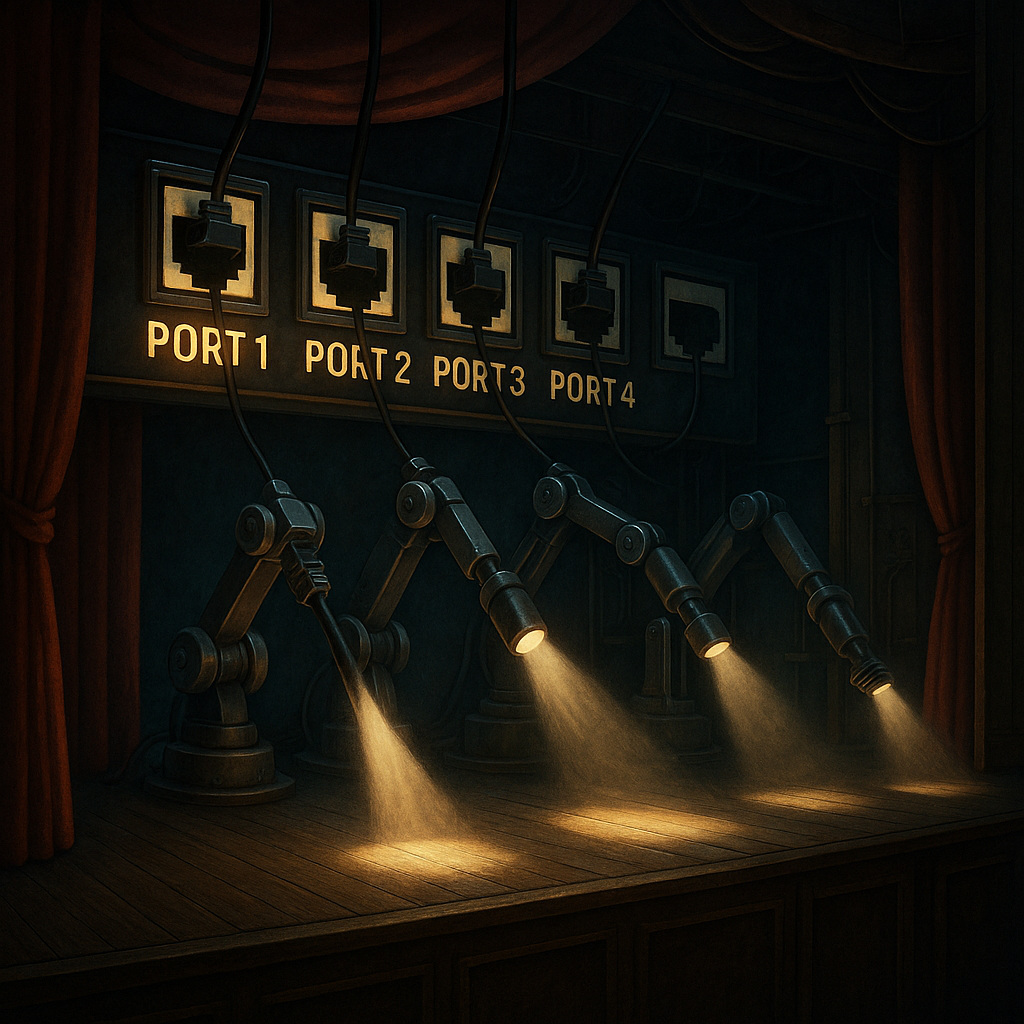
ARCx speaks to V0–V255; the Dynamixel skill translates that into bus packets for specific servo IDs and models. Your code stays the same, even when hardware doesn’t.
Bus Servos Tamed
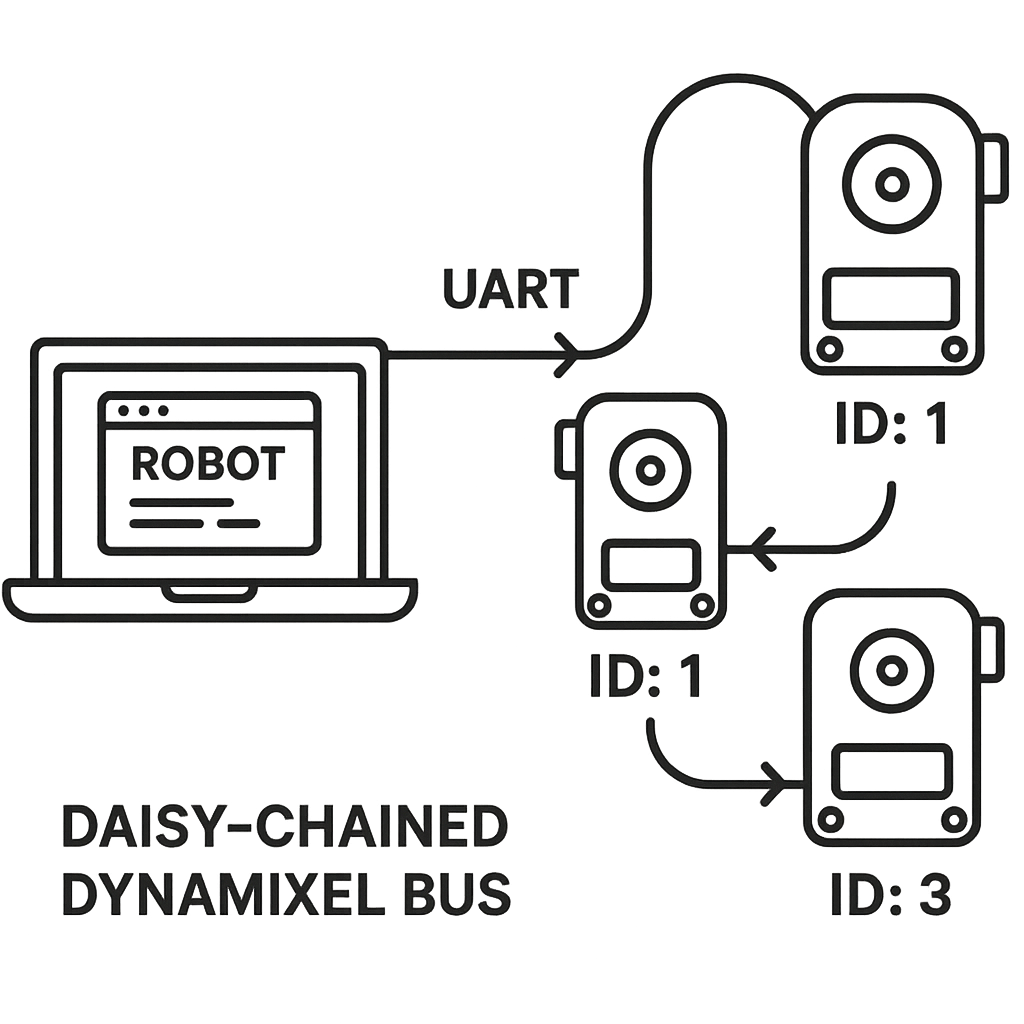
Daisy-chained Dynamixels share a UART bus. Same baud, different IDs. Full duplex reads; transmit-only moves. The skill does the hard mapping so you don’t.
Mind Over Mechanics
Auto Position, Servo scripts, and kinematics act on virtual ports. Swap an AX-12 for an XH540? Update the mapping, not your logic. The robot keeps its “self.”
When a Robot Learns to Pretend
Robots break, upgrade, and change shape. If your code hugs the hardware too tightly, every bolt you twist becomes a rewrite. ARCx pulls off a neat trick: it lets the robot pretend its body is a neat list of virtual servo ports. The pretend is the point. It makes a stable world for your scripts while the physical world does what it always does—surprise you.
With the Dynamixel Servo Driver, you map V-ports (like V1, V2) to real Dynamixel IDs on a shared bus. Your Blockly, JavaScript, or Python scripts call Servo.SetPosition() on V1. The skill turns that into the right packet for the right model, from AX-12 to XH540. It’s like telling a stage manager, “Spotlight on actor V1,” and the cables quietly dance in the rafters.
Why Lie to Your Joints?
Because truth is slow. Hardware truth is voltage, current, and register maps. Your robot’s mind wants intention: “look left,” “hand to 30 cm forward,” “wave hello.” In ARCx, skills run in isolation, so one misbehaving part won’t sink the project. You can add, configure, or remove skills on the fly. The Dynamixel skill keeps the illusion stable: V3 can drive ID 17 today and ID 42 tomorrow, without your logic caring.
Auto Position plays smooth poses on V-ports. The Kinematics Service moves named chains in millimetres. Even the Autonomous AI skill (the LLM decision-maker) treats each skill as a tool—add the servo driver, and your AI suddenly has new “muscles.” It doesn’t know AX from XH; it just knows V1 can nod “yes.” That’s a healthy lie.
Quick Primer: Bus Servos, UARTs, and Virtual Ports
Dynamixels are “bus servos.” Many servos share one serial line (a UART). Each servo has an ID. You send a packet that says, “Hey ID 17, go here,” and only that servo listens. It’s like houses on one street: same road, different addresses. All servos on the bus must use the same baud rate (the speed of bits), or the street sounds like static.
Full duplex UARTs can send and read at once, so ARCx can ping, scan, and read positions. A transmit-only digital port can still move a servo but can’t read back. The Dynamixel Servo Driver has a Bus tab for board/port/baud, a Tools tab to scan IDs, and a Servos tab where you map virtual ports to IDs and models. You can pick modes like Position, Wheel (spin), or ExtendedPosition (multi-turn on X series), set min/max raw steps (1024 or 4096 scale), and invert direction for mirrored mounts.
Body Language by Math: Kinematics Meets IDs
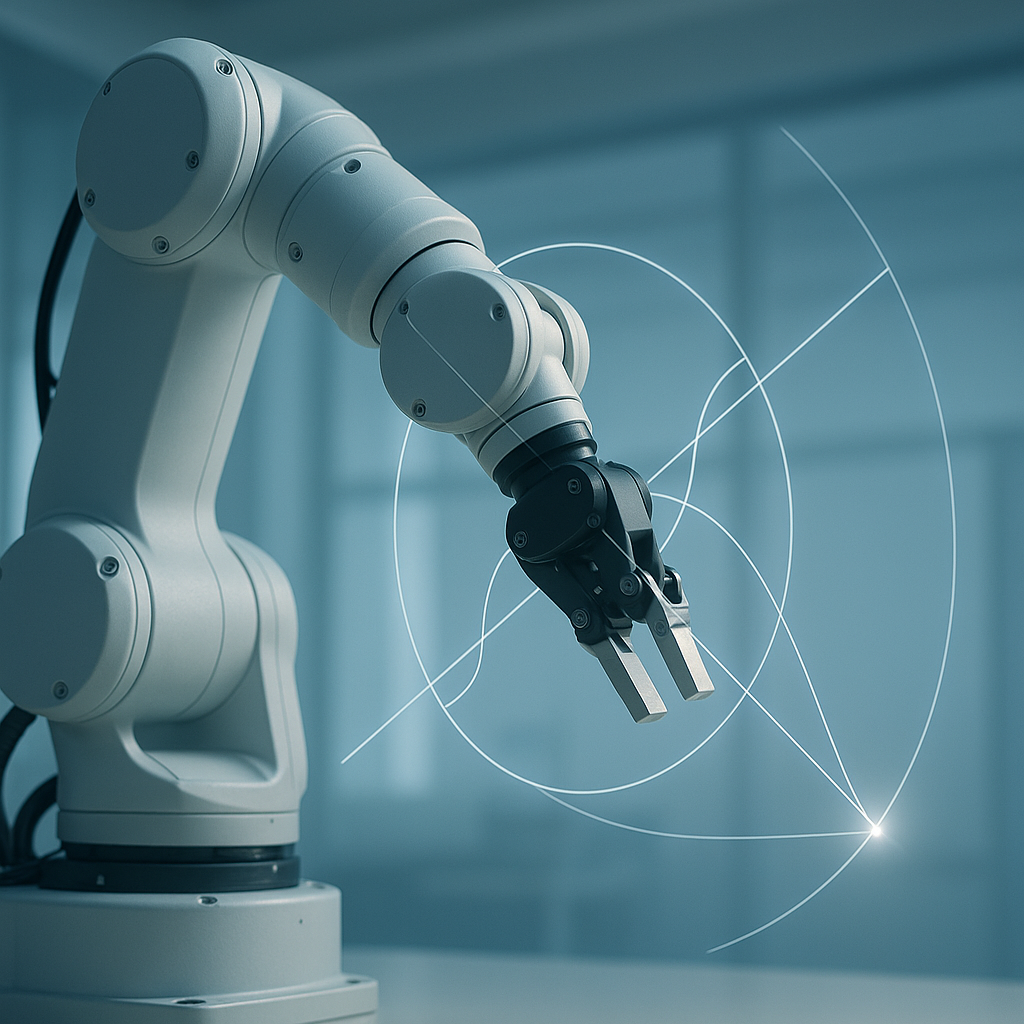
Inverse kinematics sounds scary, but think of it like this: you point to a spot in space; math figures out which joints must bend. In ARCx, named kinematic chains let you move an arm by X, Y, Z in millimetres. Under the hood, that becomes servo positions on V-ports. The driver maps each V-port to a specific Dynamixel. Your high-level plan glides over low-level details.
Want to script a gesture? The shared ARCx script API makes it one voice. In Python or JavaScript you can call Servo.SetPosition("V1", 45) and Servo.SetPosition("V2", 120), or play an Auto Position action you designed. If you later replace an AX-12 with an XH430, just update the model and limits in the skill. The math stays the math; the arm stays the arm.
Abstraction isn’t avoidance. It’s alignment—your intention aligned with the right packet, at the right time, to the right ID.
How ARCx Makes the Illusion Honest
ARCx runs on the robot itself, headless, with .NET bundled—no extra installs. You program it from any browser; multiple browsers can be live at once. Close the tab, the robot keeps going. Skills are isolated, so a broken one won’t crash the rest. The script editor brings IntelliSense and a panic button that stops scripts, movement, servos, and audio together—because sometimes “oops” should be a single click.
Athena, the built-in AI helper, reads your project—skills, settings, control commands, variables—and suggests scripts or configuration changes you can approve. The AI script assistant writes Python or JavaScript that already knows how your skills listen. Add the Dynamixel skill and your custom UI can drop in servo pads and sliders for V-ports in minutes. Hook up the ROS 2 Connector if you want to speak rosbridge over WebSocket. And if you add the Autonomous AI robot skill, each new skill becomes a new tool your robot’s mind can call. Muscles by mapping. Intention by language.
So, if a robot’s body is a table of mappings and its mind is a set of intentions, which one do you think makes it feel “alive” to you?
- Runs on Windows 10/11 and Ubuntu 24.04 LTS (x64/ARM64, incl. Raspberry Pi)
- Headless; program from a browser; multiple browsers stay live
- Blockly, JavaScript, Python—one API for servos, movement, I2C, UART, audio
- Dynamixel Servo Driver maps V-ports to IDs/models
- Supports AX-12/18, MX-28/64/106 (P1), XL-320/330/430, XC430, XM430/540, XH430/540
- Use a hardware UART for full duplex (read/scan); digital port is TX-only
- Auto Position, Kinematics, and Servo scripts work on V-ports
Key Thought
Abstraction is empathy for the future builder—you, three upgrades from now, at 2 a.m., swapping a servo and not rewriting code.
Big Idea
The most reliable robot is two bodies at once: a physical chain of motors and a virtual map of intentions. ARCx keeps them in sync.