Your Robot’s First Opinion Is About Gravity
Every robot starts by deciding which way is up. It sounds simple. It isn’t. That choice is a tiny act of belief built from noisy sensors and stubborn math.
Give a robot a voice and it will talk. Give it an IMU and it will stand its ground. One of these is cute. The other keeps your living room from becoming a crash test lab.
Gravity Is The First Opinion
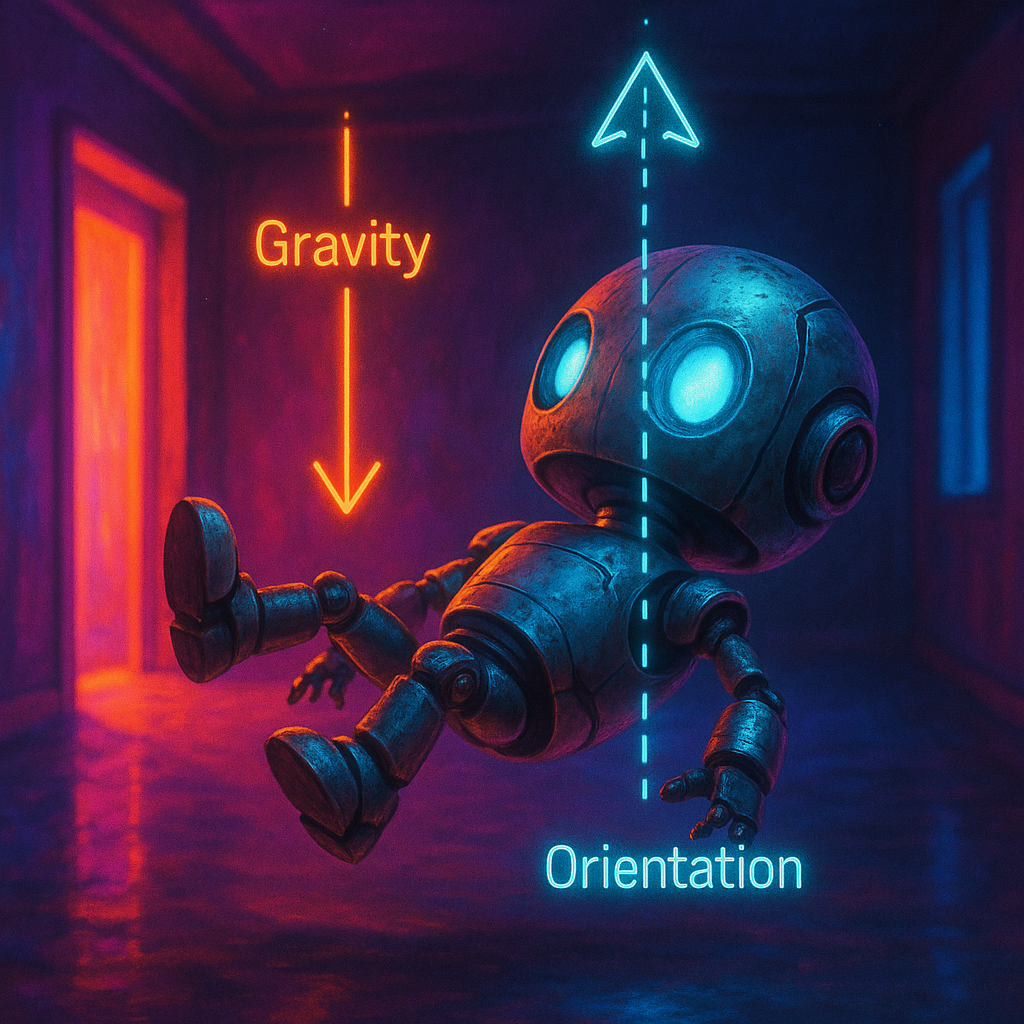
Before goals or maps, a robot must trust a direction for “up.” That trust shapes every move it makes.
Fusion Makes A Personality
How you blend accelerometer, gyro, and compass decides if a robot is cautious, bold, or dizzy.
ARC Turns Belief Into Behavior
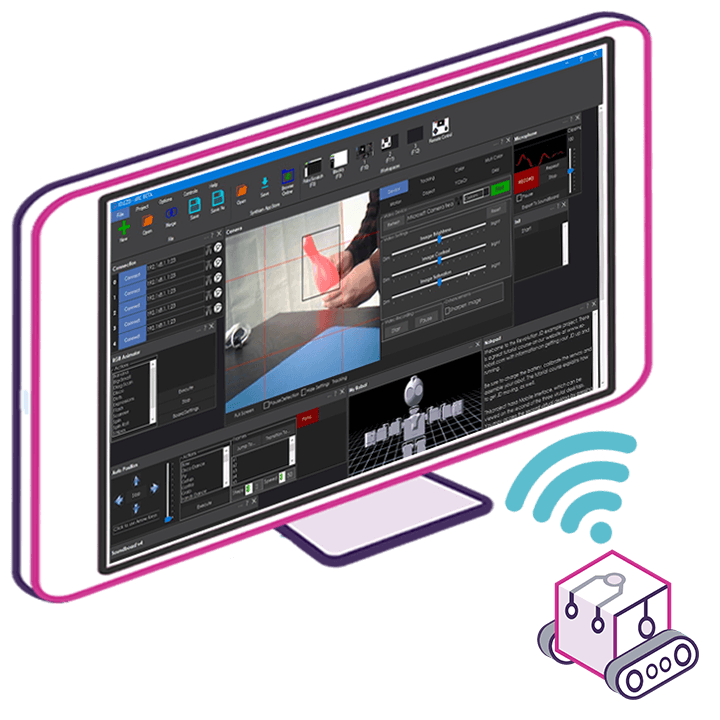
With ARC Robot Skills like the 3-in-1 IMU, you can wire that belief into balance, navigation, and grace.
The Day Your Robot Picked “Up”
You turn on a new bot. Its servos twitch like it had an espresso. Then it steadies. That moment is not luck. It is the bot choosing a story about the world: down is where gravity pulls; up is the opposite; don’t faceplant in front of humans.
Robots do not feel shame, but they do feel torque limits. If they guess wrong about up, they pay with scraped plastic. So they learn to hold an opinion. Sometimes they even defend it. (Looking at you, magnetometers near big speakers.)
Nerd Corner: How an IMU Decides “Up”
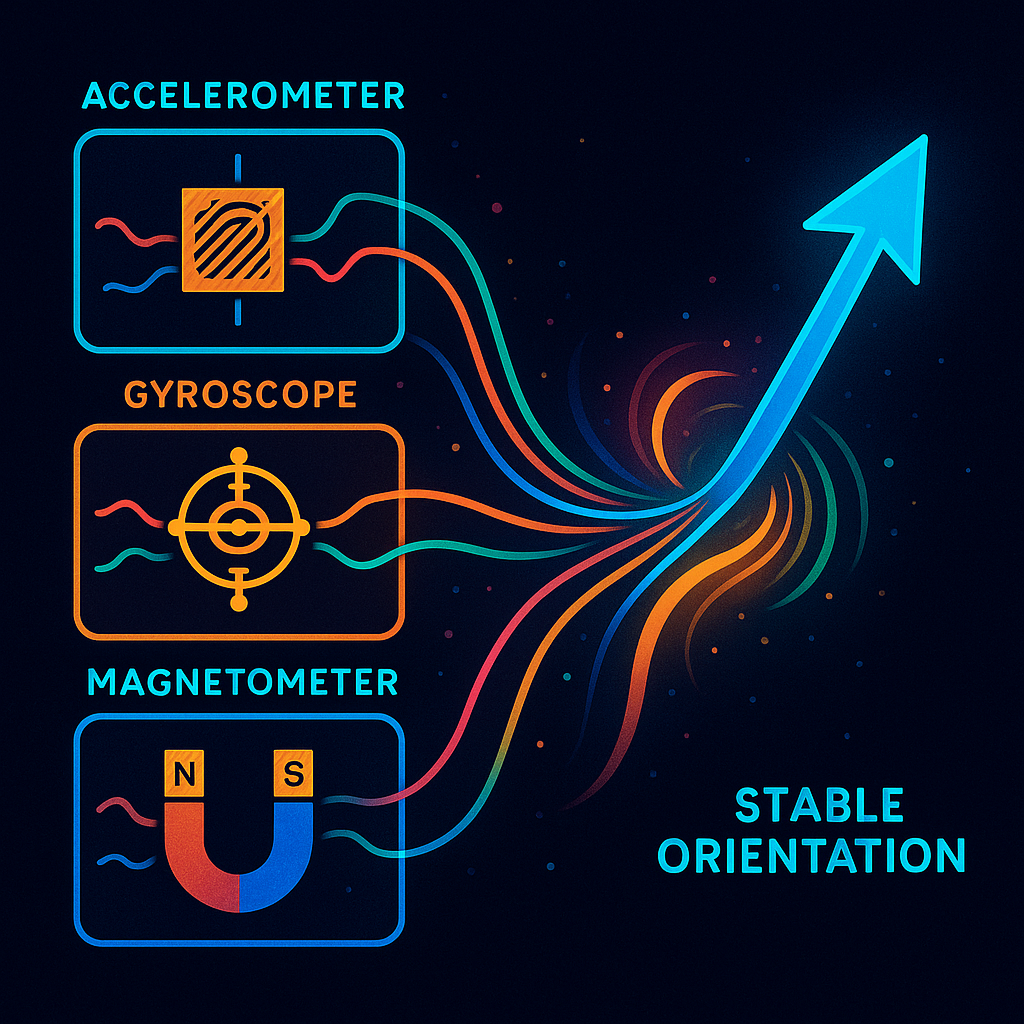
An IMU is an Inertial Measurement Unit. It bundles three sensors: an accelerometer (feels acceleration and tilt), a gyroscope (feels rotation speed), and a magnetometer (feels magnetic north). Each one is a little bit wrong in a different way. Together, they can be very right.
Think of three friends telling you about a movie. The accelerometer remembers the plot (tilt from gravity) but forgets action scenes during bumps. The gyro remembers the car chases (fast spins) but gets the ending wrong over time (drift). The magnetometer remembers the theater’s exit sign (north) but gets confused if someone brings a giant fridge magnet (your motors).
Sensor fusion blends them. A common trick is a complementary filter: let the gyro handle quick changes (high‑pass), let the accelerometer and magnetometer handle slow truth (low‑pass), and mix them with weights. A Kalman filter is a fancier version that also estimates errors. Both aim to give you orientation as yaw, pitch, and roll (three angles), or as a quaternion (a 4D rotation that avoids gimbal lock—the robot’s version of tying itself in a knot).
Designing Attitude With Numbers
Blend weights feel like personality knobs. Trust the gyro more and your bot moves boldly but may drift. Trust the accelerometer more and it stays steady but may wobble during bumps. Give the compass a vote and it holds a heading—unless your fridge is now a magnetic supervillain.
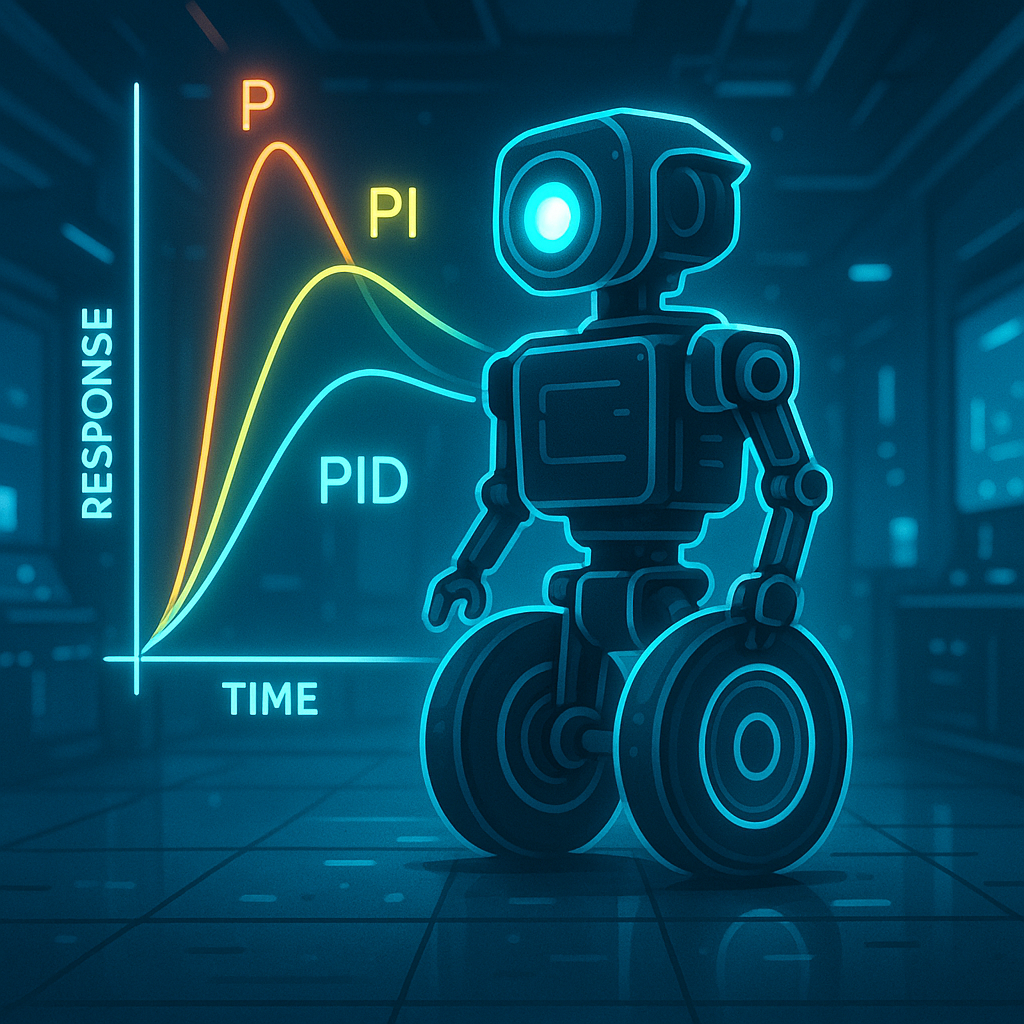
These choices flow into control loops. A simple example is a PID loop. P is how hard you push back on tilt now. I is how much you correct for a bias over time. D is how much you ease off so you don’t overshoot. Tune them and your bot stands calm. Mistune them and it discovers interpretive dance.
When The Room Cheats
Rooms lie. Floors shake. Air conditioners nudge. Magnets lurk. Good robots cope. They watch confidence, not just values. If the compass looks fishy, fade it out. If a bump hits, let the gyro rule for a second. If drift creeps in, let gravity slowly reset pitch and roll.
That is the heart of robust behavior: dynamic trust. It is also why two identical bots can feel different. One forgives chaos. One panics. Both are following the same math, just with different patience levels.

Belief, Meet ARC
In Synthiam ARC, the belief becomes behavior fast. Add the 3-in-1 IMU Robot Skill, select the right I2C port, and you’ll see live tilt, rotation rate, and heading. Use those values to trigger balance scripts, auto‑level a camera gimbal, or make a rover turn to a compass heading.
Because ARC treats sensors and actions as modular Robot Skills, you can wire belief to motion without re‑inventing filters. On EZ-B (or EZB) hardware, you can sample fast, feed a PID loop for your servos, and push commands right away. The Synthiam community shares projects that show clever tricks—like fading out magnetometer data when your motors spin up, or switching behaviors if the bot gets nudged.
So yes, LLMs can chat. But ARC helps a robot stand—and standing is the beginning of everything else. It is hard to explore when you keep meeting the floor.
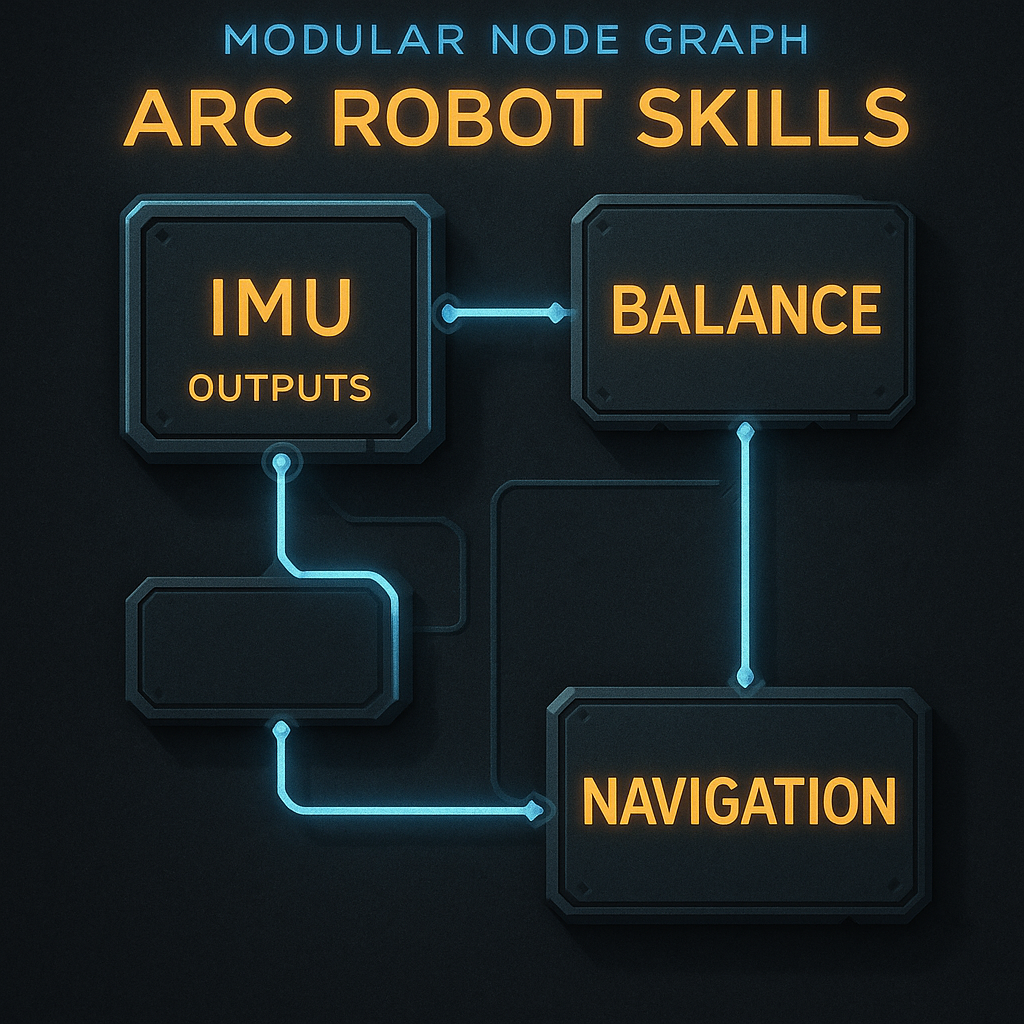
- IMU = accelerometer + gyro + magnetometer
- Fusion blends fast changes and slow truth
- PID turns tilt into graceful motion
- ARC + 3-in-1 IMU = belief you can build on
Key Thought
Change the weights in your fusion or the gains in your PID, and you change how your robot treats the world. That is design, not destiny.
Big Idea
Balance isn’t a number—it’s a narrative your robot tells itself 100 times a second. ARC lets you edit the script without rewriting the physics.
If a robot must choose what to trust first, what do you want it to believe about your world?