Is a Robot Still a Robot If It’s Just You With Extra Wheels?
Telepresence is the awkward cousin of autonomy: it doesn’t think for itself, but it lets you be somewhere you’re not—with microphones, motors, and a better posture.
Maybe that’s the twist we needed. Before we ask machines to decide, we let them carry us. Along the way, we learn what “agency” even means when it’s routed through Wi‑Fi and wheels. Also, yes—the robot hears everything. Be nice.
Borrowed Bodies, Not Borrowed Minds
Telepresence robots are bodies you rent by the minute. Agency becomes a slider, not a switch: from full human control to gentle robot assist.
Latency Is a Personality
Delay and jitter shape how a robot feels to drive. Shared control smooths the ride with local safety and smart blending.
ARC as the Agency Mixer
Synthiam ARC plugs teleop, autonomy, and sensors into one desk. The result: a robot that is honest about who’s actually in charge—until you change it.
The Borrowed Body Problem
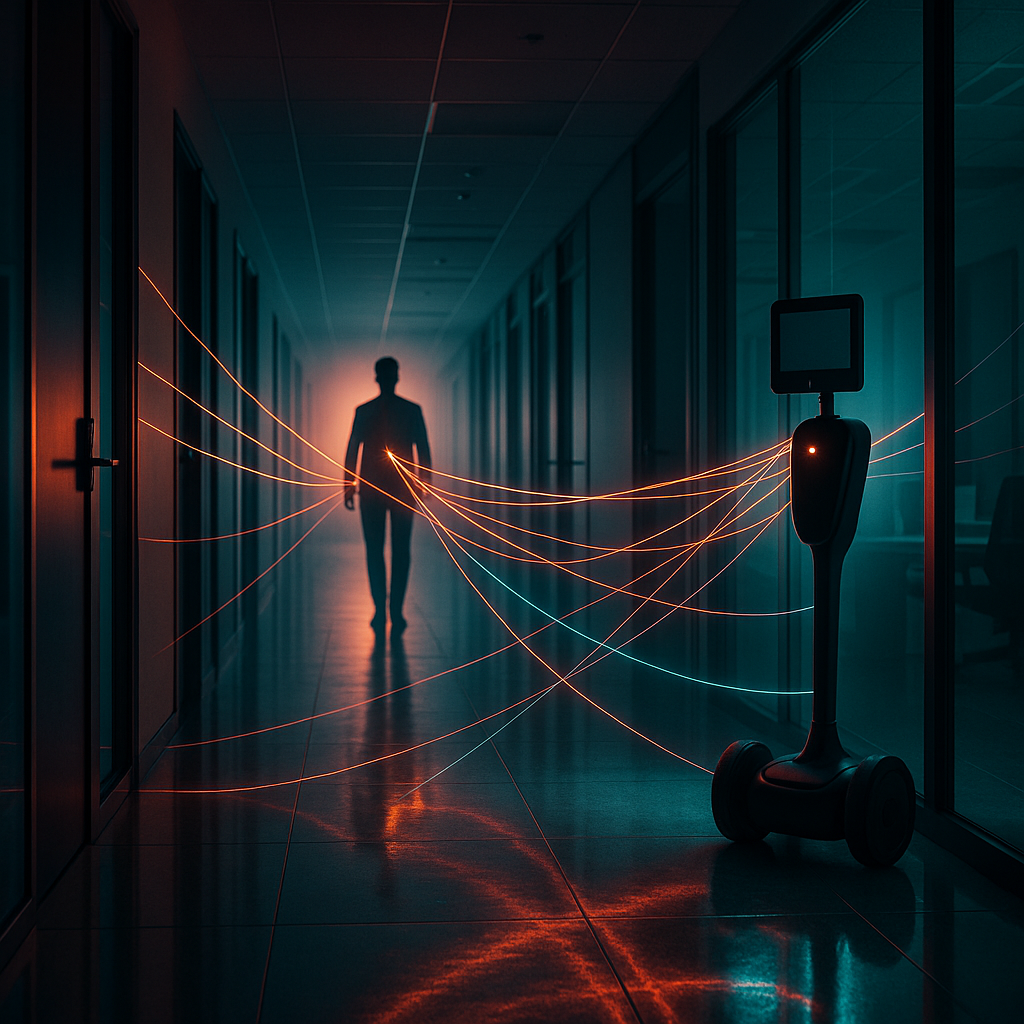
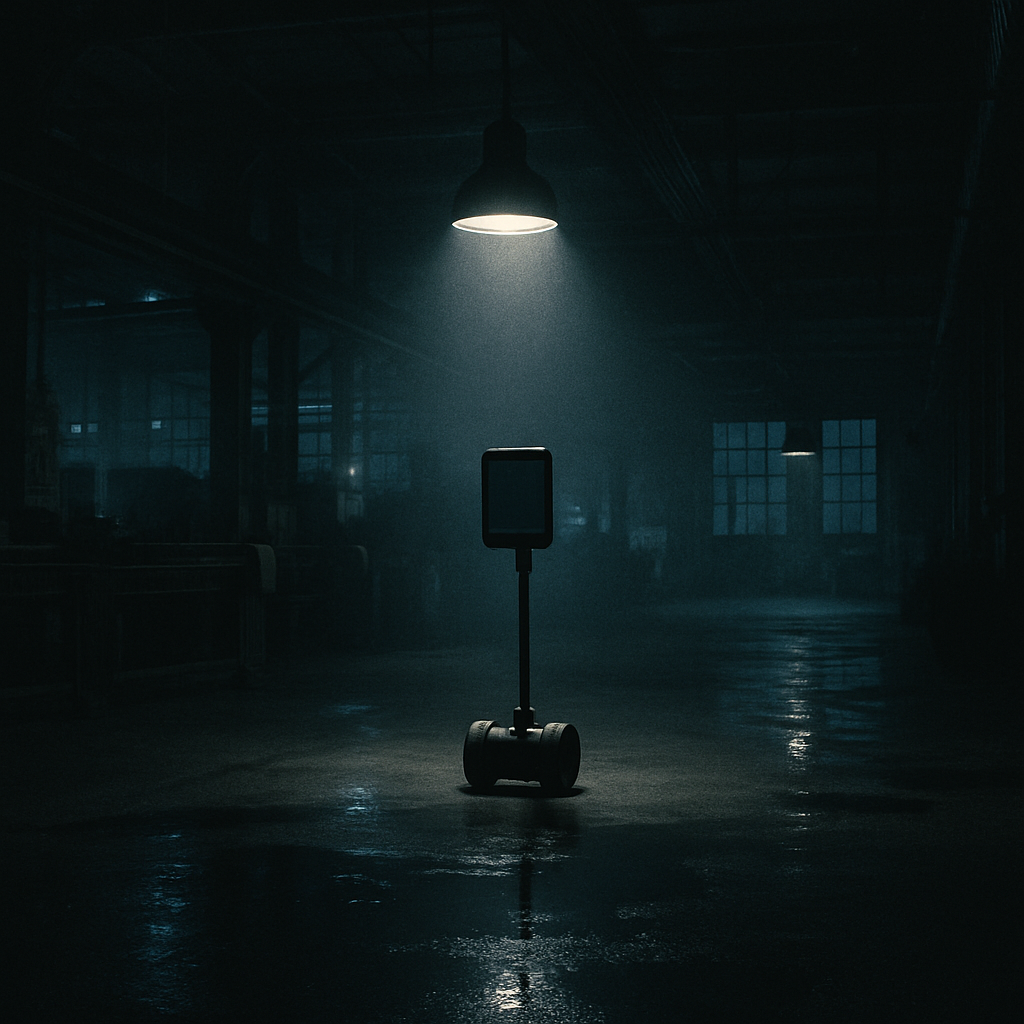
A telepresence robot is a body on wheels with your face on it. It is you, but also not-you—like a very polite ghost with Bluetooth. You steer. It listens. The machine does not claim wisdom. It just offers reach.
That honesty matters. Autonomy can feel like magic until it drifts into mystery. Telepresence says, “I go where you push.” If it bumps a chair, you bumped a chair. That kind of accountability is not just ethical. It’s refreshing. Like finding out your smart fridge posts no motivational quotes.
How It Actually Works
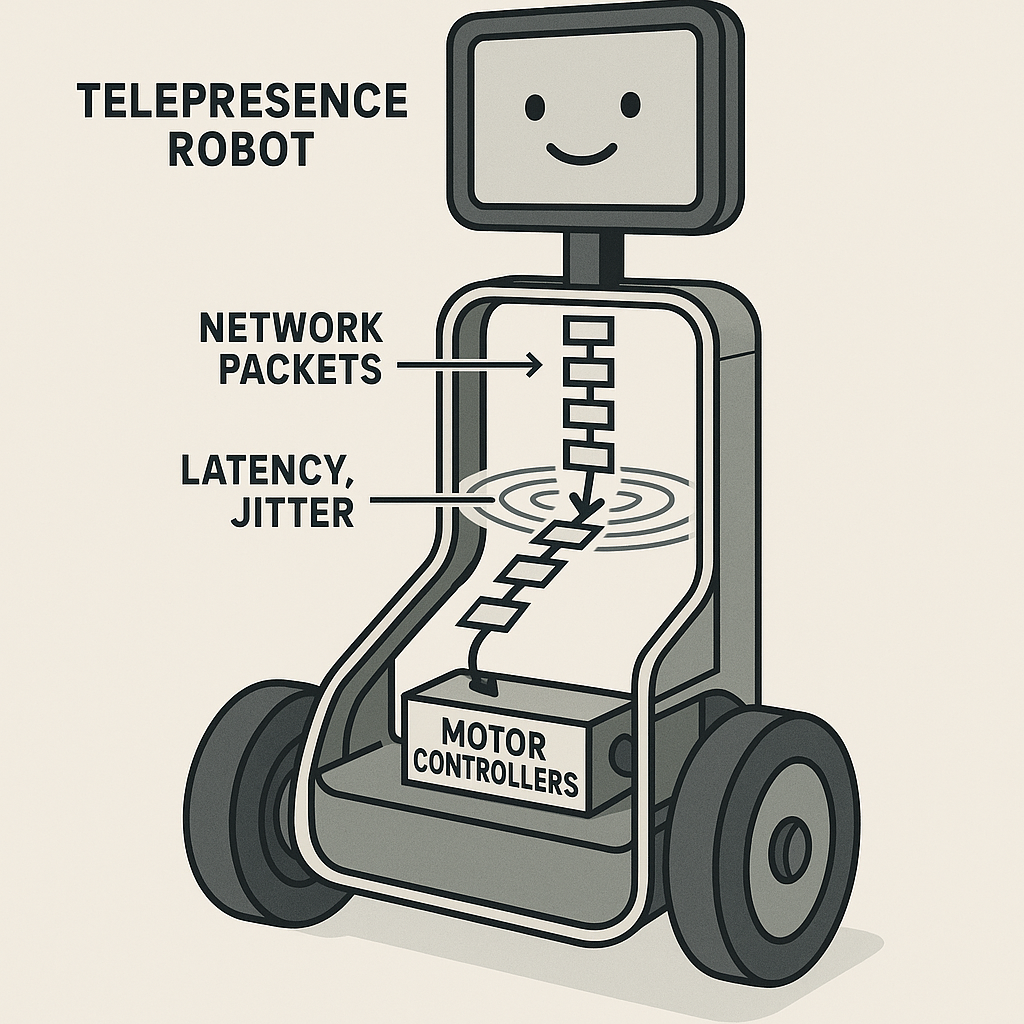
Telepresence is remote control plus guardrails. Your joystick or keyboard sends commands like “drive forward” and “turn left.” The robot uses differential drive: two wheels spin at different speeds to arc or pivot. Under the hood, motors get PWM—tiny timed pulses that set speed. Think of PWM as tapping a gas pedal very fast to reach just the right vroom.
Two network gremlins define the feel. Latency is how long it takes your command to arrive. Jitter is how much that delay wiggles up and down. High latency feels like steering a canoe with a rubber rope. High jitter feels like that rope keeps changing length.
Good systems fight back with local loops. A watchdog cuts power if commands stop. A rate limiter caps sudden changes to prevent tipping or skids. A deadband ignores tiny, shaky inputs. Some add a predictive display that shows where the robot will be in a blink—like a videogame ghost car for your robot.
When Autonomy and Teleop Share the Wheel
Pure teleop is simple, but hallways are not. Shared control blends human intent with local smarts. The robot keeps you from doing obviously bad things—like kissing a wall at 0.8 m/s—while still letting you be bold when safe.
Here’s the trick in plain words. The robot reads your joystick vector (where you want to go) and a safety vector (where it is safe to go). It then mixes them with weights. If sensors see open space, your vector wins. If a chair leg sneaks in, the safety vector gets louder. It’s like dance partners who decide who leads based on who is about to step on a cat.

The Honest Robot: Presence Without Pretend
Autonomous robots guess your goals. Telepresence doesn’t guess; it asks. That clarity reshapes work. Doctors round remotely. Parents attend school plays from airports. Engineers tour a factory without the jet lag or the safety vest that never fits.
And it resets trust. Logs say who moved, who spoke, and when. If the robot nods, it is because you hit the key. No mysterious “AI thought it was best.” Just you, wheels, and an audit trail. It’s a relief—like finding the office coffee maker actually turns off at night.
From Borrowed to Blended with ARC
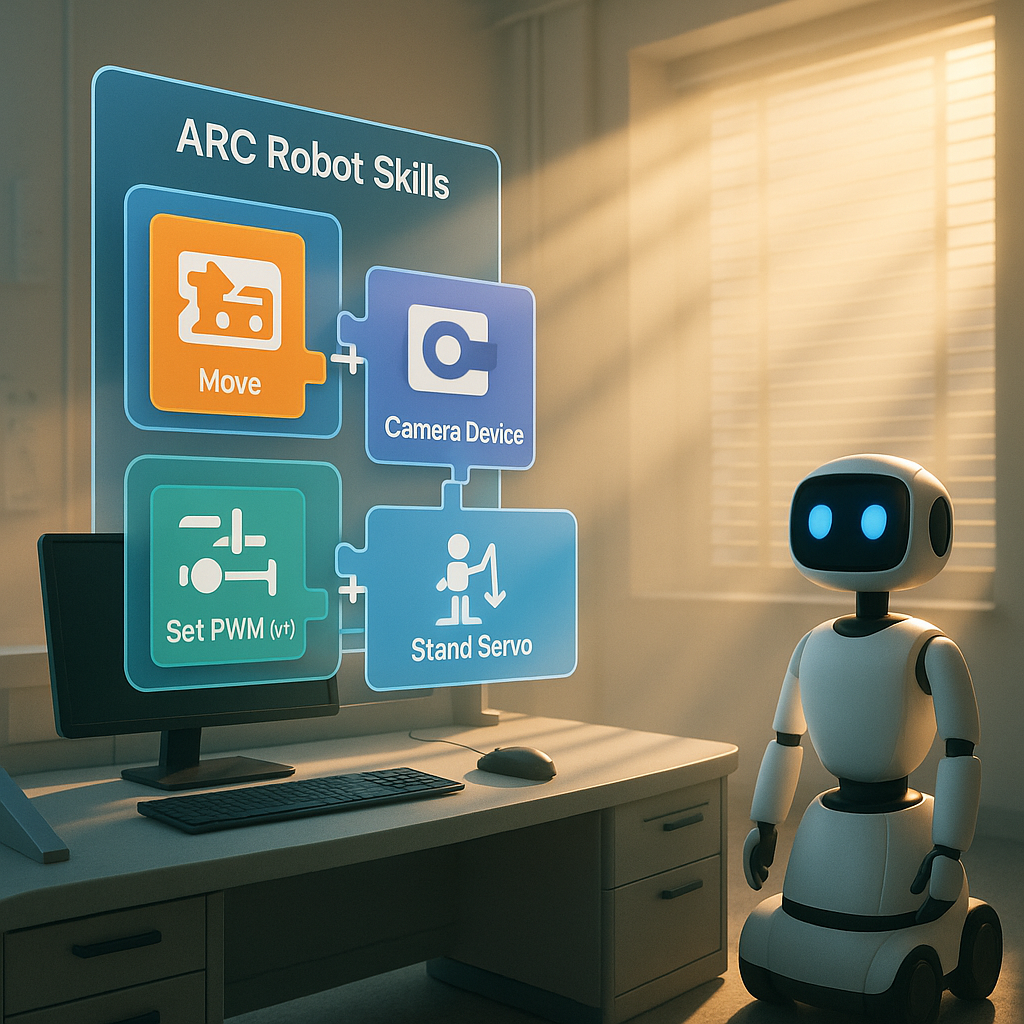
Here’s where the plumbing meets the philosophy. In Synthiam ARC, telepresence isn’t a dead end; it’s a hub. You can drive, then layer in skills—vision, voice, even local obstacle avoidance—and slide the agency dial as the job changes.
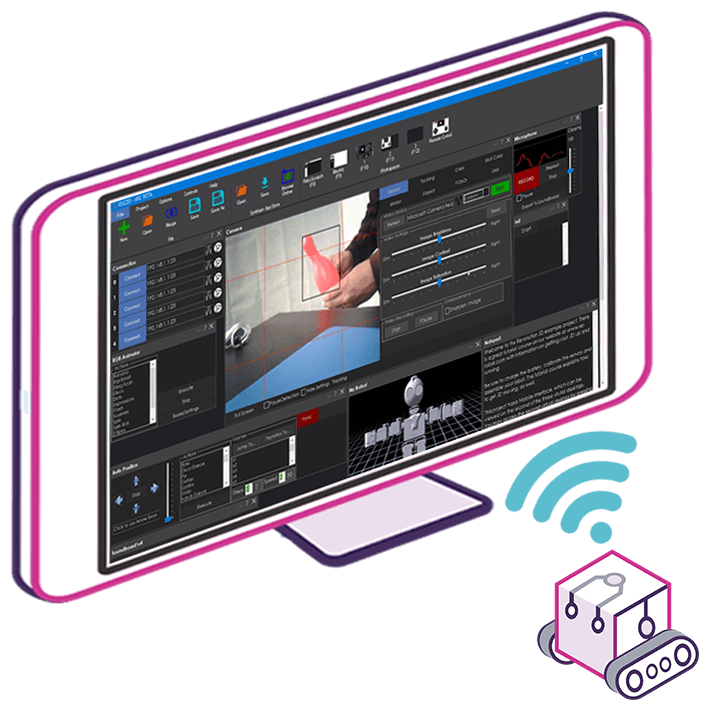
Take the Exosphere telepresence robot. With Windows on its UP Board, ARC talks to its motors and neck servo through the COM port using the Exosphere Robot Skill. Add a Movement Panel for simple driving, a Camera skill for object detection, or a joystick for rate control. If you like, mix in safety layers—ARC Robot Skills that watch distances and damp wild commands. It’s agency as LEGO: snap, test, keep what helps.
ARC doesn’t lock you to one brain. Use on-board compute for low latency, or call cloud AI for analysis between drives. It also plays nice with other hardware—EZB controllers included—so the same teleop ideas can travel into your next robot body with fewer rewires and less swearing at COM ports.
So is a robot still a robot when it is just you with extra wheels—or does it become something stranger: a place where your choices can move? What do you want that place to say about you?
- Telepresence = remote body, local guardrails.
- Latency (delay) and jitter (wobbly delay) shape feel.
- Shared control blends human intent with safety vectors.
- ARC mixes skills: drive, vision, voice, avoidance.
- Exosphere + ARC with ANY robot.
Key Thought
Before we grant machines decisions, we can lend them our decisions—then study the seams. Those seams are where trust lives.
Big Idea
Agency is not on/off. It’s a mix channel. With ARC’s Robot Skills—and tools like the Exosphere can move the fader from “me” to “we” without rewriting the song.