


Asked
 Resolved by Athena!
Howmany Voltage Regulator Is Needed
do i need a voltage regulator per servo ? or one voltage regulator per complete robot set up ?
Related Hardware (view all EZB hardware)
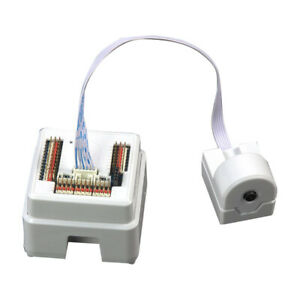
EZ-B V4
by EZ-Robot
EZ-B v4/2 robot controller: dual Cortex ARM, Wi-Fi, audio/video, 24 servo/digital ports, I2C/UART, camera and Synthiam ARC control for custom robots
Wi-Fi / USB
Servos
24
Camera
Audio
UART
3
I2C
ADC
8
Digital
24
dave&nink
i have no idea why i freaked out but i did .
so my sincere appolegies to bolt of you .
No worries my friend. We all have our freak out moments. You should see some of mine.... Well, maybe you shouldn't. LOL.
Have a good week!
@Nomad,
I don't know if these drawings will help you or confuse you. I know they confused me a bit until I studied them. I've built and rebuilt a couple full sized Lost in Space B9 robots. These are the electrical drawings of the way I powered and wired the last one I did. They are complex in that they assume that there will be two power sources available to the robot. One is a AC to DC converter powered by house current (like you are going to use in your Imoov) and the other is a set of batteries. This circuit allows the batteries to be recharged when needed. In this circuit are switches and relays to isolate one power source from the other and switch between them when needed.
So, if you can ignore the parts of these drawings that don't apply to your method you may be able to get an idea on how you need to plan to build your power distribution in your robot. For example; to make it simple to apply to your method, in the drawing (B9 Power Distribution_B Ross (4).pdf) on the left side you will see something labeled "External Power". This would be your AC to DC converter. Simply draw a straight line over to the fuse block (this could be a fuse block or a wiring block) and ignore the relays and everything else. Remember that you have three DC power outputs (+V) on your converter so you could have three lines coming from the External Power to three wiring blocks. You could even tie the three +V DC power outputs together and create a "bus" then go to a single wiring block. You would do the same for the three COMs. Personally. I'd keep everything separate and run to separate wiring blocks or fuse blocks.
I hope this helps somehow.
B9 Power Distribution_B Ross (4).pdf
B9Power (2).pdf
Also, I made a Youtube video of the finished wiring setup that I built from the above drawings I attached above. There's a lot of close up shots and commentary from me on how I wired and powered everything. Here's the Youtube link:
hi dave these drawings will be very confusing for me . i will ask one question at the time if thats oh whit you . . i can allreddy see i need a fuse box . i choosed this safety switchs . cutt of the female connect to powersupply or fuse box ? question . the fusebox comes between the on/off switchs and power supply ? how mutch is the fuse ?
If you're saying that you are going to use what you show as a connection between your wall socket and the power converter I think it would be a waist. If you got the converter DJ pointed you to then it's already fused internally. A picture of the PCB on Amazon shows a fuse mounted near the AC power in lugs:
If you bought some other converter then what DJ pointed to then check it's specs to see if it's already fused like this one. Most all but the cheapest and low quality converter are already fused. A fuse before the converter only protects the converter anyway. That won't really provide any protection for the devices on the DC output side. If you want to add fuses to the different circuits on the DC side you will need to add up the max Amp draw of all your devices and motors on each circuit and add 20% to find your fuse size. I'd use slow blow fuses. I hope this helps.
@dave
i have the the converter dj mention . so i can go from the on/off switsh to the converter ? my idea was to cutt of the female and connected straight on the converter . the converter doesn have a on/off switsch .
Yes, you don't need the high side of this converter fused. You can use a cord with a male plug on one end so you can plug into the wall when your ready. Y The other end would be connected to the AC lugs of the converter.
am i gonna use these .. or just the comm ?