The Robot With a Thousand Mouths: When Your House Becomes Its Body
What if your robot didn’t need its own speaker or mic? What if it could borrow the ones already scattered around your life—and sound like it lives in the walls?
With Synthiam ARCx and the Amazon Alexa robot skill, voice stops being a feature and becomes the robot’s wiring harness. The house turns into a giant I/O board, and your Echo devices are the robot’s roaming mouth and ears. Yes, your robot just became an extrovert who texts from your kitchen.
Voice as a Hardware Bus
ARCx lets a robot talk through Echos in any room and listen to what people ask Alexa. Voice becomes a network path, not just a sound.
Headless, Everywhere
ARCx runs on your robot’s own computer—Windows 10/11 or Ubuntu 24.04 LTS (x64/ARM64, incl. Raspberry Pi)—no monitor needed.
Borrowed Agency
Your robot can run Alexa routines, set volume, whisper, and trigger scripts from “Alexa, tell the robot to dance.” Whose voice is it anyway?
Your Robot Doesn’t Need a Mouth. It Has Yours.
Most robots lug around a speaker and microphone like a backpack full of bricks. With ARCx’s Amazon Alexa skill, the robot just borrows the gear you already have. Anything you can say to Alexa, the robot can say for you: “turn on the porch light,” “lock the front door,” “set the thermostat to 70.” The Echo answers back from the room you choose. It’s ventriloquism for machines.
The skill can also make an Echo speak, whisper, or announce, play music or a sound effect, kick off your Alexa routines, and set Do Not Disturb. And it can listen to what people say to Echo devices, so a phrase like “Alexa, tell the robot to dance” can start an ARCx script on the spot. Your robot becomes the polite third roommate who actually follows the chore chart.
There’s no extra hub. The skill signs in to your Amazon account itself, like the phone app does. You get the reach of your whole home without rewiring a single wall.
How It Actually Works: Voice Is a Bus
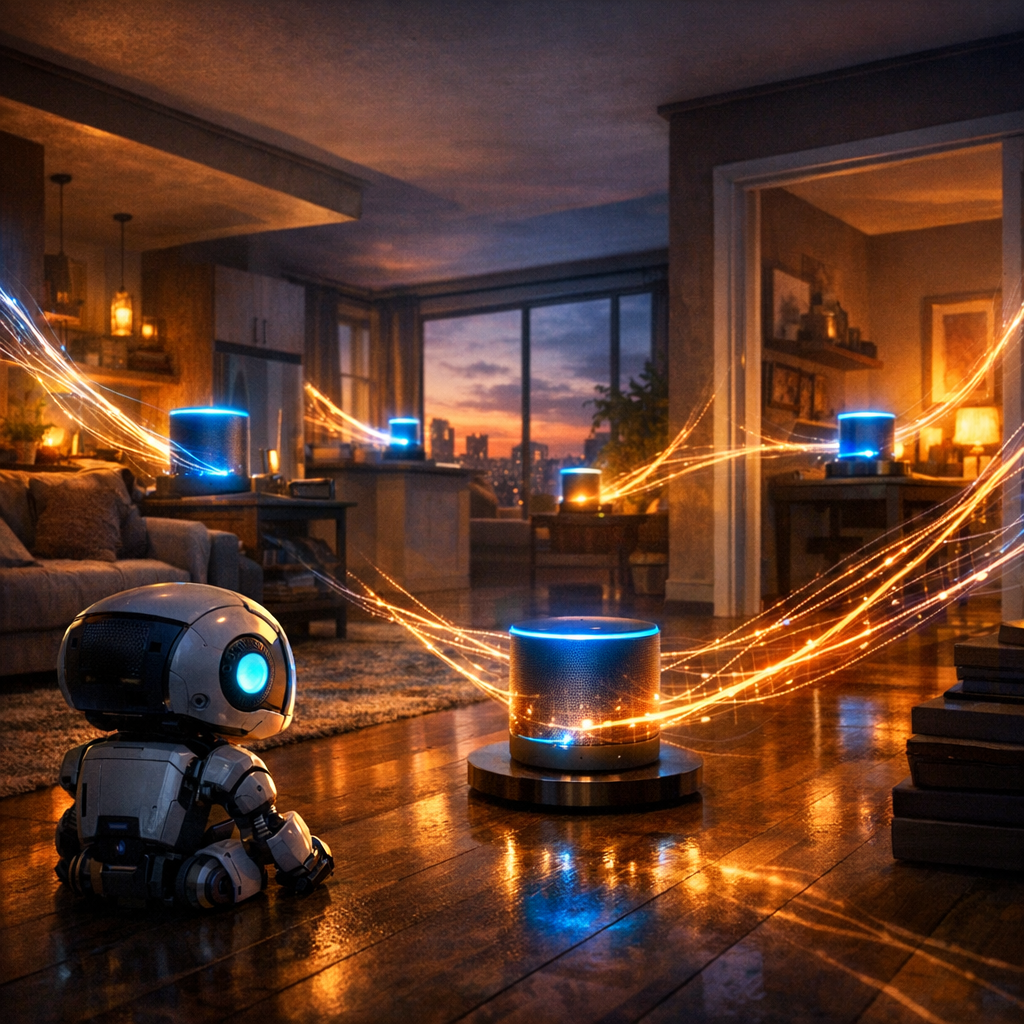
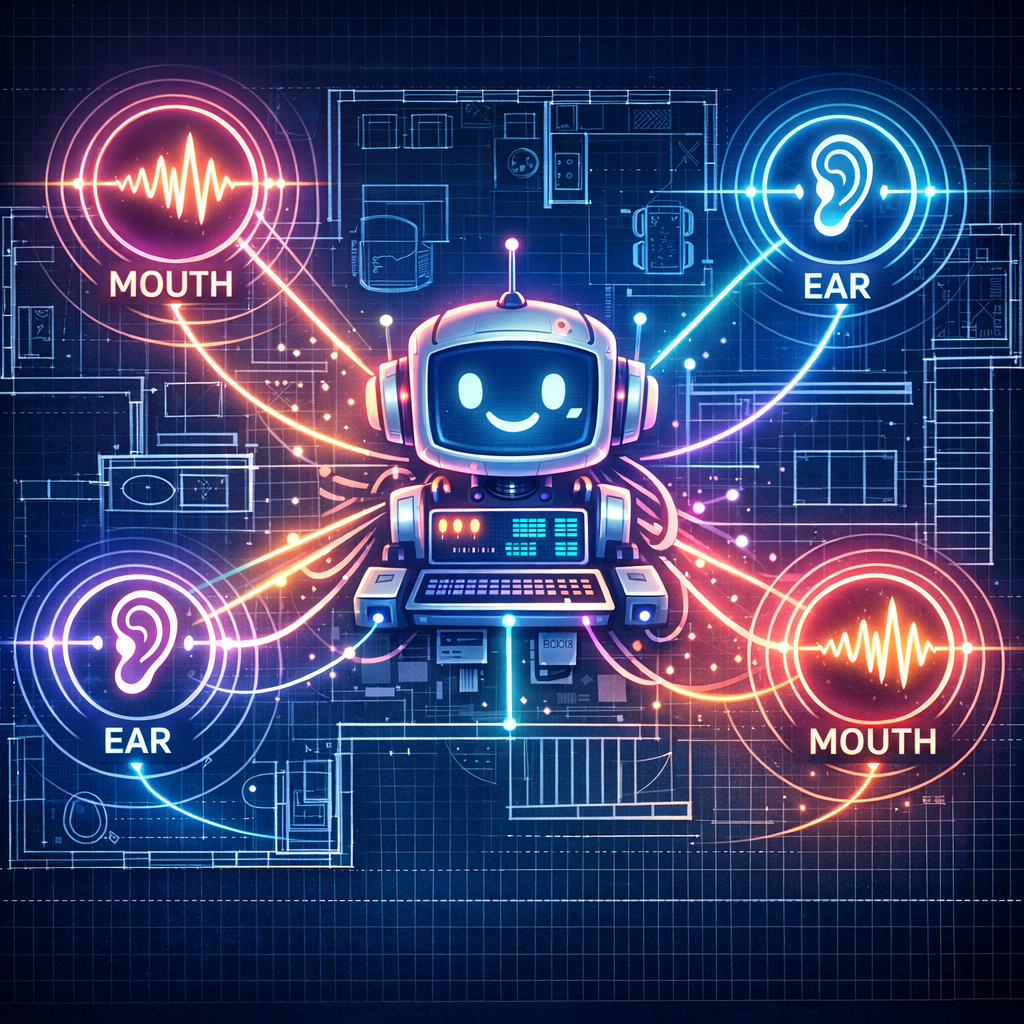
In electronics, a “bus” is a shared path that many parts use to talk. Think of a school hallway where everyone passes notes. This skill turns Alexa into that hallway. The Echo speakers are the robot’s remote mouth and ears spread around your home.
To connect, the skill signs in to your Amazon account. It uses two-step verification with an authenticator app that makes a 6‑digit code. That code is called TOTP (Time‑based One‑Time Password). It’s math based on a secret key and the current time—like a lock that changes keys every 30 seconds. If you paste the authenticator secret into the skill, it can make those codes itself and sign in again when Amazon ends a session. That’s great for unattended robots.
For listening, the skill reads the account’s Alexa voice history, if you keep recordings saved. That’s how it knows that someone said, “Alexa, tell the robot to dance.” It doesn’t guess; it reads the transcript. Your sign‑in data is kept on the robot’s computer and not inside the project file, so you don’t share tokens by accident when you share the project.
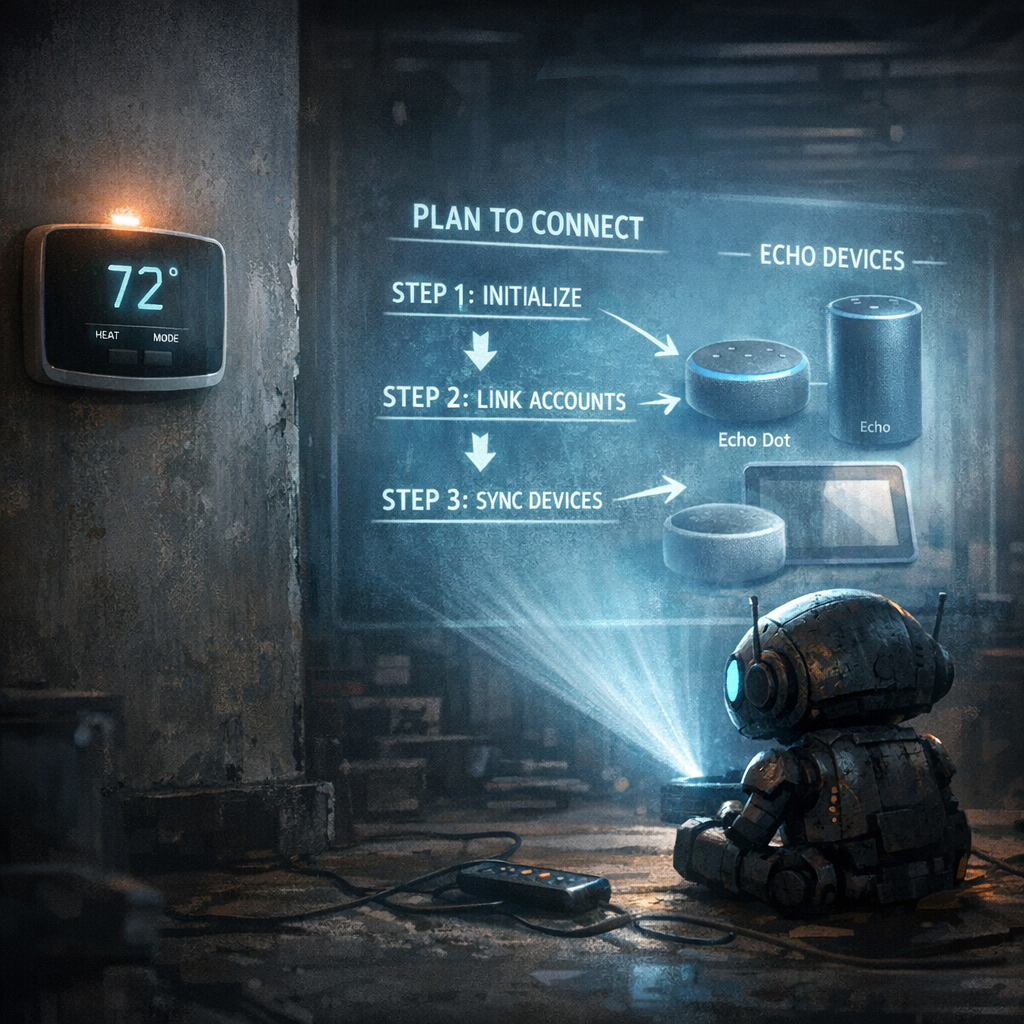
The Day Autonomy Made Plans With Your Thermostat
ARCx’s Autonomous AI skill can turn a large language model into the robot’s decision maker. It can see through the camera, listen, speak, drive, and use every skill’s control commands as tools. When you add Alexa as a skill, that becomes one more tool. “If the room is dark, announce I’m turning on the lights, then run the evening routine.” This is not a chain of hacks—it’s a menu of robot tools the AI can choose from.
ARCx supports many AI providers or a local model through Ollama or LM Studio. You can shape the robot’s personality, mood, memory, and goals, and set safety limits. So yes, it can plan to dim the lights for movie night, but no, it can’t blast music at 3 a.m. even if it thinks your plants enjoy EDM.
“Add a new skill, add a new tool. With Alexa, the robot’s voice reaches rooms its wheels never do.”
Programming Without Stopping the Party
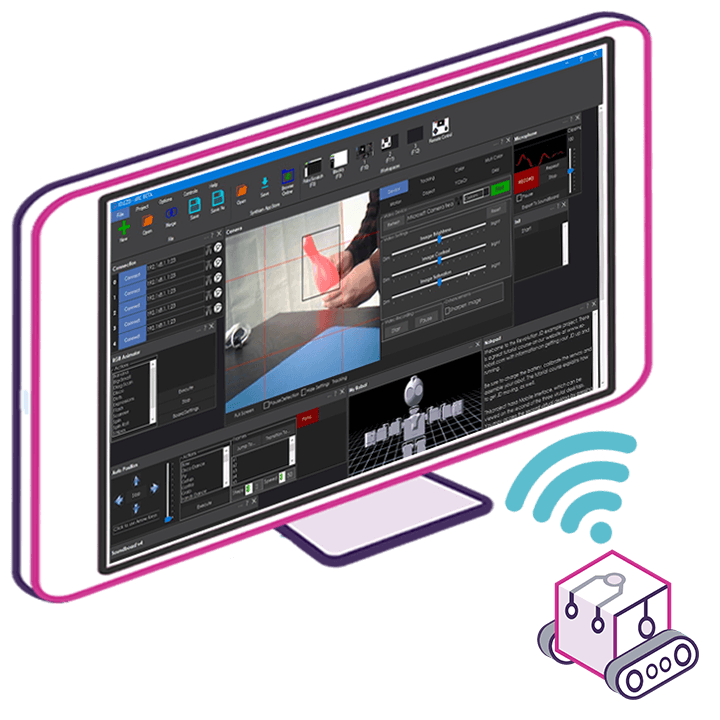
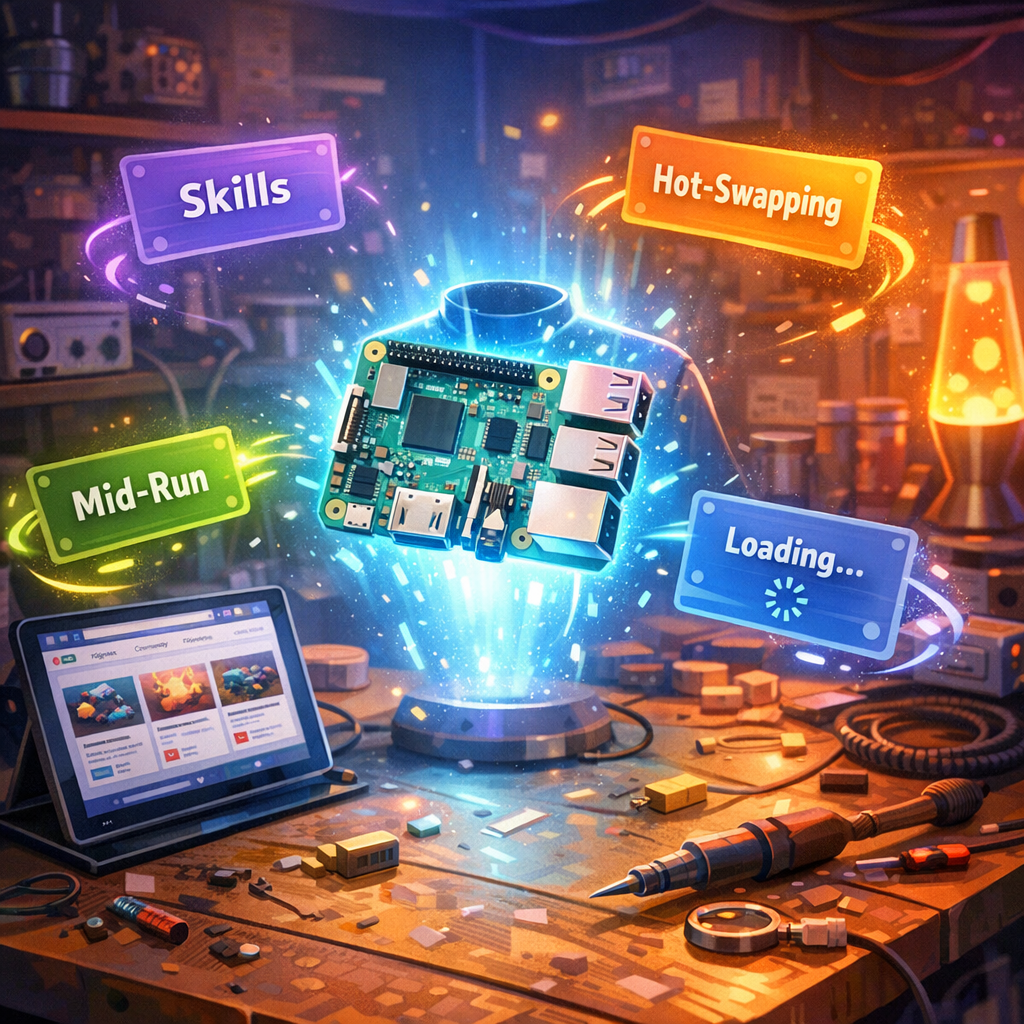
Synthiam ARCx runs on your robot’s own computer—Windows 10/11 or Ubuntu 24.04 LTS on x64 or ARM64, including Raspberry Pi—and it runs headless. You program it from a web browser on a laptop, tablet, or phone. You can even have several browsers open at once; close them and the robot keeps going. Add, configure, or remove skills without a restart. Each skill runs isolated, so a broken one doesn’t sink the whole ship.
Write logic in Blockly, JavaScript, or Python with one shared API for servos, movement, I2C/UART, audio, kinematics, and more. The editor has IntelliSense, a live console, and a big red panic button that stops scripts, movement, servos, and audio at once—because sometimes you need to be the grown‑up. Athena, the built‑in AI assistant, reads your project and helps write scripts or configure skills, showing every change for you to approve.
Who Owns the Voice?
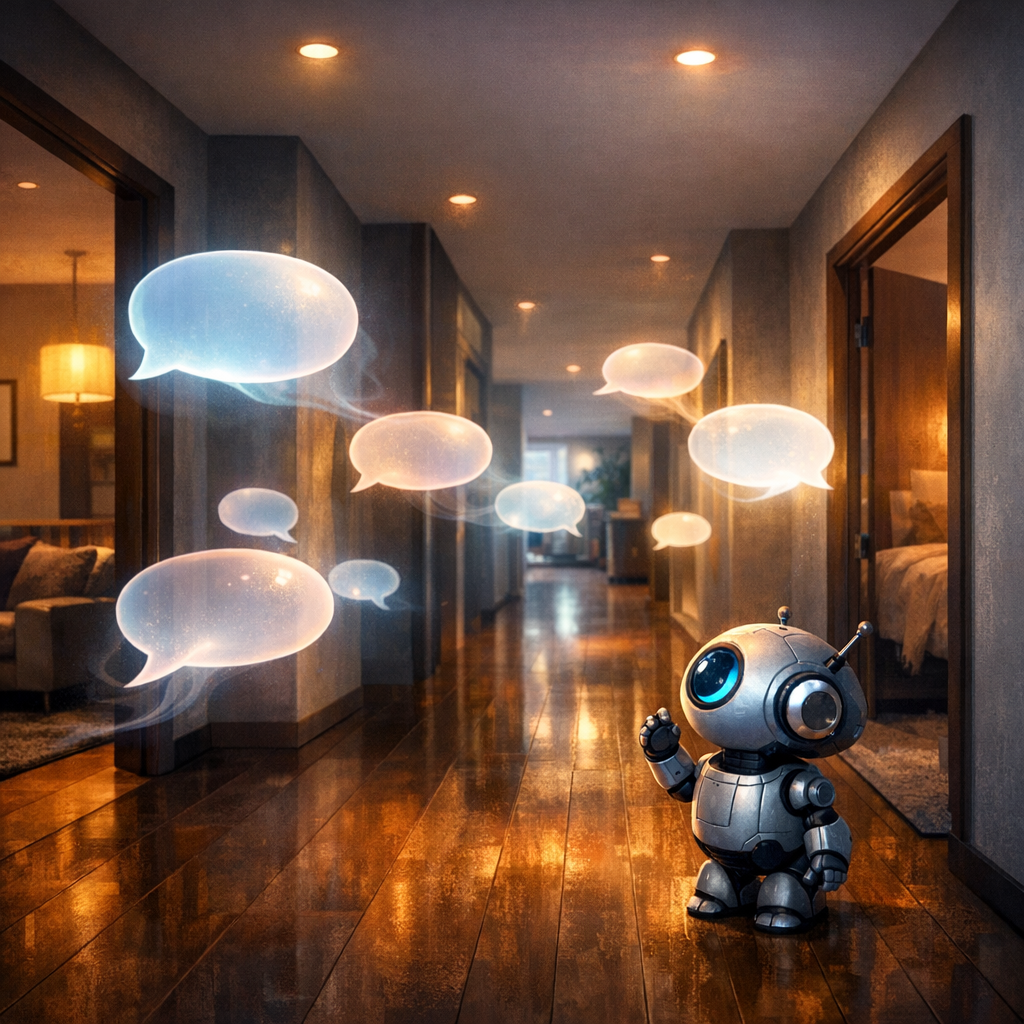
When a robot talks through an Echo, the words feel normal because the speaker is familiar. That lowers social friction. You didn’t invite a new gadget to shout orders; you asked the house for help, and your robot politely handled it. The fun twist: the robot can also hear you when you talk to Alexa, and start a script right then. It’s a duet. You sing the first line; the robot picks the harmony.
ARCx leans into this idea. It runs headless on real robot hardware, it treats voice and devices as tools, and with the Amazon Alexa skill, it makes the space you live in part of the robot. If that sounds like a magic trick, it is—one you can program today in Synthiam ARCx.
Is a robot more itself when it speaks in its own voice—or when it borrows all of ours?
- Runs on-robot: Windows 10/11 and Ubuntu 24.04 LTS (x64/ARM64 incl. Raspberry Pi)
- Program from any browser; multiple browsers stay live
- Blockly, JavaScript, or Python with one script API
- Athena AI assistant for scripts and setup (approve every change)
- Autonomous AI skill: LLM decision maker with safety limits
- Alexa skill: speak/whisper/announce, run routines, ask/answer, set volume/DND
- Listen via Alexa voice history; trigger “Alexa, tell the robot to …” to run scripts
- Headless operation; add/remove skills without restart
- Vision (OpenCV), offline/online speech, and ROS 2 Connector via WebSocket
Key Thought
Devices you already own can be your robot’s body. Echos are ears and mouths; lights and locks are fingers. ARCx turns the home into hardware.
Big Idea
Stop building a robot that drags every sensor with it. Build one that speaks the language of your house. Add a skill in ARCx; gain a superpower.
Explore Synthiam ARCx