We worship maps. But many robots don't need them. This is a love letter to one-way, memory-led navigation, where a single camera and a good memory beat a perfect floor plan.
I'll argue why robots that forget the map can be smarter, calmer, and more human-ish. Then I’ll show how ARC’s teach-and-repeat tools make this real right now—no lidar, no giant grid, no “here be snacks” scribbles.
Memory Beats Maps
Robots can travel by remembering what they saw, not by building a full map. It’s teach-and-repeat: show once, then go.
One-Way Truth
Forward-facing cameras make routes directional. That’s not a bug—it’s honest about how the robot sees.
Cosine, Keyframes, Go
A vision model turns pictures into numbers. Compare angles, match frames, steer to reduce error. Simple, sturdy, fast.
The Un‑Map Manifesto
Most of us think a robot needs a perfect map, like a secret blueprint of the world. But try this thought: maybe maps are for us, and memories are for robots. If you can show a robot the way once, and it can remember that sight, why make it learn the entire universe like it plans to sell real estate?
Teach-and-repeat navigation is humble and sharp. The robot sees, remembers, and later compares what it sees to what it stored. It’s like your GPS-hating uncle who still gets everywhere by “that weird tree, then the corner store.” Except the robot doesn’t argue about music.
Dropping maps frees the robot from heavy math and fragile assumptions. It stops asking, “Where on an invisible grid am I?” and starts asking, “Does this look like the next bit of my story?” That small shift turns navigation into recall, not cartography.
Quick Primer: Memory Math for Navigation
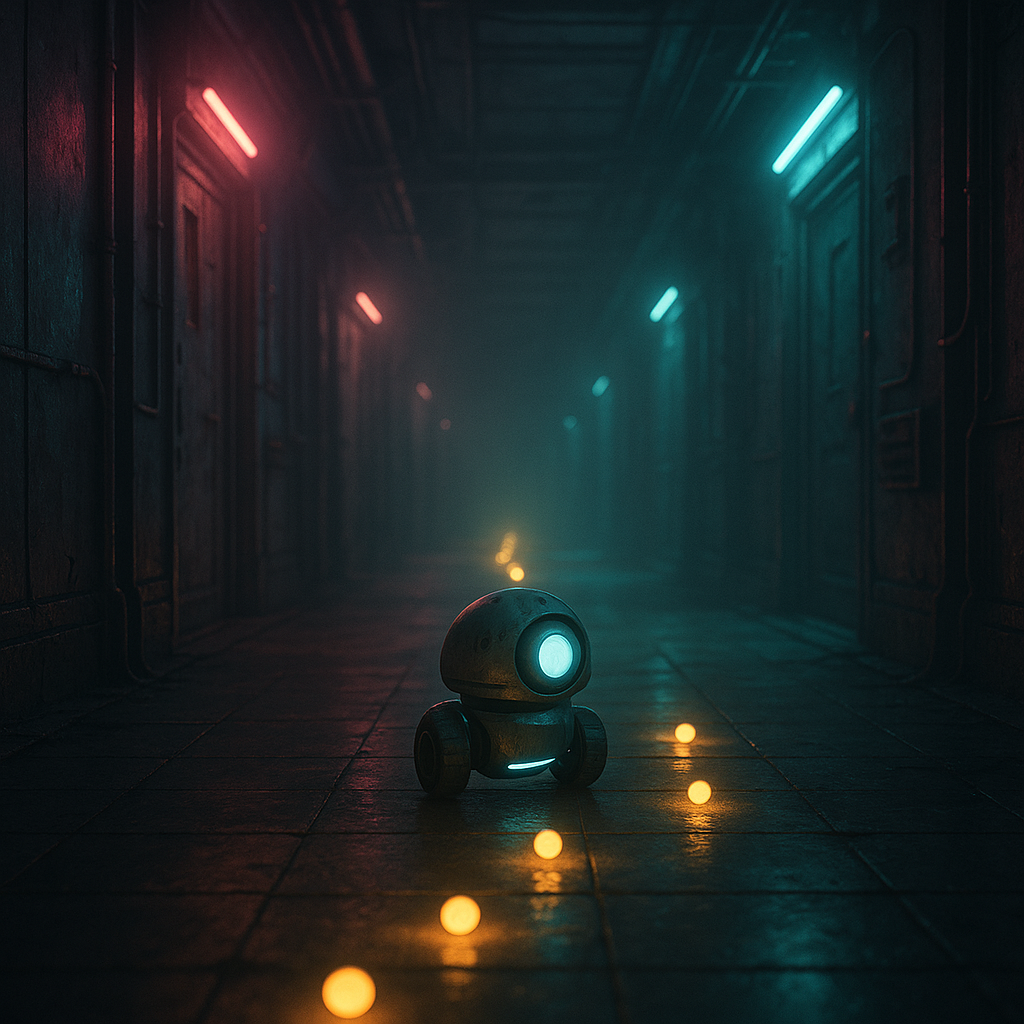
Here’s the trick in plain words. Each camera frame is turned into a “feature vector.” That’s a short list of numbers that acts like a fingerprint for what the camera sees. The model that makes this is called DINOv2. It was trained on huge image sets, so it knows how to notice shapes and textures. Think of it like: eyes + a very picky musical ear, but for pictures.
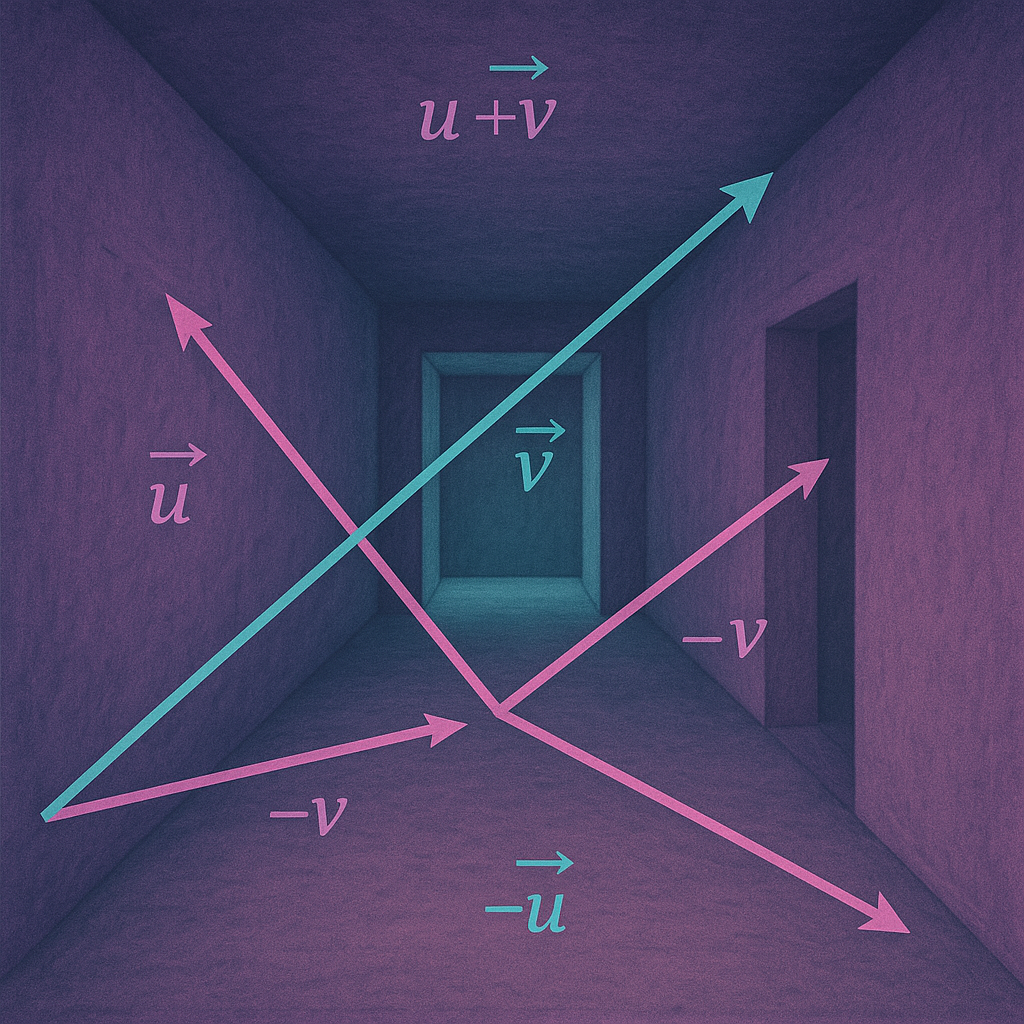
To compare two views, we use cosine similarity. Imagine each vector is an arrow. The cosine checks the angle between arrows. If they point the same way, the score is near 1. If they point differently, the score drops. The robot keeps “keyframes”—snapshots along the taught route. While driving, it looks at the next keyframe and asks, “Does my arrow match that arrow?” If yes, it moves on.
Steering uses heading error. The robot matches small points between the live view and the next keyframe. If those points shift sideways, the robot turns to cancel that shift. It’s like bowling with bumpers: nudge left, nudge right, stay centered. DINOv2 runs in ONNX Runtime, which can use a GPU so the CPU stays free for other tasks. Small brain? More like small, fast math. Same vibe.
The One‑Way Truth (and Why That’s Okay)
A forward-facing camera tells a one-way story. Going forward, the world looks new. Going back, everything is different. Doors, corners, even the same plants now face you like they changed their hair. So routes are directional. Record both ways. It’s not a flaw—it’s the physics of seeing.
We love symmetry, but robots live in perspective. Accepting one-way routes is like admitting coffee can’t be unpoured. It’s honest and safer. The robot won’t pretend it knows the way back; it will learn the way back. That kind of honesty beats a confident wrong turn every time.

When the World Changes Its Haircut
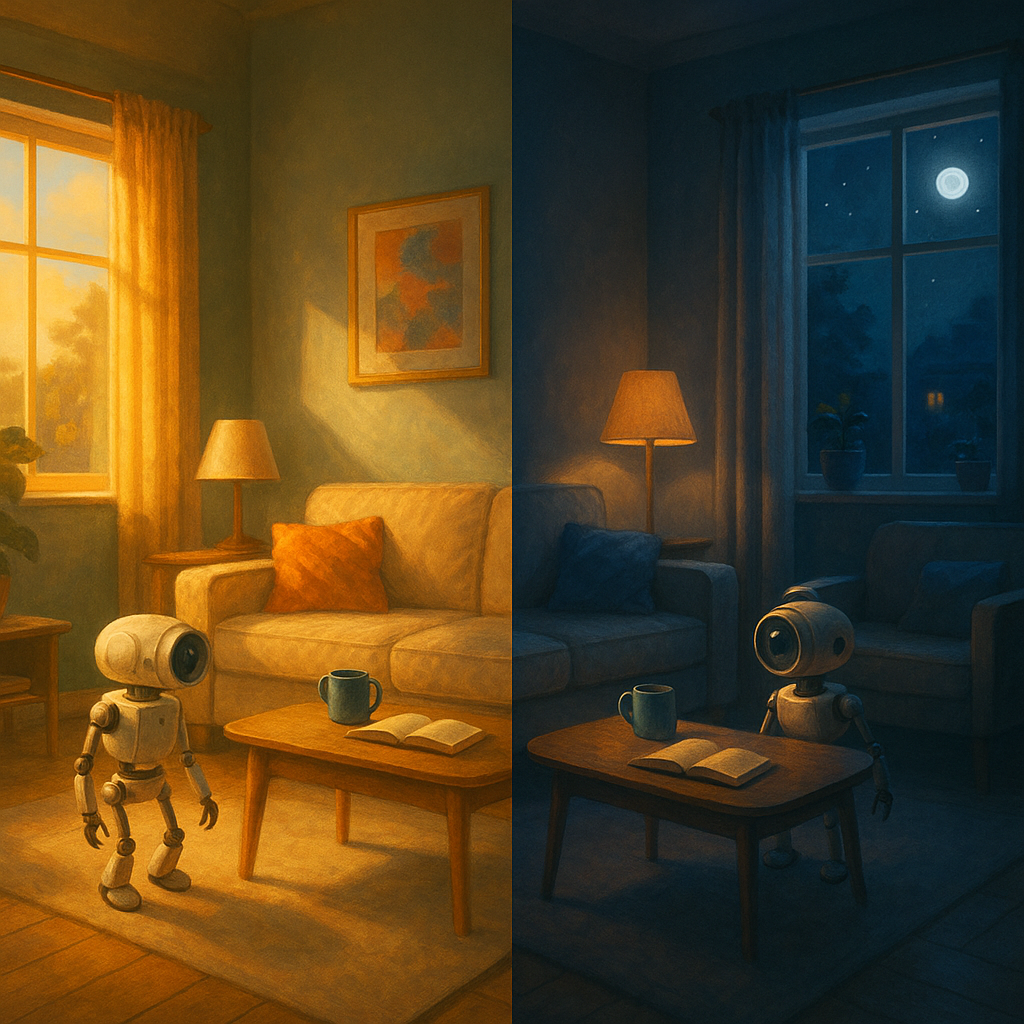
Real homes change. Lights switch. The sun moves. Someone parks a chair where chairs should not be. Memory navigation handles this by storing several views at each place. If the robot can arrive from any angle at the kitchen, it should remember the kitchen from those angles. Train at day and night if you need both.
The match score (0 to 1) tells you how sure the robot is about what it sees. Low score? Add more views, or slow down at tricky spots and keyframe them. Think of keyframes as bright lanterns through a foggy area. More lanterns, less guessing. And no, the robot is not judging your new curtains. It is too busy doing cosine.
Where Synthiam Fits: ARC, Skills, and Shared Memory
All of this is not a future wish. It’s in ARC today. The Visual Waypoint Navigation Robot Skill learns places and routes the way you drive it—then repeats them using DINOv2 features and cosine similarity. Steering runs through Movement Manager, so it works with your favorite movement panel and even EZB-based builds. Train where the robot will drive. Record the return path as its own route. Honest vision, honest travel.
ARC and its Robot Skills make high-tech feel friendly: ONNX Runtime under the hood, GPU acceleration when you want it, simple training windows when you don’t. The Synthiam community swaps tips, scripts, and route tricks daily. It’s like open mic night, but with robots that actually follow the beat. Map-less doesn’t mean mindless; it means focused. So here’s the real question for your next project.
If your robot could remember exactly what matters to get where it’s going, what would you choose to teach it first?
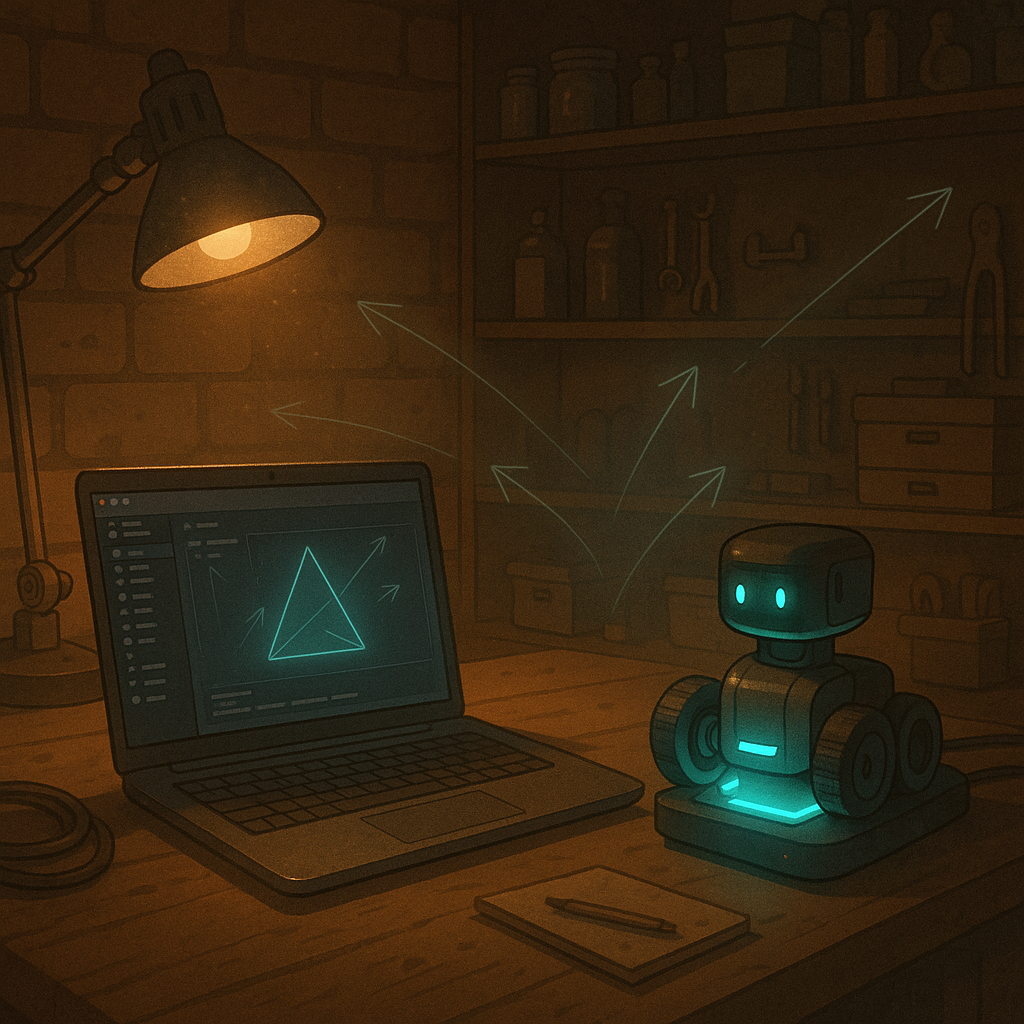
- Teach-and-repeat beats heavy mapping for many spaces.
- DINOv2 + cosine similarity = fast, robust matching.
- Routes are one-way; record both directions.
- Use keyframes at corners and doors; add views for angles.
- ARC runs it with ONNX and optional GPU acceleration.
Key Thought
Maps tell you where you are; memories tell you where to go.
Big Idea
Autonomy isn’t about knowing everything. It’s about knowing enough, right now, to choose the next frame with confidence. That’s memory-first robotics.