Robots Prefer Verbs: The Case for One-Line Intent Over Grand Plans
Maybe the future of robotics isn’t a perfect plan. Maybe it’s a fast whisper: turn, look, stop, breathe. One clean verb at a time.
Grand plans break. Verbs adapt. This is the story of tiny commands, big behavior, and why a console prompt might be the most honest way to talk to a machine.
Micro-intents over masterplans
One-line actions can stack into robust behavior, recovering faster than brittle, all-at-once scripts.
Console as conversation
A REPL turns robotics into a back-and-forth: say a verb, watch the world, say the next.
ARC in the loop
Synthiam’s EZ-Script Console lets you try, test, and chain one-liners into living behavior.
Meet the Verb-First Robot
We like big plans. Flowcharts. Diagrams that need a bigger monitor and a stronger coffee. But robots live in the mess of now. Floors are slippery. Cats are surprising. Batteries are dramatic. A long plan tries to predict all of it. A single verb just acts, learns, and asks for the next verb.
Think of it like hiking with a friend. You don’t hand them a 40-step route. You say, “left,” “duck,” “pause.” Tiny moves, constantly updated. Robots love that. One line to turn a servo. One line to check a sensor. One line to stop. Stack enough of those, and it looks a lot like intelligence. Or at least like someone who remembered to duck this time.

Quick Primer: What a REPL Really Does
A console is a REPL: Read, Evaluate, Print, Loop. It reads your line, runs it, shows the result, and goes again. Like tossing a ball to a robot and getting it back right away. Fast feedback builds skill.
Inside, your line gets chopped into tokens (little words the computer understands), then interpreted. No big compile step. Type Servo(D0, 90) and the engine sets your pin D0 to 90 degrees. Under the hood, the servo doesn’t speak degrees. It listens for a pulse of electricity (PWM) about every 20 ms. A 1 ms pulse might mean 0°, 1.5 ms is ~90°, 2 ms is ~180°. The REPL turns your clean “90” into those tiny pulses. Magic, but with math.
You can also read the world in one line: Print(GetADC(A0)) could show a light sensor value. One more line can respond: Servo(D1, 30) if it’s too bright. That’s a conversation: your verb, the world’s reply, your next verb.
Safety, Ethics, and the One-Line Brake Pedal
Short commands are safer because they make space for new information. Say “forward 10 cm,” then listen again. If the camera spots a pet (bounding boxes are those rectangles tools like YOLO draw around objects), the next line can be “stop.” No arguing. No five-step plan to unspool.
Design trick: keep a standing verb that can always interrupt. A watchdog timer, a bumper switch, or an ultrasonic check runs between lines like a heartbeat. If it warns, the next verb is “freeze.” Your robot becomes politely cautious. Like a self-driving grandma, but with cooler LEDs.

From Language to Motion: Verbs Across the Stack
Large language models break ideas into tokens (tiny word chunks) and guess the next token. Set a temperature to control how wild those guesses get. Low temperature means predictable. High means spicy poetry. Now imagine mapping those text verbs to robot verbs. “Look left.” “Wave.” “Back up.” Each line becomes a physical token.
This makes autonomy feel like a chain of micro-intents. The model suggests a move, the sensors answer, the next move adjusts. It’s improvisation with guardrails. Jazz, but the kind with bumpers and a big red stop button.

How Synthiam ARC Leans Into Verbs
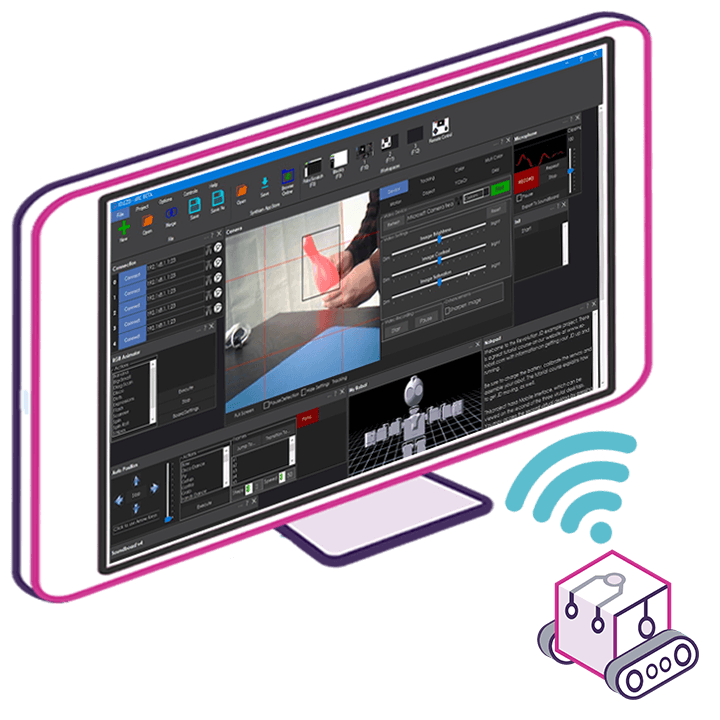
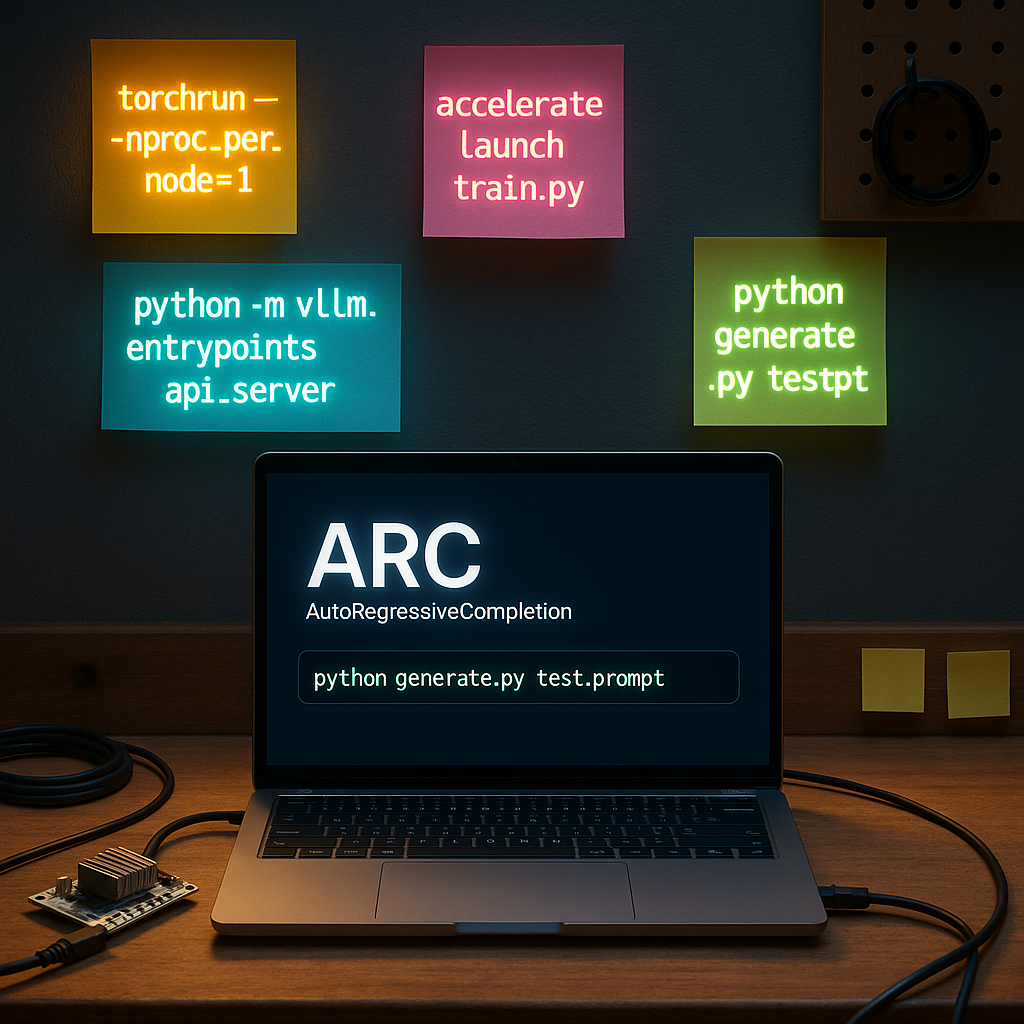
Synthiam ARC turns this idea into practice. The EZ-Script Console is your robot REPL. Type one line. See it act. Up-arrow through history. Try again. It’s perfect for learning and for real-time testing: nudge a servo, speak a phrase, check a sensor. Then chain the good lines into a full script when you’re ready.
ARC’s Robot Skills library gives you verbs for vision, speech, movement, and more. EZB hardware bridges those verbs to the real world—pulses, motors, sensors. And the Synthiam community is a hive of shared one-liners and clever stacks. We’re not asking you to write a novel. We’re handing you the best verbs and a stage.
Start small: one clean command. Watch. Adjust. That’s not a shortcut. That’s how behavior grows up.
So, Are We Teaching or Conversing?
When you guide a robot one line at a time, the boundary blurs. It feels less like programming and more like coaching. You say “look,” and it looks. You say “stop,” and it stops. Together you shape a rhythm: read, act, learn, repeat. The fancy word is “control loop.” The friendly word is “conversation.”
Maybe that’s the big surprise. Intelligence might sound like small talk—the kind that moves a servo, not a soul. And yet, one verb at a time, it does move something bigger: trust.
Question for you: If your robot could only understand one line at a time, what would you teach it to say—or do—first?
- Verbs (one-line commands) adapt faster than big plans.
- REPL = Read, Evaluate, Print, Loop: instant feedback.
- ARC’s EZ-Script Console makes verb-first robotics easy.
- Safety lives between lines: always leave room to stop.
Key Thought
A robot that listens often can learn quickly. Short commands make space for new truth every second.
Big Idea
Don’t ship a novel. Ship a verb. Then listen. Then ship the next verb. ARC gives you the stage and the spotlight.