Forward Is a Feeling: When Robots Rewrite the Compass
We say “go forward,” but many robots don’t even have a forward. They have options—six of them, sometimes more. It’s not rebellion. It’s geometry.
Our brains like arrows. Robots prefer math. Between those two is a translator layer that turns human verbs into machine motion without making either side cry. Today we visit that layer, hand it coffee, and ask how it works.
Idea 1
“Forward” is a human shortcut. Holonomic robots slide, roll, and rise, so direction becomes a negotiation between intent and physics.
Idea 2
A translator layer maps verbs to motors. In ARC, movement scripts convert speed values into PWM signals and wheel/prop speeds.
Idea 3
Constraints matter. Good robots “refuse” impossible moves. That’s not failure; it’s wisdom baked into control logic.
The Day “Forward” Broke
Tell a drone to go forward and it asks, “Pitch forward, or slide north?” Tell a mecanum bot and it whispers, “I can moonwalk sideways, is that okay?” When a machine can move in more than one axis at once, our single arrow becomes a choose-your-own-adventure.
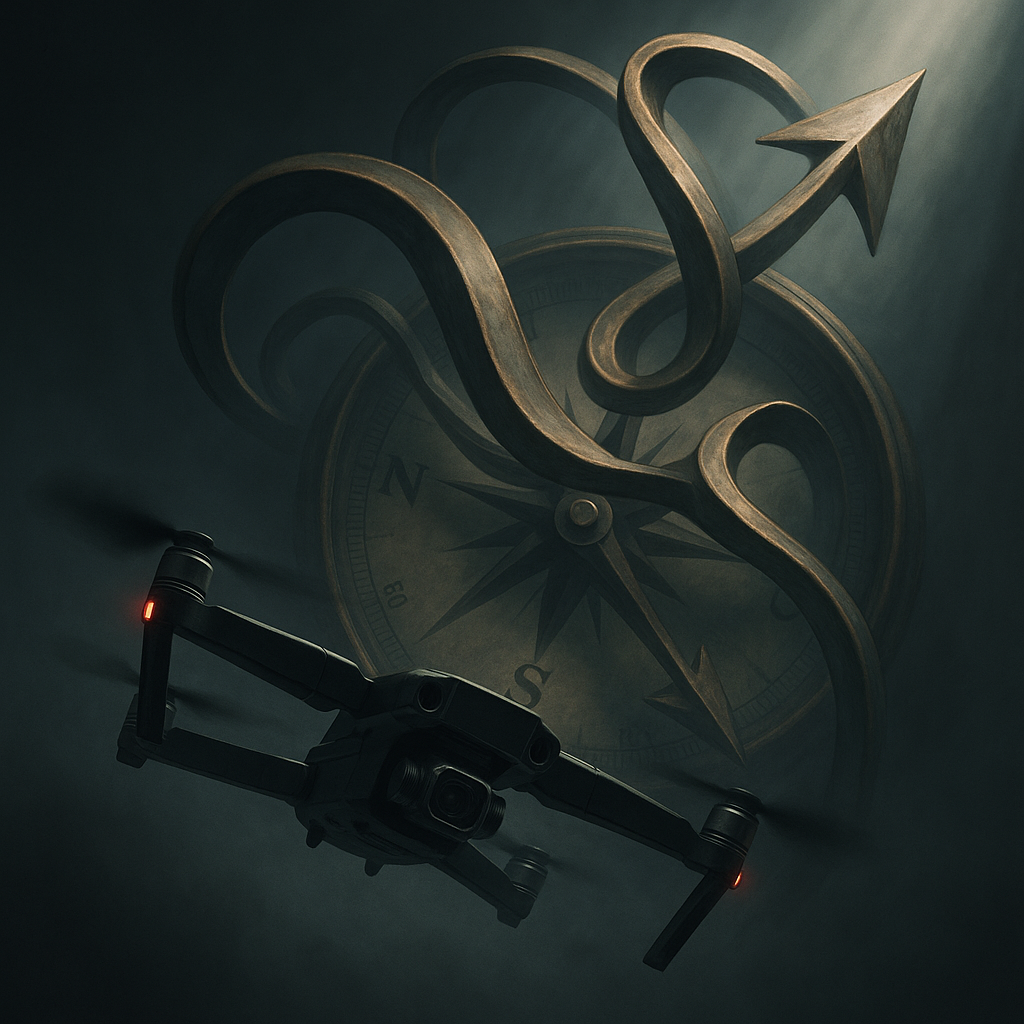
Robots with wheels that roll in any direction are called holonomic. Drones act holonomic in the air because they can change position and orientation freely. Your ankles do not. That’s why a robot’s “forward” is often just “the way we both agree to pretend is forward today.”
Quick Primer: Degrees of Freedom, Holonomy, and PWM
Degrees of freedom (DoF) are the independent ways something can move. In 3D space you have six: up/down, left/right, forward/back, plus three rotations called roll, pitch, and yaw. A holonomic robot can control all needed DoF at once. A car isn’t holonomic because it can’t slide sideways without turning first. A mecanum-wheeled robot can slide, spin, and move diagonally like it’s late for three meetings.
How do speeds become motion? Many controllers use PWM—pulse width modulation. That’s a fancy term for turning power on and off very fast to imitate “some” power. In ARC, a movement panel often gives you a speed from 0–255. You map that to PWM 0–100% so motors get the right push. Think of it like tapping a light switch super quickly to “dim” a bulb. Yes, your robot is basically doing tiny techno finger-drumming.
The Translator Layer: From Verbs to Motors
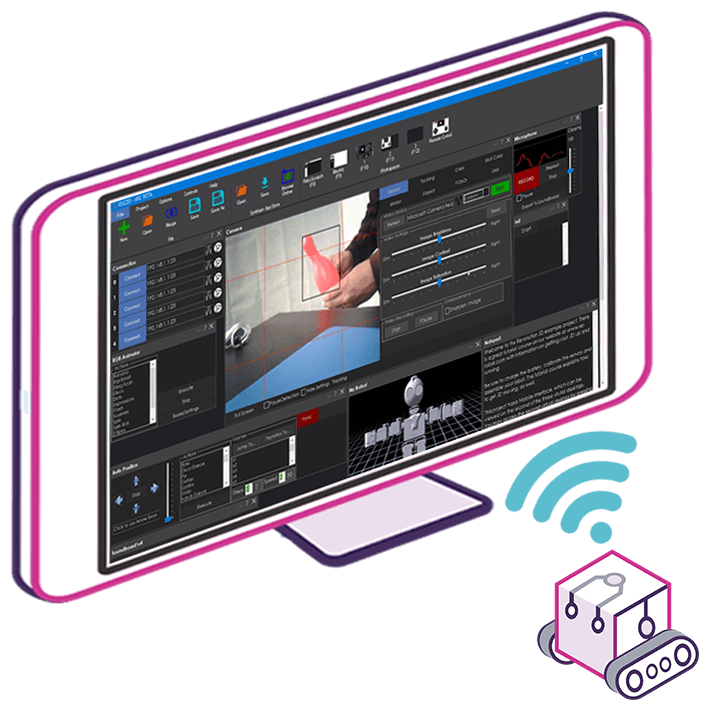
Humans say verbs. Motors hear voltages. The middle bit does the diplomacy. In Synthiam ARC, that translator is often a Movement Panel, which turns high-level directions into the exact motor and servo commands your hardware expects.
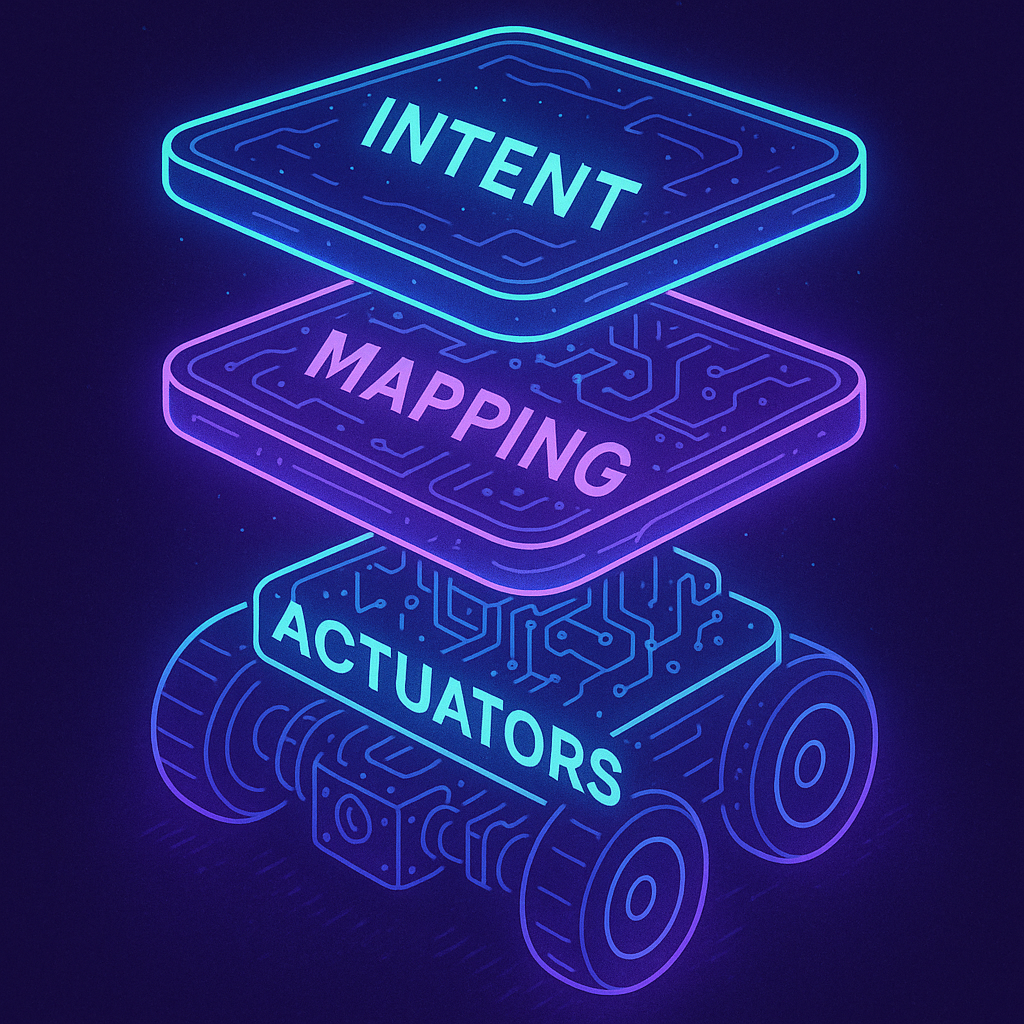
The Custom Movement Panel v2 adds scripts for directions like roll left, roll right, up, and down—perfect for drones, gimbals, and mecanum rigs. Inside those scripts you can read left/right speed values, then map 0–255 into PWM 0–100 for ESCs or motor drivers. It’s a clean verb-to-voltage pipeline. Your intent goes in; wheel speeds, prop thrust, and servo angles come out.
Good motion control speaks both languages: our messy “go there” and the motor’s precise “spin now.”
When Robots “Refuse,” They’re Being Smart
Ask for “up and down at the same time,” and a quad will quietly ignore you. That’s not sulking; that’s constraint handling. Control code checks limits like max current, tilt angles, and safe RPM before obeying. A PID loop—proportional, integral, derivative—may also slow things to prevent overshoot, like tapping the brakes before a curve.
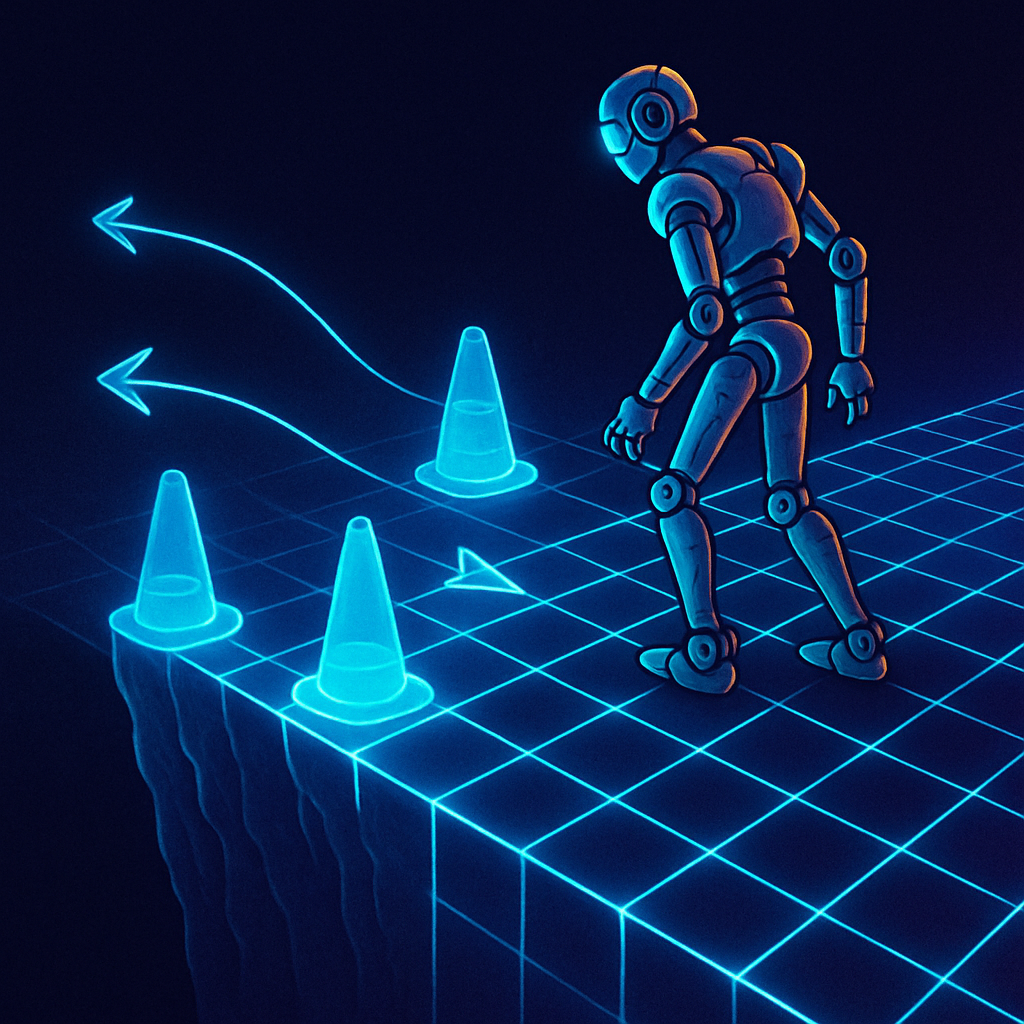
Good scripts honor deadbands (tiny zones where tiny commands do nothing), saturations (the “that’s all we got” limit), and safety envelopes (no-fly or no-drive zones). A robot that declines a command you didn’t mean to send is basically a friend taking your keys after your third espresso. Annoying, yes. Also lifesaving.
How Synthiam Embraces the 6D World
Synthiam ARC treats “forward” as a story we can rewrite together. Robot Skills handle sensing and actuation, while Movement Panels unify your verbs across wheels, props, and servos. With the Custom Movement Panel v2, you compose behaviors for forward, reverse, sideways, roll, and vertical moves, then map them to whatever hardware you’ve got—from ESCs through EZB hardware to smart servos.
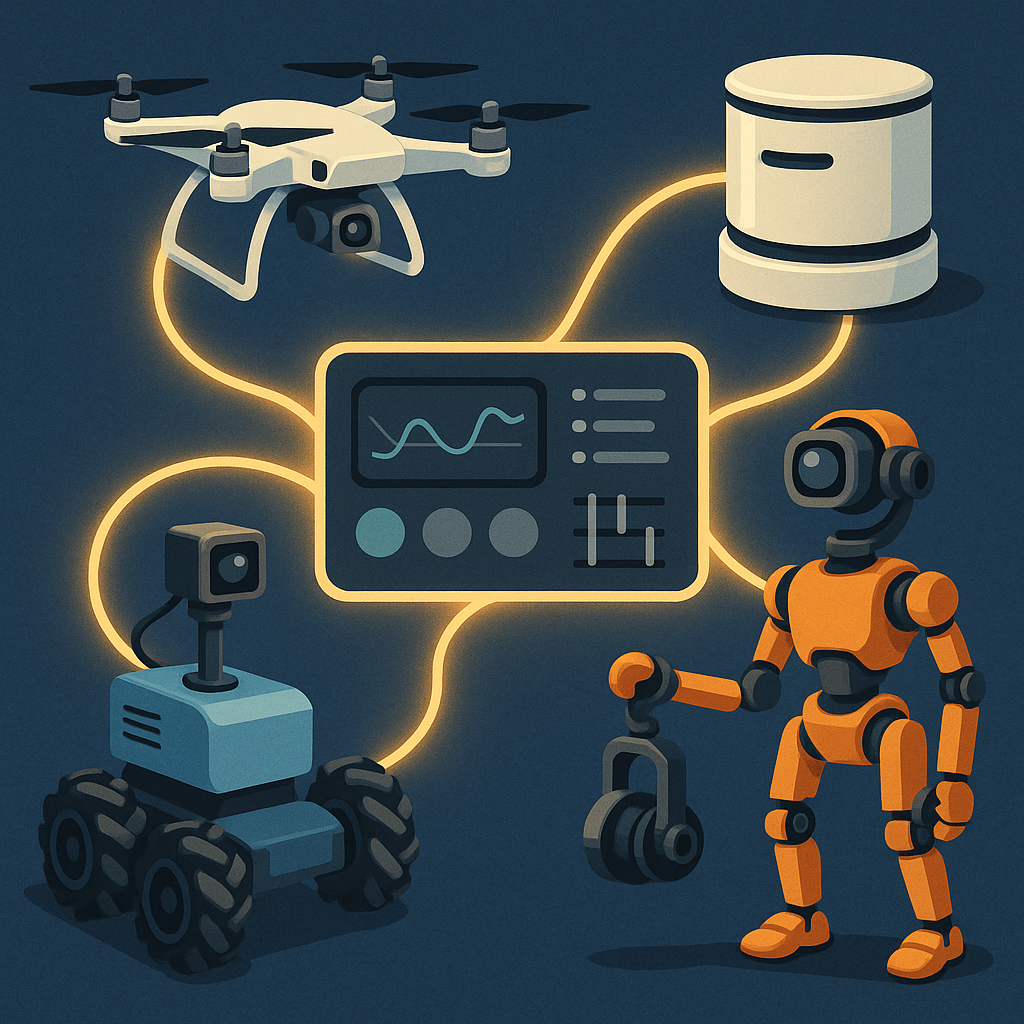
The community shares examples, tricks, and “don’t do what I did” tales so you can stand on fewer rakes. ARC is the place where intent meets implementation without a messy breakup. Teach your bot your meaning of forward—or let it teach you a better one.
Nerd Corner: Sideways Math, Simple Words
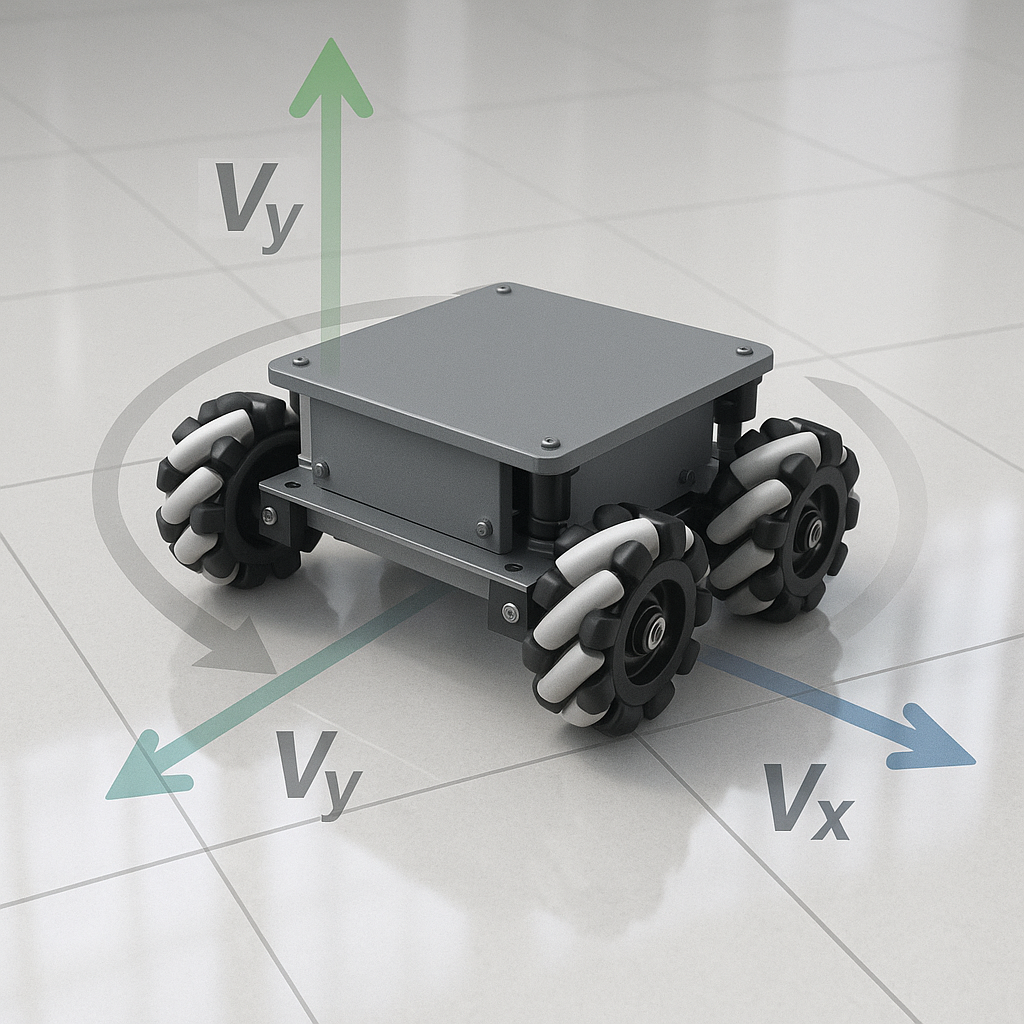
Mecanum drive turns your desired motion (vx sideways, vy forward, and omega spin) into four wheel speeds. Each wheel contributes differently because its rollers sit at 45 degrees. Add them up right and the bot slides like butter in a hot pan. Get the signs wrong and it becomes a confused shopping cart. Still cute, less useful.
For drones, “go forward” means pitch a bit, then feed more thrust so altitude holds. Roll and yaw adjust to keep heading. That’s why Custom Movement Panel v2’s extra directions are gold: you can split intent into pitch, roll, yaw, and thrust scripts, then mix them depending on the command. It’s like a band: drums (thrust) keep time, guitar (roll/pitch) adds direction, and yaw is the singer turning to the crowd. Try not to let the bassist (battery) die mid-song.
So, when your robot asks what you mean by “forward,” how will you answer?
- “Forward” is context, not a fact.
- Holonomic motion unlocks new verbs.
- ARC maps intent to PWM and servos.
- Constraints make robots safer, not stubborn.
- Custom scripts = custom physics superpowers.
Key Thought
Direction is a user interface. Build it well, and your robot feels intuitive—even when it can dance in six dimensions.
Big Idea
Use ARC’s Movement Panels to separate “what” from “how.” Let users speak in goals; let scripts speak in PWM and kinematics. The Custom Movement Panel v2 is your bilingual dictionary.