


Affordable Modular ARC Robotics Kit
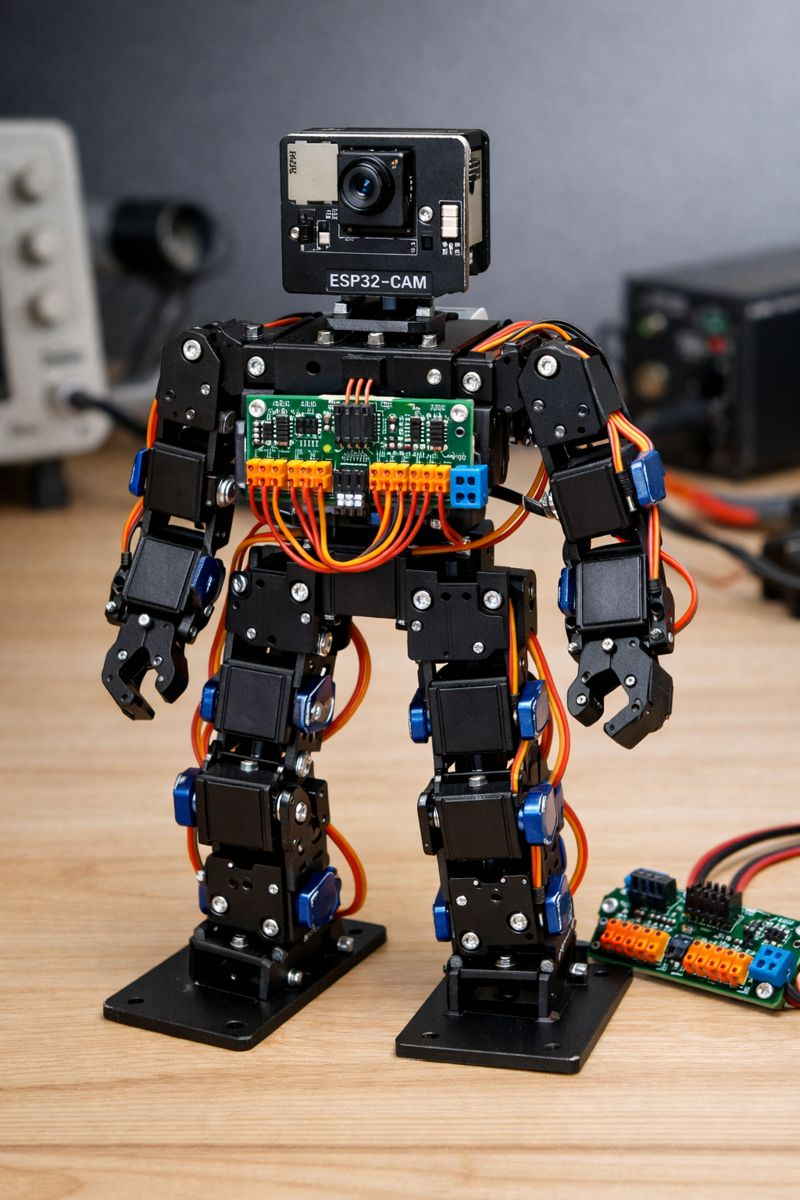
Is it time for a new ARC compatible Robotics Kit? Most of us came across ARC back in the days of EZ-Robot. These are great robotic kits for schools and summer camps to teach kids robotics. The problem is the cost and availability. ARC now works with ESP32-CAM and PCA9685 controllers. Together these provide a lot of the functions of an EZ-B for around $5. So now using low cost servos like MG90S or other 9g servos you can build a bipod robot that works with ARC for under $50. Using a modular design the pieces could also be used to build other robots like Hexapods, Robotic Dogs, Rovers etc. ARC has all the functions built in to support a new robotics kit all we need to do is design the connectable servo casings, servo horns. body and other components for 3D printing. We could then provide the free 3D printable models and even make kits available for sale. ARC makes it easy to program, build and configure the robot and this would make robotics a low cost barrier of entry for students and still teach all the skills needed to learn basic robotics with all the features that now come with AI integration.
There are a bunch of opensource ESP / PCA based robots available that you can make work with ARC today, but I think a modular design that allows you to build a range of different robots that have pre programmed projects, scripts and build instructions available for ARC would be the best approach.
Anyone interested in working on something like this ?
Thanks for jumping in @Jeremie and I fully understand the conflict of interest. If this had to go through ez-robot we may come out the other side with a board that costs the same as the current EZB as there is a ton of overhead when you make a commercial product.
My goal was to come up with a way to make robotics cheap, easy and accessible for kids. The current EZ-Robot model is expensive. For a class of 15 kids you need 15 windows laptops and the classroom robot kits so you are looking at around $10,000+ USD for the Robot kit and if you don’t have 15 windows laptops another $7,000 to $10,000 . Only high end private Schools have the funds to make this type of investment. In this interview with Dennis last month it sounds like he is aware of it. https://youtu.be/PKy8stFpRYY?si=bwt4kFWPWTCV8dIr
I got excited when XARC was being discussed as schools all have Crome books or iPads these days. So that removed the windows PC hurdle and the other part is the high cost for the robots.
Honestly if I was going to do this I would take a step back and redesign the entire solution end to end
For the Robots, low cost esp cam based robots, open hardware (PCB and BOM), open 3D print diagrams, off the shelf servos. Simple 4-6 servo robot cost approx $100 more complex models (humanoids, Hexapods, dogs etc) can be added where budgets allow.
For the software cloud based, the robot firmware auto connects to cloud software over wifi and that’s it. Kids can use the kit in school, summer camp, after school programs etc and if they want to take it home they can pay a marked up price of say $150 for the base robot or more for the added components and buy a subscription to the cloud software to continue their education at home. Because everything is open they could then build and program their own robot end to end.
Costs for schools is $1000 for the robot kits. The robots the schools sell to the kids who want to take them home fund the program to keep it in place.
ARCx will never run on a Chromebook or tablet but it can run in a web browser. If the limitation is a phone type device with only a web-browser, there are other low cost products with the sacrifice of features.
Another similar arcx-style approach we have achieved with ARC is remote access service. For schools with Chromebook’s, the remote access service is used. Read more: https://synthiam.com/Support/ARC-Overview/Options-Menu/remote-access-sharing
Windows and ARC are installed either on multiple vms of a laptop, or raspberry pi, or other affordable sbc.
the chromebooks connect to that instance of arc. It’s like Remote Desktop but uses mic and speaker via remote host. It’s a full fledged Remote Desktop service for arc. That way low end sbc’s can be used.
however, after all that, we do find windows laptops on Amazon or bestbuy for less than an sbc or same cost as a Chromebook. So that’s been a strange twist over the past few years.
the trouble is you gotta decide what value youre adding to education and measure the cost - and that’s been super challenging.
You either have a super low end Chinese-like product with no safety and low educational value. And teachers can’t teach it because it’s too confusing for them. Too many wires and setup time. Kids only have an hour or less for the robot class so they can’t spend it all building one leg.
then you have all the sphero type robots for the classroom which have been proven to be useless and used more as toys. The cost is actually quite high for the education versions and then you realize there’s no educational value because there’s no real features. Even for teaching programming you don’t have enough sensory to properly implement IF and loop conditions, so students learn nothing.
lastly you have Lego - which is the most expensive and we know what their limitations are. Primarily because it takes so friggin long to build something, the programming never happens. And even if it does happen, it’s because one of the nerd kids stayed after school to play with it. Lego and most other products like this exclude 99.9% of the class - which is why I’m against FIRST.
so trying to find our position - we bet on cost of PCs lowering over time. Choose a dominate operating system thats easy to use, and a platform that scales into industry.
the one thing we didn’t have a plan for was Microsoft deprecating every single computer built before 2018 by releasing windows 11.
so now, even all those low cost and older-but-capable computers can’t be used in classroom due to windows 10 not getting security updates.
on that topic, I’m surprised there isn’t more news and talk of Microsoft’s stupid action with windows 11. Think about it you can’t even give away an old pc or laptop. You can’t even donate it. You can’t even give it to a third world country. You can’t even give it to an under privileged school.
your only option is to throw it out.
*Edit: Note that I was compiling a response before DJ responded, and didn't see his post until I posted.
@Nink This isn't necessarily true. If you aren't familiar with my background, I started in extreme condition down-hole electronics repair in the oil patch, then moved to a DIY kit electronics company in the maker movement called Solarbotics. One measure Solarbotics employed to keep costs affordable was to sell parts down to the component level, even PCBs, and they'd also sell bundles that users would assemble themselves. It's possible that the bottom half (PCBA) of a new EZ-B could be sold by EZ-Robot and the user is required to source their own ESP32 board that plugs into it. If the labour is on the user side this can dramatically reduce the markup. The trade off comes when users are not experienced, make mistakes, and need support. If support was done by the community and there was no expectation for EZ-Robot to provide support it might be doable. EZ-Robot isn't locked into their current business model, there is room for flexibility, but the right conditions need to be proposed into order for things to work. As a previously mentioned, a win-win scenario needs to be dreamed up.I was also looking forward to and planning for ARC-X to be a thing, there were so many ideas I could leverage on the hardware side, but as @DJ mentioned isn't possible at this moment in time. I can't speak to changing architecture but I know that changes always introduce new issues that need to resolved.
I can see the hardware challenges you're running into and what you might not be considering:
One thing that I believe you guys may be missing in comparing EZ-Robot hardware pricing to current inexpensive hardware is the value that comes with having a curated solution. Affordability is only one of many considerations when selling a solution to others. As mentioned above, there are many factors at play that may be invisible to you. Also keep in mind, EZ-Robot can do batch manufacturing and their own economies of scale. EZ-Robot is also open to selling DIY products at scale to meet your needs, you just need to get ahold of Dennis with a plan and business case. I could approach Dennis myself but I need help creating a well thought case to present to him.
Jer you hit every nail out of the park.
i'm definetly enjoying watching nink and Will with their venture because it reminds me of us back in the day. But, the world might be different for them now. having access to work with companies like ez-robot give them leverage that we didn't have. when you start checking all the boxes that's needed in the classroom, you find out it might be cheaper to buy iotiny's or ezbv4's - OR - as jer offered, some sort of partnership with existing products.
when i was leading ezrobot, the lowest we could get a product in the classroom was with Shell-e (the 3d printed robot). It was simple enough that anyone could assemble and cost effective. But as expectations rise, i can see the need to have walking and crawling robots with cameras for kids.
are all esp32's the same width/size to plug into an adapter/breakout board? i'd have to really take a good look at what can be done with the esp32 that covers across all their models.... if dac, camera, pca9685,etc could operate at the same time with a single codebase. having a standard breakout that includes an audio amplifier would be useful...
but as jer said, the ribbon camera is a huge downfall. those aren't gonna last a day in the hands of a child.
Thanks DJ!
Yeah for sure, our list of requirements seemed impossible back then. Then day-by-day we knocked them out. It was a really fun and rewarding challenge!
It excites me to see this kind of development, I'm all for it! But there are many things to consider. Affordability is kind of a red herring.
I could evaluate all the available ESP32 modules to see if there's a common layout pattern(s) to be used. There's no saying that a new PCB couldn't have multiple layout configurations available as long as there's good labelling on the silkscreen of the PCB. I'll do a bit of digging, but I'm sure Will and Nink have more experience with those modules than I do. I did buy an affordable and tiny ESP32-S3 module by waveshare that can be soldered directly onto a PCB, this would remove the need for ESP32 breakout board modules, but not all the pins are broken out.
All excellent points @Jeremie and @DJ. You guys have a wealth of knowledge and experience and it appears also a lot of scars and lessons learned over the years. I do believe there is opportunity to transform ARC and EZ-Robot to meet the current cost constraints of schools and work with existing in classroom technology with a modern sustainable business model. This would allow both companies to capture a larger market share. Also funding is always a challenge. If you had 2 Million in funding you could just drop 10,000 robots in 1000 schools. This could kick start some type of reoccurring income to sustain the program and proliferate the platform across other schools.
FYI on the ribbon cable front, My $150 Canadian freenove dog that works with ARC uses a similar type and length of ribbon cable for the camera as ez-robot and this sits between the ESP and a docking board for the camera so you can fully enclose and protect the tiny ribbon cable in a plastic case like ez-robot.. The real problem with this dog is it’s not something a 10 year old could assemble in an hour in a classroom (It took me ~ 6-8 hours of messing with tiny screws and connectors)
This is where clear outcomes need to be defined to align efforts. From my understanding, the idea was to have a solution that consisted of one microcontroller:
*Note: if you're throwing multiple esp32's into this solution, it starts to approach iotiny territory. also, how many wifi networks is there going to be with multiple esp32's?
additional requirements would be...
*Note: that being said, a pre-assembled product would check most of those boxes.
That's merely my feedback, but if you already have a predefined outcome for where your effort is heading, do share. That would make any input or feedback that Jer and I could provide more useful to you.
Oh - I want to add a note about computing/programming. The mobile app is often used in classroom due to Blockly and roboscratch. All it requires is an existing project be created in ARC. That's quite a popular solution with younger students on a budget.