Made By Humans, For Humans
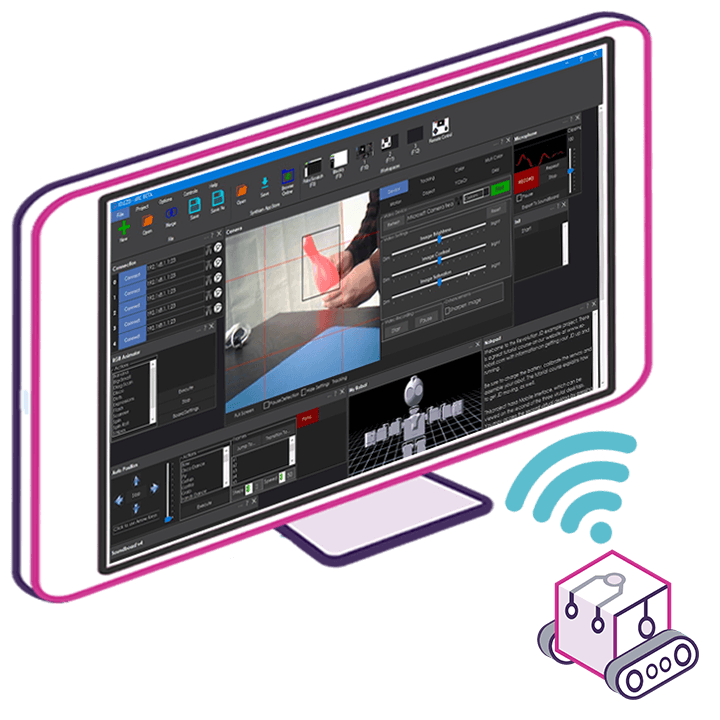
ARC, ARCx and Exosphere are designed, architected and written by people who build robots, for people who build robots.
Built by People. Built for People.
Every core decision, from how a robot skill plugs into a project to how a servo is told to move, was made by a person who understood why. We build robots, we teach robotics, and we support the people who build them. The software is made by humans, for humans.
Humans Invent. AI Repeats.
AI models are impressive tools, but they work by predicting the most likely answer from the data they were trained on. Their output is a remix of what already exists. The most probable solution is rarely the new one.
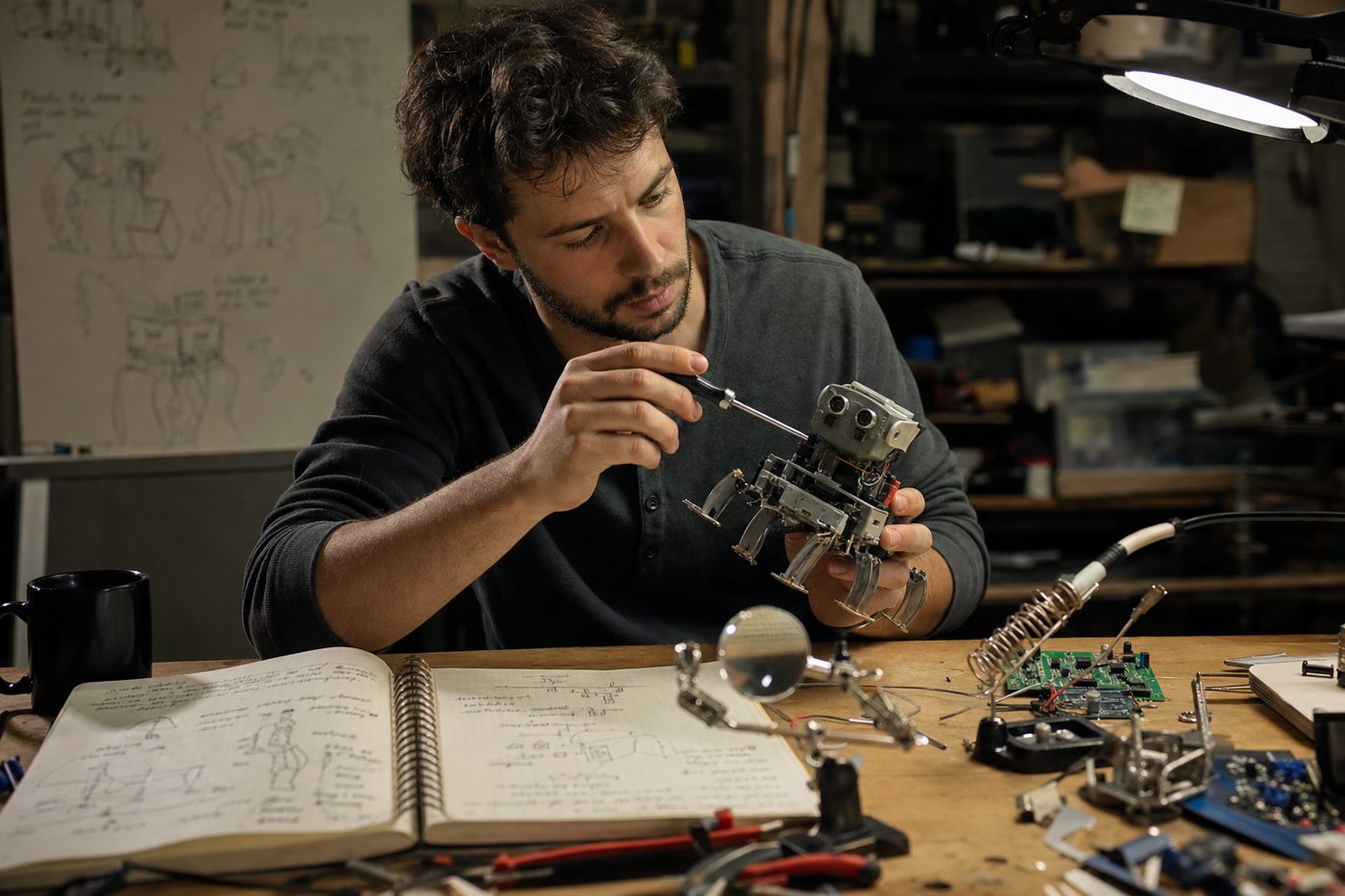
People bring something a model can't: curiosity, frustration with how things are done today, and the nerve to try an idea nobody has tried. Our engineers work with real robots, real classrooms and real customers. They spot problems nobody has written about yet, and they invent the answers.
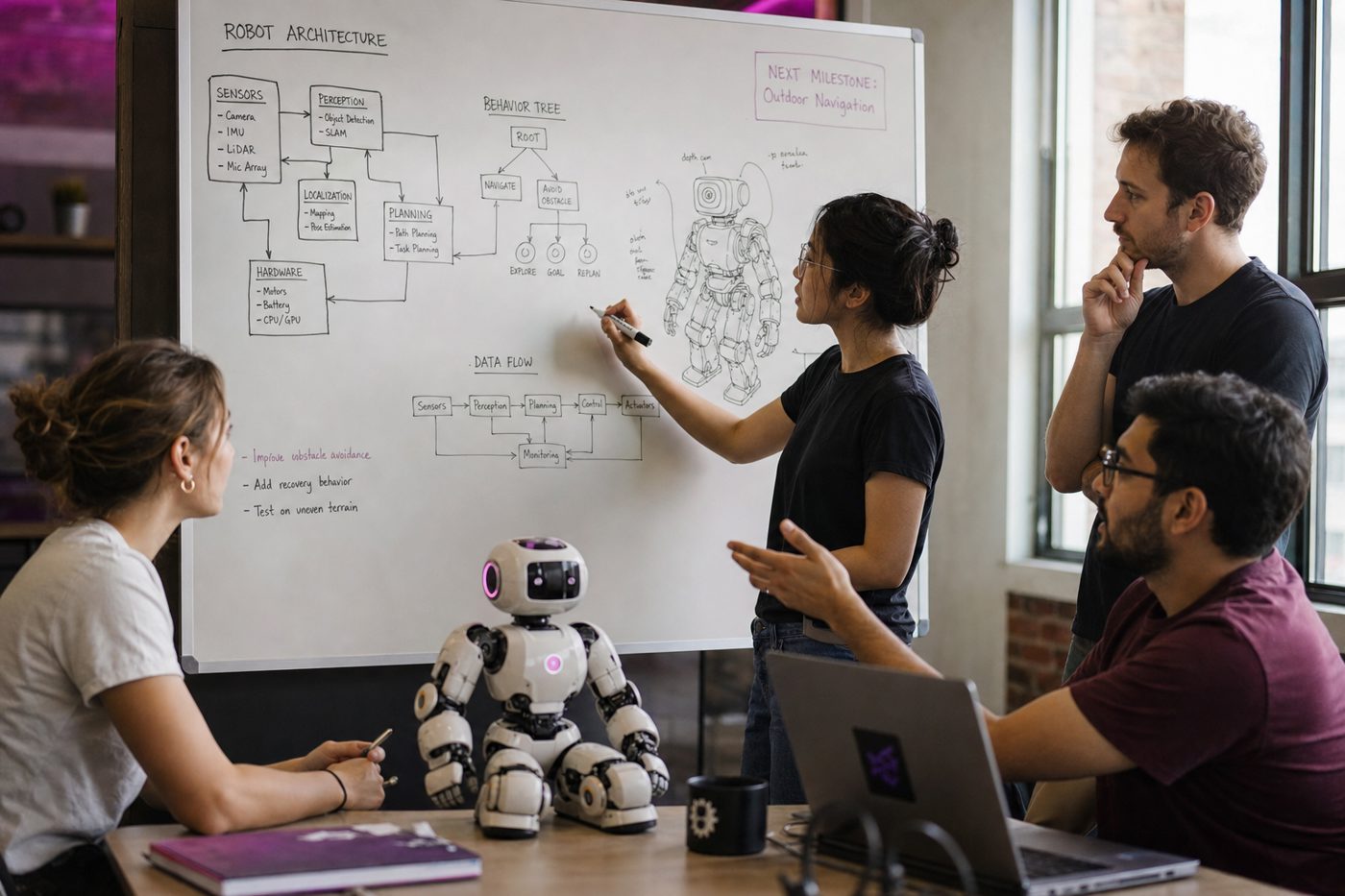
If AI Had Designed Synthiam...
...it would look like every robot framework that came before it, because that is what it learned from. You would get another pile of configuration files, another steep learning curve, and another tool that only experts can use.
The ideas that define Synthiam came from people asking "why does this have to be so hard?" and not accepting the usual answer. Robot skills that drop into a project like apps. Hardware-agnostic control. A low-code workspace that grows from a classroom to a factory floor. None of these would come from averaging what already existed. New problems need new thinking, and new thinking comes from people.
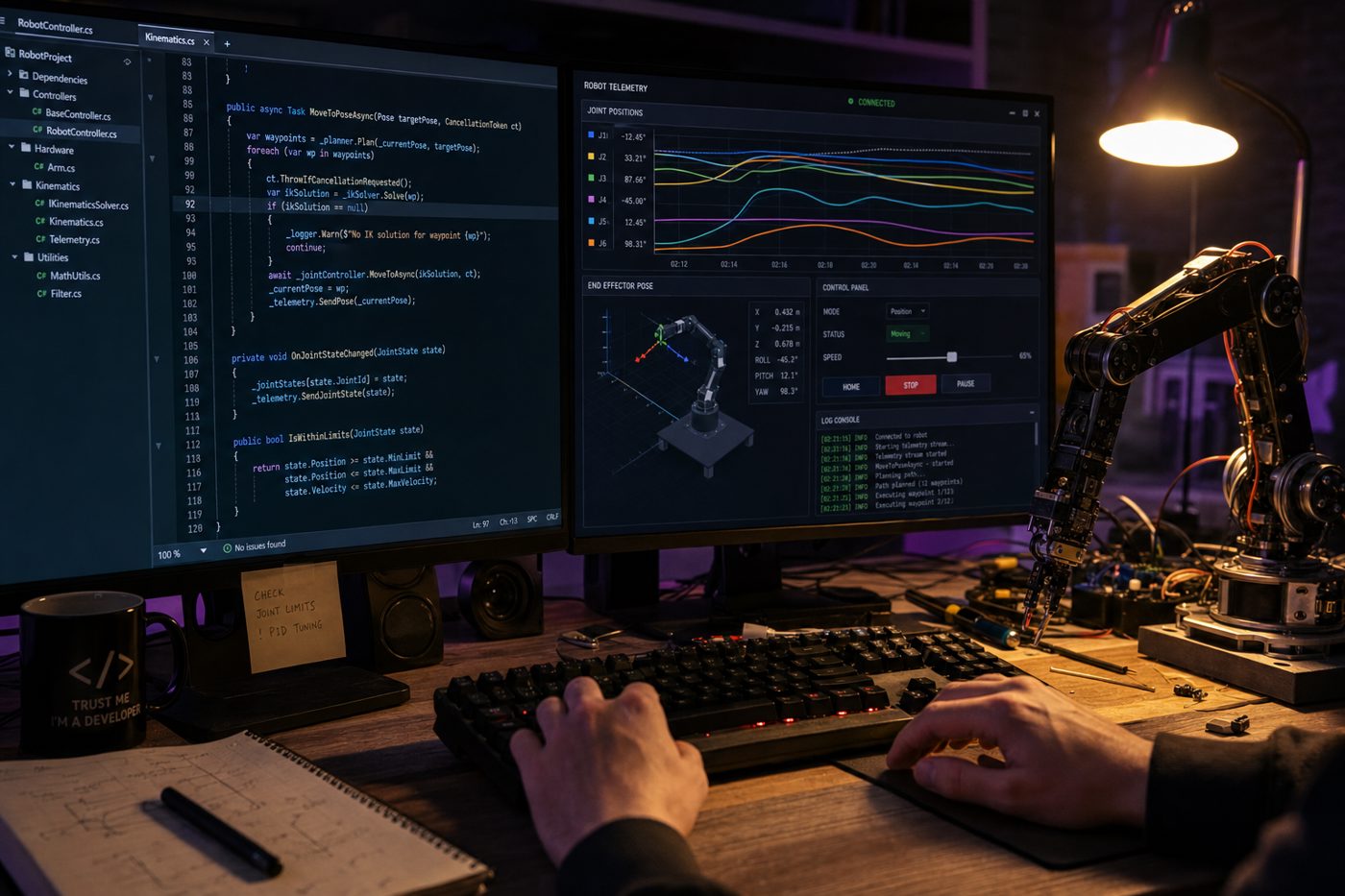
We Know Our Code Because We Wrote It
A person who writes code knows why it works, where its limits are, and how it connects to everything else. That knowledge pays off every day for everyone who uses the platform.
Faster Bug Fixes
Our engineers know which part of the system a report points to. Nobody has to dig through code that no one on the team understands.
Cleaner Integrations
Hardware partners and developers get answers from the people who designed the interfaces they're connecting to.
Accurate Manuals
Documentation is written by people who know what the software actually does, not what a model guesses it might do.
Real Assistance
Support questions are answered by engineers who can think through your robot, your hardware and your use case.
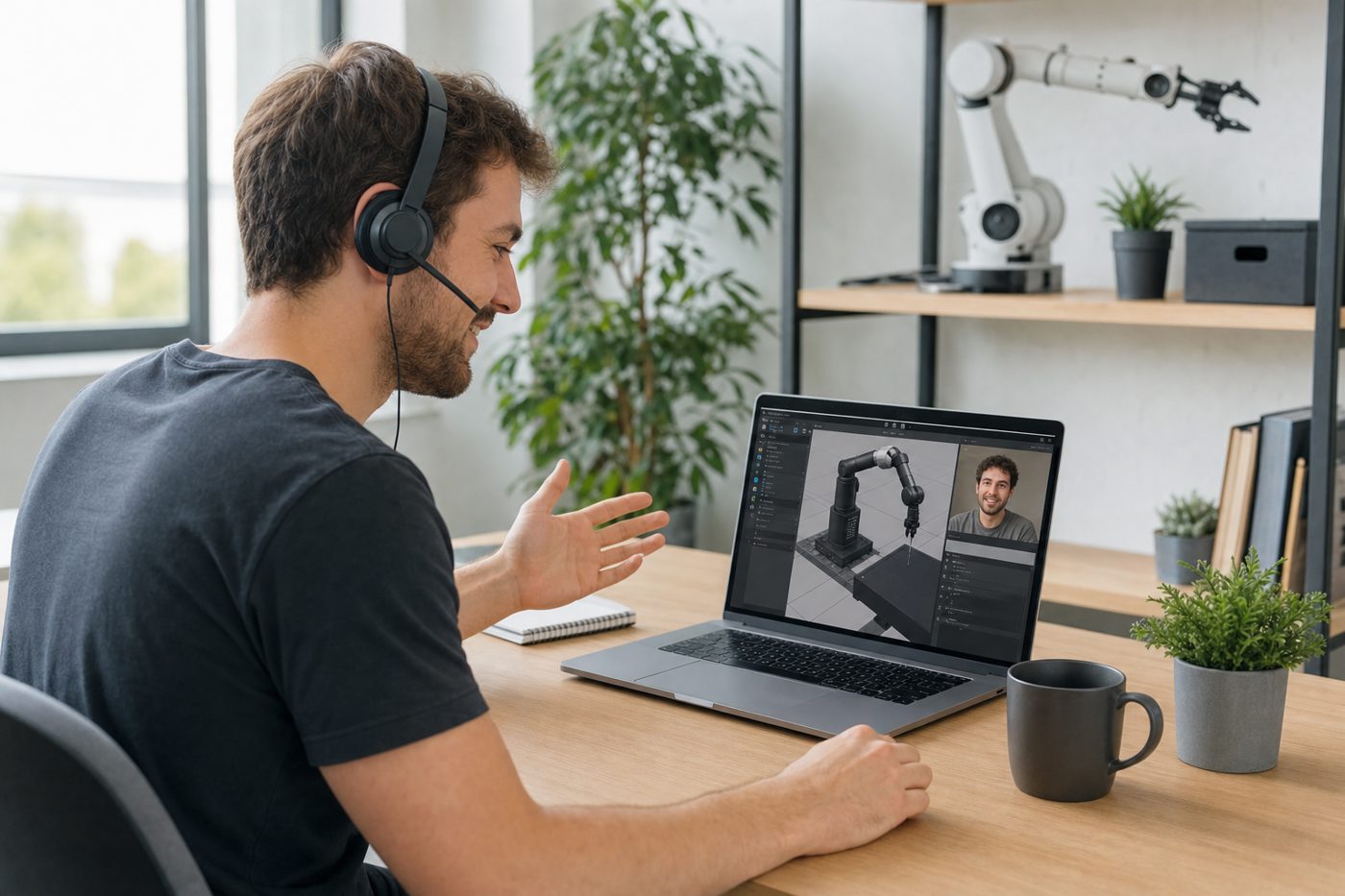
When the AI Goes Down, We Don't
A team that relies on AI to understand its own product is one outage, price increase or policy change away from being stuck. If a cloud AI service goes offline, gets rate-limited or is retired, our engineers still know the platform inside and out.
They can troubleshoot a customer's robot with a debugger and their own experience, and they can find a problem faster because they already know where to look. AI is a feature we build into the platform for you. We don't need it to keep the platform running.
Knowledge That Stays Inside the Company
Lower Risk From Internal Dependency
The most important knowledge about our platform lives with our team, not in an outside model we don't control. No vendor can deprecate our understanding of our own product.
For customers running robots in classrooms, labs and industrial sites, that means a supplier whose roadmap doesn't depend on someone else's. The dependency is internal, so the risk is one we manage ourselves.
Data & Knowledge Sovereignty
Because our own people build the platform, the knowledge of how it works stays inside Synthiam. It isn't outsourced to an outside AI provider, and we don't depend on one to maintain it.
This also matters to Synthiam's investors. They are backing proprietary IP with a clear record of who wrote it, engineering knowledge that grows over time, and a core product that nobody can copy by typing in the same prompt.
A Human-Built Foundation That AI Can Build On
The Synthiam ecosystem includes hundreds of robot skills, and many of them come from third-party developers, partners and community members. Some of those skills were written with help from AI coding tools. That's what we expect, and it shows the platform is doing its job.
A clear, consistent architecture designed by people is what makes fast integration possible. A developer can use AI to quickly connect a new sensor, service or piece of hardware to ARC because the foundation underneath is stable, well documented and understood by the people who built it. AI speeds up work at the edges. Humans own the core.
How Synthiam Uses AI
We aren't against AI. We build AI into our products, and we use it ourselves where it helps. We just keep it out of the parts that need human judgment. Here is exactly where we use it.
Reviewing Code for Security
AI gives the code our engineers write an extra security review, helping catch vulnerabilities early. Our engineers write the code, and they decide what gets fixed and how.
Images for Our Website
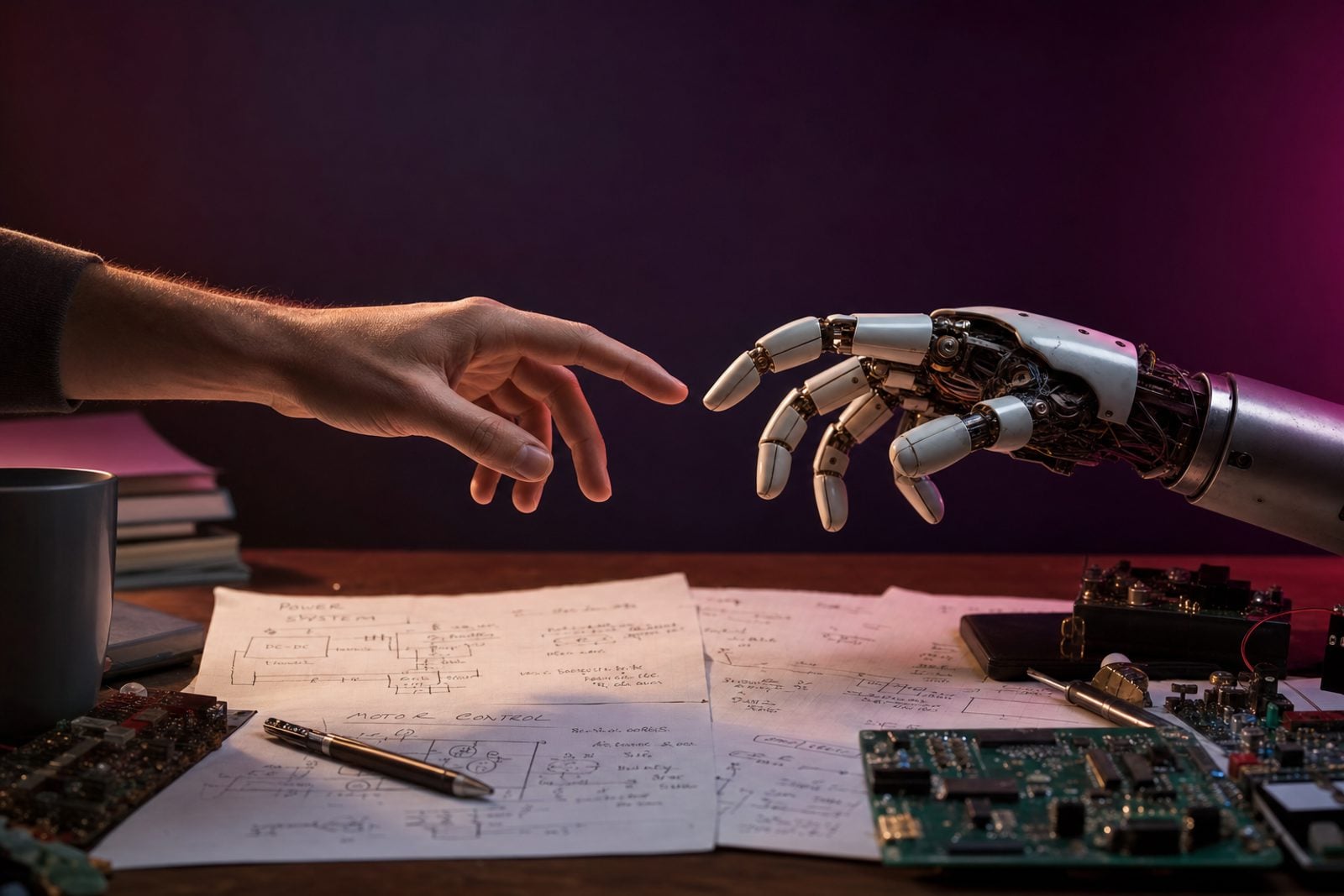
Many images on our website, including the ones on this page, are generated with AI. We're a small team on a budget, so your subscription money goes into new features instead of photo shoots and stock libraries.
Athena, Our Support Agent
Athena is our AI customer support agent. It answers questions and helps troubleshoot any time of day, and it works from documentation and a platform that our engineers understand.
Why Human-Written Code Is Good Business
Creativity and understanding are only the start. Here are more reasons why writing the platform ourselves benefits customers, partners and shareholders.
Clear IP Ownership
In many jurisdictions, purely AI-generated material may not qualify for copyright protection. Human authorship gives Synthiam, its partners and investors a clear chain of title for the code they rely on.
Security You Can Reason About
AI code generators can introduce subtle vulnerabilities, outdated patterns or even packages that don't exist. Code written and reviewed by people means every library and every line is there on purpose.
Safety in the Physical World
Robots move, lift and work around people. When software drives motors and servos, someone has to understand every decision path and answer for it.
Accountability
Every architectural decision has an owner who can explain why it was made. That matters to enterprise customers, auditors and anyone certifying a robot for real-world use.
Long-Term Maintainability
Engineers who know the history of the codebase can change it without breaking the projects customers already depend on. That's how a platform stays compatible for years instead of months.
Tuned for Real Hardware
Performance is tuned by engineers testing on real robots, microcontrollers and cameras, not by a model that has never watched a servo jitter.
Regulatory Readiness
AI regulation and procurement rules are getting stricter. A platform with documented, explainable code written by people is easier to audit, certify and approve.
Predictable Costs
Maintaining the platform doesn't depend on per-token pricing or a third-party subscription that can change overnight. That keeps our costs, and your pricing, stable.
Trust
Educators, businesses and makers know there are real people behind the software who stand behind it, answer questions and take responsibility for it.
Built by People Who Build Robots
Meet the person who started it all, or explore the platforms our team designs, writes and supports every day.
Explore ARC ARCx for Enterprise Meet Our Founder