

Make Tutorials For Ez-Credit
Hello!
You may have seen the new tutorial section, and it looks like we already have a bunch of new tutorials. What we need is more tutorials, so I have created a list of tutorials below for anyone to take on. Just respond to this post with the tutorial you would like to create and get started. If you have any suggestions for other tutorials I can add them to the list as well. Upon completing the tutorial, you will be rewarded with the ez-credit value listed with each tutorial!
Some of these tutorials will be very simple, but keep in mind, it will be helpful for lots of new users.
EDIT: When you are done making the tutorials please make a post on this thread letting me know you are done. That way it will be a bit easier on me to keep things organized. Thanks!
IMPORTANT Credit must be given to any information obtained from 3rd party sources
Tutorials:
Controlling a Neo-Pixel ring with the EZ-B v4 and an Arduino - $20 bhouston Completed
How to connect and use multiple EZ-B v4s - $25 thetechguru
Speech Recognition - $10 Steve G Completed
Setting servo speed, and initialization scripts (Using the connection established command) - $10 Steve G Completed
Serial (Explanation of what it is, EZ-Script functions, peripherals that would use it, etc...) - $15
UART (Explanation of what it is, EZ-Script functions, peripherals that would use it, etc...) - $20 Richard R
i2c (Explanation of what it is, EZ-Script functions, peripherals that would use it, etc...) - $15
ADC (Explanation of what it is, EZ-Script functions, peripherals that would use it, etc...) - $15 Steve G Completed
Looping (Using repeatuntil, repeatwhile, goto, etc...) - $10 Richard R
Files (read, write, etc...) - $15 JustinRatliff Completed
Arrrays (Explanation, functions) - $15 Ravdeep Steve G Completed
Pandorabot - $20 Steve G Completed
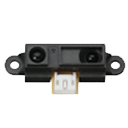
Using a LIDAR with the EZ-B v4 - $15
Amps and Volts (Current draw, voltages for different peripherals, voltage regulators, voltage on pins, etc...) - $15 Steve G Completed
Battery choices (Different types of batteries and what to use them for) - $20 Ravdeep Completed
Power supplies (I believe that @Technopro has a thread on this. Maybe he wants to create a tutorial for power supplies using that thread) - $20 Technopro Completed
Sabertooth/Kangaroo - $25
Tip120 & Tip122 Transistor Switching Circuit Steve G Completed

@Justin.
A quick tip for making a tutorial, hmm let me think... cut 'n' paste dude, lol. Sorry, couldn't resist.
I don't know if you've seen it, but I wrote a Tutorial tutorial which might give you a few quick pointers. Basicly try to write them so everyone who has different ways of learning can hopefully understand and follow them. As you know, even if seems so obvious to you, it may not be for someone else. That's all I can really say. I'm sure whatever you come up with will be great.
I'd love to see them if you write any.
Thanks for catching that guys. @Steve, thanks for compiling the Tip120 & Tip122 Transistor Switching Circuit tutorial.
Hey James.
The "amps 'n' volts" tutorial is now live. I've added a few extra bits of info in it as well, as its all relevant as you will see.
@Dave. I used your water analogy that Alan mentioned and expanded on it a bit. I hope that's alright.
Amps, Volts, and Power Converters & Power Supplies.
After the shenanigans that took place over the "arrays" one, I had a crack at it myself and made it "relevant" to the EZ-Robot platform. I wrote it as how I understand what arrays are and how they are used, so I hope it's okay. I'm not really expecting credit for it as I felt I had to put something up that actually made sense to take the place of that other thing. I'm not sure if it's the sort of thing you were looking for, but anyhow, here it is...
Explanation and Uses of Arrays.
I also put another one explaining what the "Display Popup" plugin is and ways to use it. Hopefully someone will find it useful.
Display Popup Tutorial.
I had an idea for another tutorial that someone could have a go at, and that's for the "Sketch Pad" control. I know that Justin Ratliff and WBS0001 have dabbled with it, and I've had a play with the example in ARC and made some basic shapes, but there's a lot more it can do apparently. So if someone's got a real hang on it, a step by step tutorial with explanations of what the different values are, how to use them, and some working examples of what else it can be used for (apart from drawing shapes), I think would be great.
BTW, your welcome about the pointing out that plagiarism thing. After I saw the first one, alarm bells started to ring as I remembered reading it a few months back. Anyway, no probs about the TIP tutorial. Half hour of copy/past (lol) was all it took. Rich did all the hard work.
Steve, I'm honored you felt the water thing was good enough to use in your tutorial. Nice job on making it better. I love the job you've done on all the other tutorials. You've become quite an asset to our slightly dysfunctional family here. I hope you stick around for a while.
@Steve, great tutorial on amps/volts and power sources. One thing you might want to add, but would take some research is something on power dropoff curve. When I used to teach classes on GPS navigation, NiCD was still common and NiMH were just becoming available with decent mAh ratings. One of the things I talked about (other than the deadly environmental poison of Cadmium if you threw away instead of recycling your NiCDs) was that a pair of AA NiCDs would output 1.5 volts until they werw almost drained and then drop voltage to almost nothing in seconds, potentially leaving you lost, where NiMH would drop off steadily and predictably, giving lots of warning. They also held 90% of their charge in storage where NiCDs would start draining the minute you removed them from the charger. On the other hand, I never jad a NiMH last more than a year regardless of the number of charge cycles, but have used 10 year old NiCDs. I don't know the charecteristics of SLA or the new chemistry batteries, thus the need to research if you want to include this kind of information.
Alan
Thanks guys. That means a lot to hear that from you two. Hopefully I hopefully will be around for a while Dave, and Alan, I'll have a look in to what you mentioned. I will have a look around and try to draw some information on the drop off curve for the other batteries. Someone may just find it useful.
Anyway, thanks again guys.
Btw, a slightly delayed
 "HAPPY THANKSGIVING"
 to all of our Canidan friends.
Nice job @Steve. The array tutorial isn't exactly what I had in mind though. I was thinking more along the lines of the scripting side of arrays:
AppendArray( variable, value ) DefineArray( variable, size, [default value] ) FillArray( variable, default value) GetArraySize( variable )
What you already have is awesome though I think that first steps are a really good introduction on how arrays are structured.
Do you think that you could include the scripting part of arrays at the end of the tutorial? If not I can always put it up as a separate tutorial for someone else to pick up. Maybe the two could link to each other.
I think that first steps are a really good introduction on how arrays are structured.
Do you think that you could include the scripting part of arrays at the end of the tutorial? If not I can always put it up as a separate tutorial for someone else to pick up. Maybe the two could link to each other.
Just wanted to pop in and say thanks! You guys have been doing amazing work on the tutorials. A special shout out to @Steve G who has gone above and beyond!