




Asked
— Edited
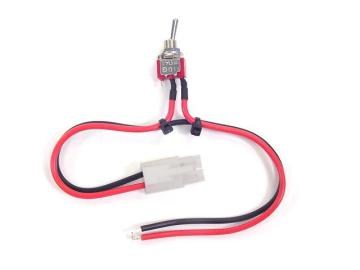
Ez-B On/Off Switch
i thought about my wall-e... and thought...and thought... and one of the things i thought of was an on/off switch(painful to open up, close, open, close, etc.) I decided to put a power button/switch on the power cable, the only thing is which one! Not sure what websit to go to or what voltage to buy it from. Fine on connecting it. just need to know voltage and where.

elfege ,a good choice if going to radio shack is NTE2904 at $2.47
ALSO a diode is only needed for inductive load,i made a tutorial on this on and why Inductive load is when driving a relay or a motor straight from the switch SECOND the IN4001 is very low rated voltage and wont handle high voltage kickbacks from a motor or relay coil
Robotmaker, I've reread your explanation of why a transistor looses so much power and it can't be understood. I'm a little knowledgeable about such things and I can't follow it. When you get back from China and you find time in your new retirement schedule could you explain it more clearly and in simple terms?
Fred, all components I've listed have been given by you in previous posts and topics. You are effectively arguing with yourself. If there are better than what I have listed in the clear and complete tutorial please bring them to attention explaining why and I may update the part numbers to suit in the tutorial. Everyone wants the most cost effective and efficient solutions along with as much information so that they make an informed decision based on their specific requirements, nobody cares who provides the information just so long as it's there.
I don't expect a clear and helpful reply but I may be proved wrong.
Ok can do that ,but its pretty simple ,measure the resistance of transistor emitter to collector is very high ,and then check the resistance on a mosfet its very very low like a switch .most are .1 ohm or less.
Just like ELFEGE said when he lost 1 volt ,i done tests long time ago when learning about mosfets witch i know alot about NOW and with my tests with a fully turn on transistor you lose more then 2 volts.
MOSFET is like a switch when its fully turn on.one main reason h-bridge designs now made uses them.
ZERO voltage drop
YES RICH that is what i did,try to give others a low cost idea and give very good detail as much as i can.
DONT need a tutorial to post info that is needed in other posts.
And i did make a tutorial ,but problems it had was hard for others to read or find useful info,because of the mess others made . but will make another one with photos of my design and a lot of info from web plus my info i have from mtesting mosfets that i dont many has done.
THIS info about the mosfet was for ELFEGE so it wasnt against you
ITS the same if i post a idea in other person post and you have a better idea you can post it too.
WE are all here it help others build robots ,LETS KEEP IT LIKE THAT please
OK, so its resistance that causes the voltage drop. The electricity is fighting to get to where it needs to go. Why is that, how come the voltage hits resistance inside a transistor and not a MOSFET? It sounds like a MOSFET is like you switch where it is fully on or fully off. But whats going on inside of a transistor?
ITEM about mosfets it uses 6 transistors to make the mosfet design ,plus low resistors and other parts.
here is very good info that compare both
One thing to keep in mind about Darlingtons is that, by their very nature, there is a substantial voltage drop between the collector and emitter. This causes more heat dissipation in the device, and results in less power to the load. In some cases it is acceptable, in others it isn't. It may result in the need for a heat sink, making it more expensive overall than a different transistor which wouldn't need a heat sink under the same conditions.
I GUESS IT BETTER to find proof then try to explain it
here is the link that has a lot more info too
darlington transistor vs mosfets
I think on every post i made or reply too,its much easy to find info on the web for proof then try to explain it.
MAIN ITEMS I said about why a mosfet is better choice,low voltage drop across the collector to emitter,less power loss and no need for a heatsink
formula is in the link and they mention TIP120 AS A EXAMPLE