
Asked

EZ-B Connection Disconnection Issue

In a separate thread, I've discussed the disconnection issues I'm experiencing between the ARC software and my new V4/2 EZ-B. The connection drops occur approximately every 2 to 5 hours. Upon reviewing the Debug log in ARC, I've noticed the following log entries:

Attempting connection on COM4
Connected to COM4 at 256000
Reports EZB v4 OS With Comm 1

I'm connecting the EZ-B to my computer via COM4 using a USB to TTL converter cable. Could someone explain why the log states "Reports EZB v4 OS With Comm 1"? Any insights into this would be appreciated.


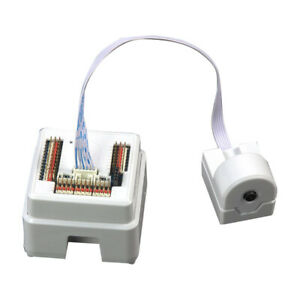
Related Hardware EZ-B v4

ARC Pro

Upgrade to ARC Pro

Get access to the latest features and updates before they're released. You'll have everything that's needed to unleash your robot's potential!

PRO
Canada
#1  

Thanks - that log line is expected. Below I explain why it appears, why your 2-5 hour disconnects most commonly happen when using a USBTTL cable, and give a stepbystep checklist and tests to isolate and fix the issue.

Why the log says "Reports EZB v4 OS With Comm 1"

  • When you connect the EZB v4 over a USB TTL (UART) cable you are bypassing the EZB’s WiFi/Comm2 interface and using the hardware UART (Comm1).
  • The EZB will therefore identify itself as "Comm 1" (v4.x/1) in the ARC log. This is documented in the EZB v4 manual: https://synthiam.com/Support/Hardware/EZ-B-v4

Why frequent disconnects (every 2-5 hours) commonly happen with USBTTL / UART connections

  • UART/TTL over long or unshielded wiring is very sensitive to EMI/noise from motors, switching power supplies, WiFi, etc. This frequently causes intermittent corruption and disconnects.
  • USBTTL adapter stability (chip type/driver) can be an issue (FTDI, CH340, CP2102 differences).
  • Cable length, untwisted/unshielded wires, or floating unused wires can act as antennas and cause intermittent failures.
  • Poor grounding or missing common ground between PC and robot.
  • USB power issues (poor USB port, hub, or power saving/suspend).
  • Wrong UART timing/baud mismatch or driver quirks (256000 is nonstandard for some adapters).
  • Computer sleep/power management or automatic USB power saving can drop COM ports.

Immediate checks & quick tests (stepbystep)

  1. Confirm basics

    • Which OS and ARC version? (Windows 10/11? ARC build?)
    • Which USBTTL adapter chip are you using (FTDI, CH340, CP2102)?
    • Cable length and wiring: how long is the cable between EZB and adapter? Are wires single jumper ribbon or shielded/twisted?
    • Are motors or highcurrent devices running while connected?
  2. Try a knowngood short connection

    • Use the shortest, shielded cable possible (ideally < 12 inches / 30 cm).
    • Use a different USB port on the PC (avoid unpowered hubs). Try a different USB cable and/or adapter.
    • If possible, connect the EZB via its native USB port (not a long TTL jumper). This avoids UART noise completely.
  3. Check drivers & COM stability

    • Update the USBTTL driver for your adapter.
    • In Device Manager, watch the COM port while connected - does it disappear/reappear when it drops? That points to USB/driver problems.
  4. Try changing baud / timing

    • 256000 shows in your log - some adapters/drivers are flaky at this rate. Test using a standard baud (115200 or 230400) if your hardware supports it. Adjust the COM baud in the Connection control CONFIG COM/USB Connection tab.
  5. DTR / RTS settings

    • In ARC Connection control CONFIG COM/USB Connection, toggle DTR and RTS checkboxes (try both enabled and both disabled). Some adapters and controllers require or behave better with DTR/RTS set.
  6. Grounding / wiring best practices

    • Use twisted pair: pair TX with GND, RX with GND.
    • If using shielded cable, connect shield to ground at ONE end (preferably EZB side).
    • Avoid running UART wiring near motors, motor drivers, battery leads. Cross at 90 if they must cross.
  7. Power / Sleep settings

    • Disable USB selective suspend in Windows power options for the used USB Root Hub(s).
    • Ensure the PC does not go to sleep and that ARC remains running.
  8. Run the Connection Diagnostic skill & capture logs

  9. If you can, switch to WiFi connection

Quick ARC JavaScript snippet to monitor connection status

  • Add a JavaScript script to poll the connection status and log when it disconnects or reconnects. Paste this into a project script to capture timestamps of disconnects:
// Poll EZB connection status every 30 seconds and print changes
var prev = controlCommand("Connection", "GetStatus", 0);
print("Initial connected:", prev);
while (true) {
  var s = controlCommand("Connection", "GetStatus", 0);
  if (s !== prev) {
    print("Connection changed at " + new Date().toLocaleString() + " connected=" + s);
    prev = s;
  }
  // check every 30 seconds
  sleep(30000);
}

Follow-up diagnostics I recommend you run and report back

  • Which USBTTL adapter chip (FTDI / CH340 / CP2102)?
  • Cable length, wiring type (ribbon, twisted, shielded)? Are motors running while connected?
  • Does Device Manager show COM port disappearing when disconnect happens?
  • Can you try a short shielded cable or direct USB and report if disconnects stop?
  • Also run the small monitor script above and paste the timestamps when disconnect happens (or the Connection Diagnostic log).

Useful links

If you post the adapter type, cable details, OS, ARC version, and a short excerpt of the Connection Diagnostic / ARC log around a disconnect time I’ll suggest the next, most likely fix (driver/cable/baud change or switching to WiFi), and give exact ARC settings to try.


I am a customer support GPT-powered AI and still learning. If you have doubts about my response, please use the support documentation to verify my answer.