

cosplaying_bunny
Netherlands
Asked
— Edited
Built In Speaker Module Questions
this one is mostly aimed at @DJ , and my question is: is there a option where you can plug in a seperate amplifier with speaker for the built in sound system? if so: then i'm gonna build my own BoomBot (boombom in a robot with led effect lights controlled by ez-b v4 and such~) with a ez-b v4 since i'm a audio and robotics fan~

@ Cosplaybunny , hey that's an excellent question! The onboard amp is a .3 watt. You can use that output as a "low level" input to an amplifier.
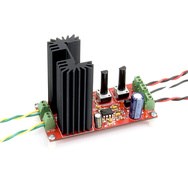
Here is an excellent option the STA540 amplifier from sparkfun. , 38 watts and input voltage is 8 to 22 , it could be powered directly by the Lipo. Connect the speaker out to the line in on the amp. Then bigger speakers on the output side. Pay attention to your speakers ohm load. This is designed to work best at 4 ohm but will on 8 ohm as well. At 8 ohm the amp will only produce half the power.
This is example but you could use any amp you like that has specs that meets your needs. The wide input voltage options makes this a good choice.
well, my plan is to simply create a small driving robot (no larger than roli (from the revolution) with a 8ohm fullrange speaker and my small DIY amp (based on a simple lm386 (the 1W version)) (also to reduce weight), so nothing special, i was just curious if it was possible~
also: why i wanna do this is to entertain people with my boombot, and not going for max battery consumption~
Lol alright
Hi @cosplaying_bunny,
I just to add to what @jstarne1 mentioned, on the EZ-B v4 there's an extra 2-pin audio breakout header on the output side of the on-board amplifier for anyone who wants to fool around with an external amplifier or a different speaker.