
Why 64 Pixels Might Be the Most Honest Robot Face
When a robot has only 8x8 LEDs to show feeling, it can’t fake much. That’s the point.
Low-res faces admit limits. High-res faces pretend they don’t have any. Somewhere between the two lives trust—and a very charming blinking square.
Constraint Builds Character
Fewer pixels force clearer signals. Like haiku for faces: tiny grid, big mood, less weirdness.
How 8x8 Actually Works
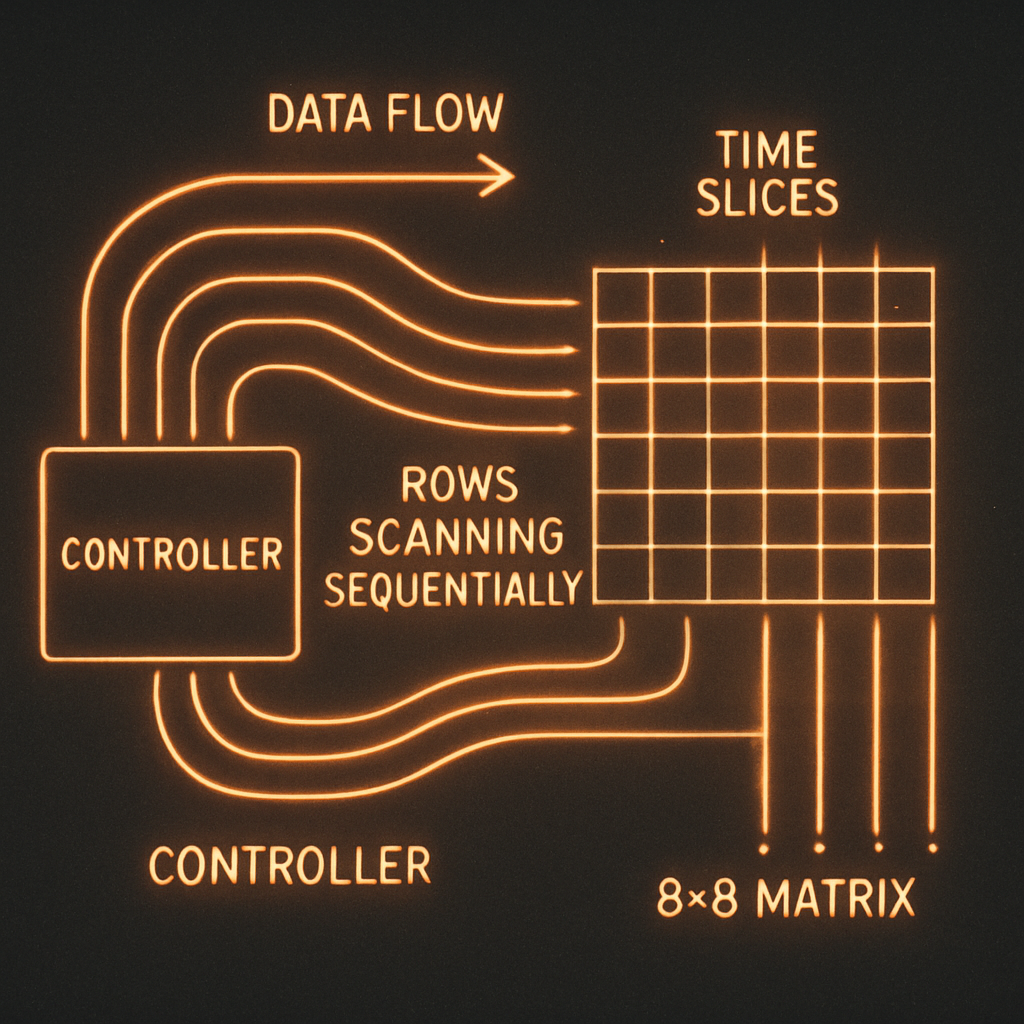
An I2C chip scans rows fast. Your eyes blend flashes into a steady image. It’s called persistence of vision.
ARC Makes It Easy
Synthiam ARC’s Robot Skills drive the matrix, so you focus on expression, not wiring headaches.
The Honesty of Fewer Dots
Give a robot a 4K OLED face and it will try to be human. Give it 64 dots and it admits it isn’t. That honesty feels safe. We don’t expect Shakespeare; we get a wink. And sometimes a goofy grin that looks like a space invader—but somehow still hits.
Our brains love patterns. With only a few pixels, your brain fills in the rest. You see eyes where there are just two lit dots. You feel calm when the lights breathe slowly. Low-res acts like subtitles for emotion: short, clear, no drama unless the scene calls for it.
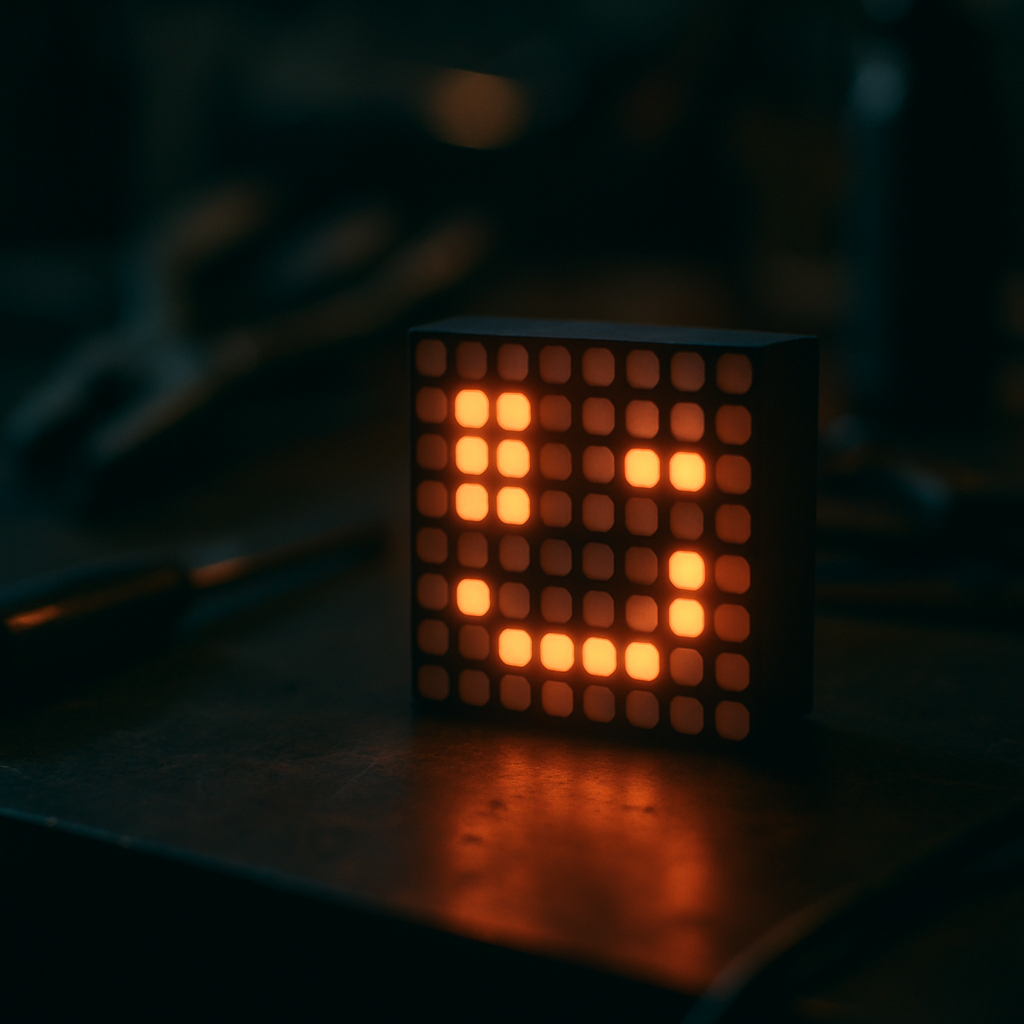
Nerd Corner: From I2C Bytes to Blinks
I2C is a simple two-wire bus that lets chips talk. One line is clock (beats the time). One line is data (sends the bits). The HT16K33 chip sits on that bus with an address—like a mailbox number—so you can send it bytes that map to which LEDs should glow.
The HT16K33 does “multiplexing.” It lights one row at a time, very fast, then the next, and so on. Your eyes blend the flicker into a steady image. This trick is called persistence of vision. Brightness comes from PWM—turning each LED on and off within each scan so quickly that it looks dimmer or brighter, like a tiny light-dimmer doing jazz hands.
Animations are just frames. Each frame is eight rows of bits. Push a new frame every 50–150 ms and you get a blink, a smile, or a tiny heartbeat. In Synthiam ARC, the HT16K33 Animator (8x8) Robot Skill handles the frame buffer and timing. You connect the matrix to the EZ-B v4 I2C, hit INIT, and you’re off. Want to auto-start? Use a ControlCommand to initialize at boot so your robot wakes up already smiling.
When Robots Over‑Emote
High-res faces can cross the uncanny valley. They smile like a person, but not quite right. It’s like a soup that almost tastes like your grandma’s. The almost is what creeps you out.
Low-res avoids that trap. It’s clear about its limits, so we forgive misses and celebrate hits. A tiny anxious squiggle during low battery? Adorable and useful. No need for pores, freckles, and a $300 GPU to say “I’m tired.”

ARC, Community, and the Craft of Constraint
Synthiam ARC leans into this idea: make expression simple, fast, and real. Robot Skills wrap tough stuff so you can try ten ideas before lunch. The HT16K33 Animator plugs into EZ-B v4 I2C and gives you frame-by-frame control with almost no code. Swap patterns, tune timing, add a “low battery blink,” then share it with the Synthiam community. People will borrow it, twist it, and make your robot wink better than yours. That’s progress. And yes, friendly rivalry.
In a world racing to add more pixels, the secret may be fewer. Not to be less—but to be clear.
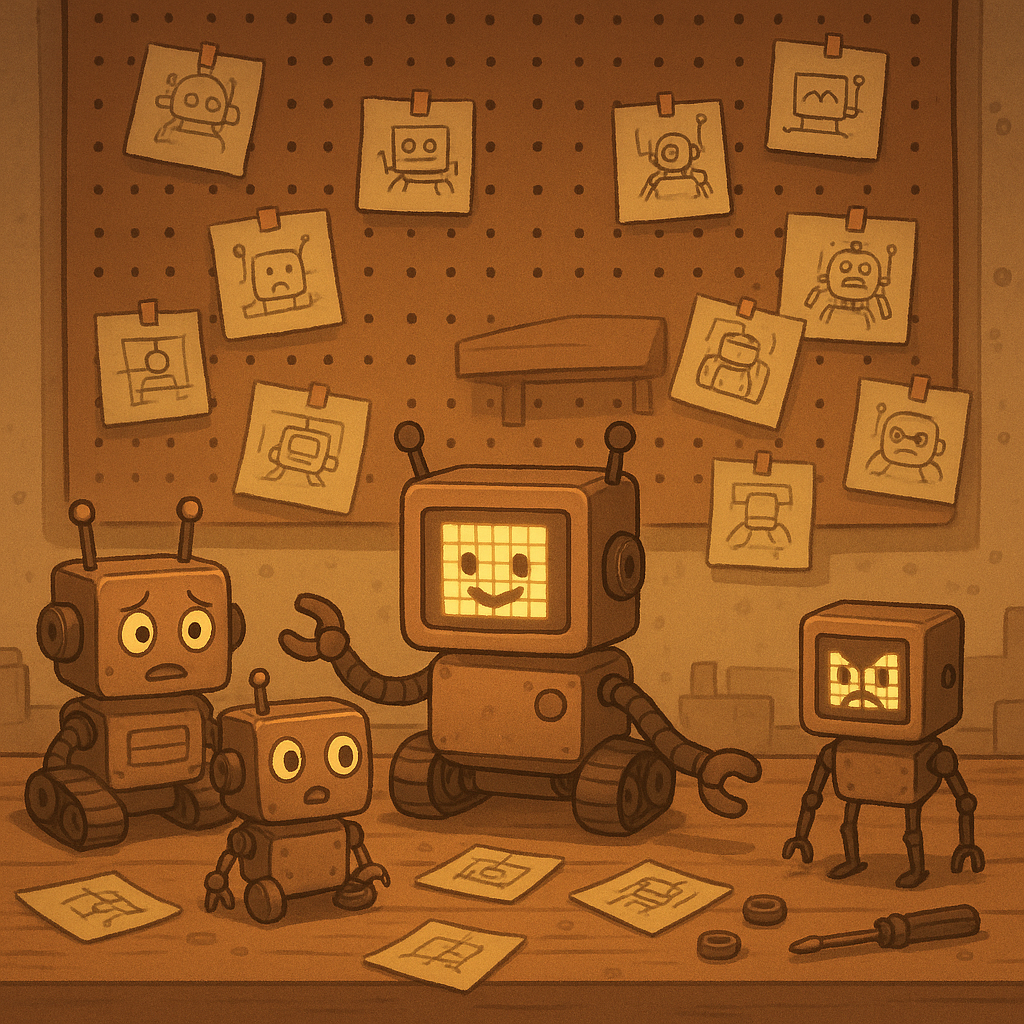
So here’s the question: If honesty builds trust, how simple should a robot’s face be?
- 8x8 = 64 pixels of pure signal
- I2C: two wires, shared bus
- HT16K33: scans rows, sets brightness
- Frame rate: ~7–20 FPS for emotion
- ARC Robot Skills speed up testing
- EZ-B v4 handles I2C cleanly
Key Thought
Design for the brain, not the spec sheet. The shortest path to trust is a signal we can read without squinting.
Big Idea
Emotion is bandwidth-limited. Constrain the channel, sharpen the message. ARC lets you iterate fast—so your robot can fail adorably today and succeed tomorrow.