Why the Best Robot Eyes Might Be Half-Closed
Robots don’t need to see everything. In fact, seeing less can make them faster, kinder to your privacy, and weirdly wiser.
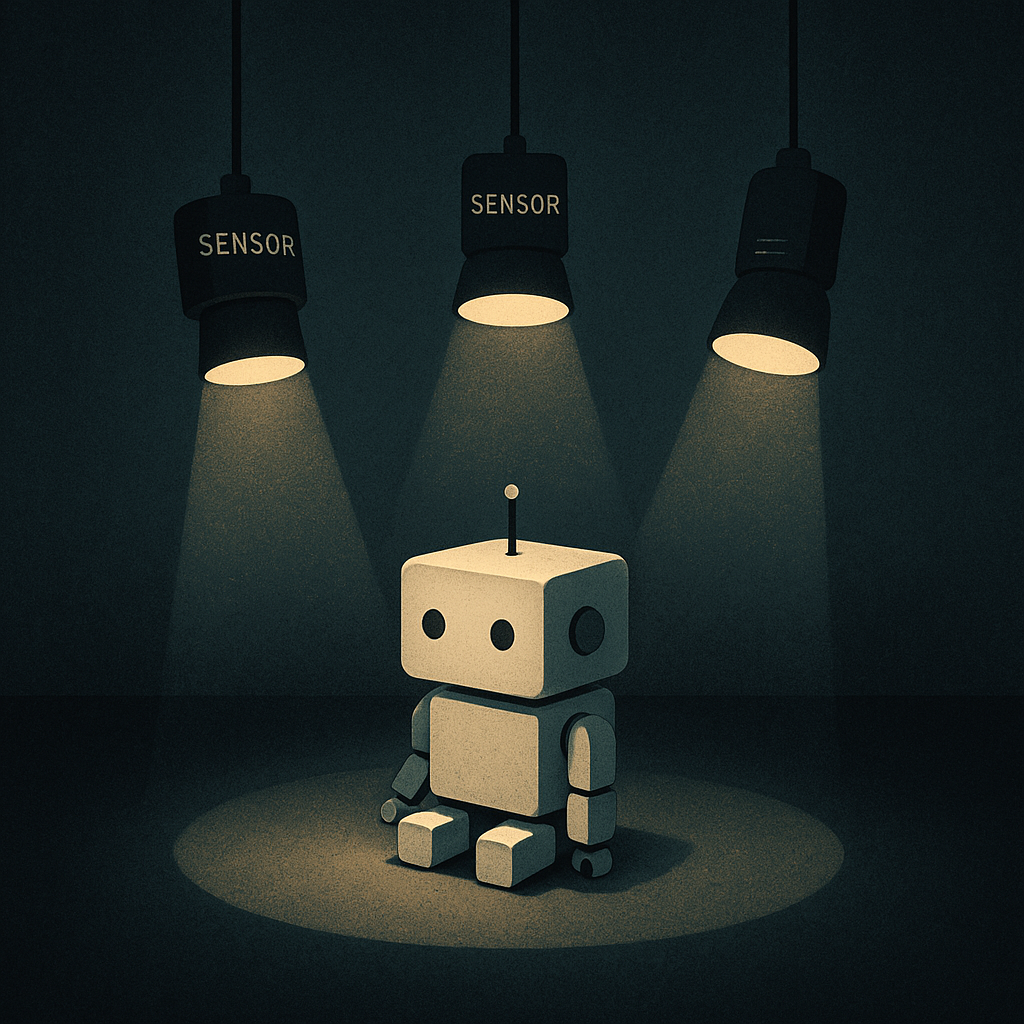
Think of it as purposeful tunnel vision. A smart spotlight beats a messy floodlight—especially when you just need to avoid the chair leg, not read its autobiography.
Pick the Right Ignorance
Less data can be more control. Choose sensors that answer the question you care about, not every question in the room.
One Dot, Big Picture
A single IR distance dot, swept on a servo, becomes a map. Slow? Sometimes. Smart? Often.
Design With Gaps
Blind spots are not bugs. They are choices that shape behavior, safety, and speed.
The Case for Useful Blind Spots
We humans blink to rest our eyes. Robots can “blink” on purpose too—by looking at less. Big cameras and fancy neural nets grab attention, but many tasks are small: Don’t hit the wall. Keep two inches from the shelf. Dodge the cat (with respect, obviously).
When a robot limits what it sees, it reacts faster and stores less personal stuff. It’s like wearing noise-canceling headphones for the world. You miss the gossip, but you nail the task. Bonus: nobody worries you saved a 4K video of their messy living room.
Sometimes the smartest sensor is the one that refuses to over-share.
How It Actually Works: One Dot, Swept
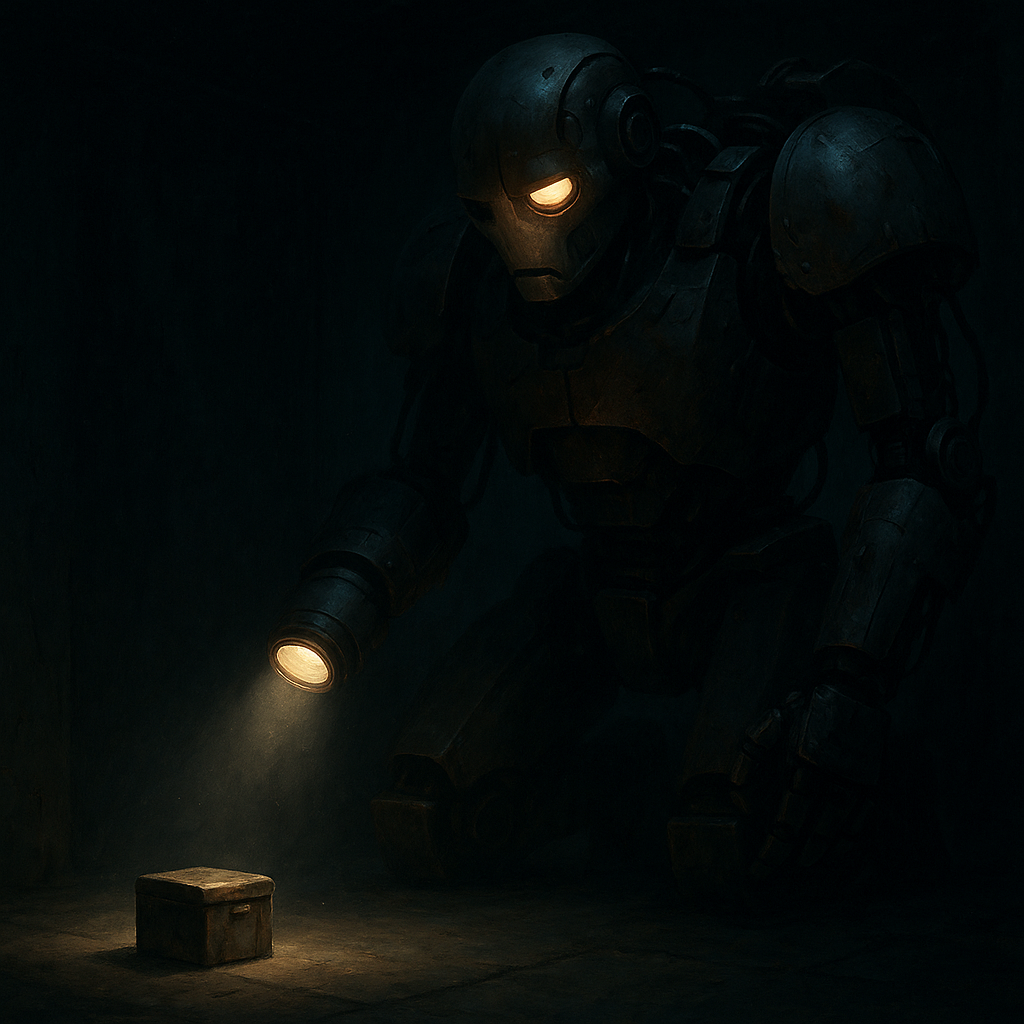
An infrared (IR) distance sensor shoots invisible light and measures what bounces back. It outputs a voltage that changes with distance. That voltage goes into an ADC—an Analog-to-Digital Converter—which turns it into a number a computer can read. Think of the ADC as a translator for electrons.
Mount the sensor on a small servo. A servo moves to angles based on tiny pulse signals called PWM (Pulse Width Modulation). A short pulse means “turn a little,” a longer pulse means “turn more.” Sweep left to right. At each angle, record the ADC number. Now you have a polar map: angle plus distance. It’s like drawing with a single colored pencil, one line at a time, but the picture still appears.
Speed, Signal, and Sunlight: Limits as Superpowers
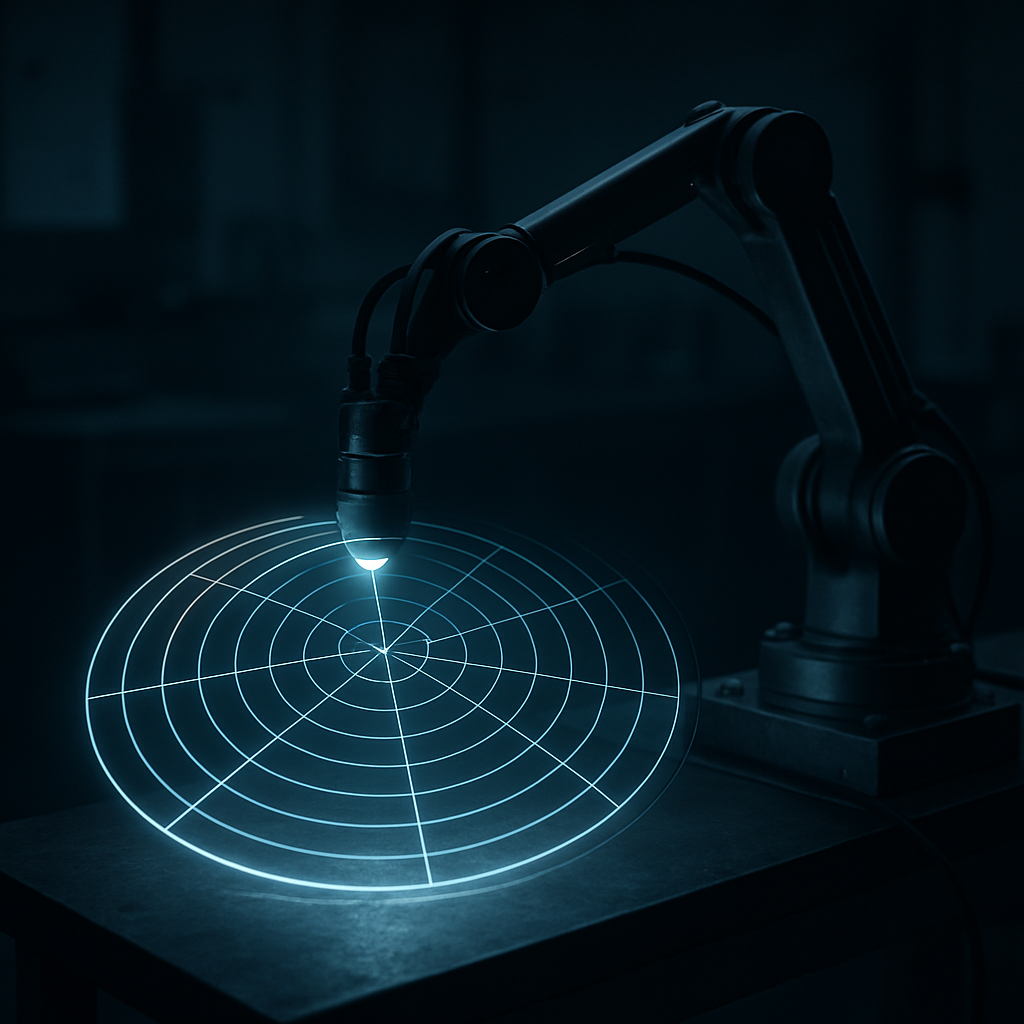
IR sensors ignore soft fabrics better than ultrasound, but sunlight can swamp them, and some black materials act like IR ninjas—slipping past by absorbing light. The trick is not to panic. Use quick math: average a few readings, drop outliers with a median filter, and set a confidence threshold so one weird blip doesn’t send your robot into a dramatic pirouette.
Scanning also takes time. If you only need forward safety, scan just the front arc and only when moving. Fewer angles, faster updates. Your robot becomes that friend who talks less but says the right thing at the right moment.
Designing for Ignorance
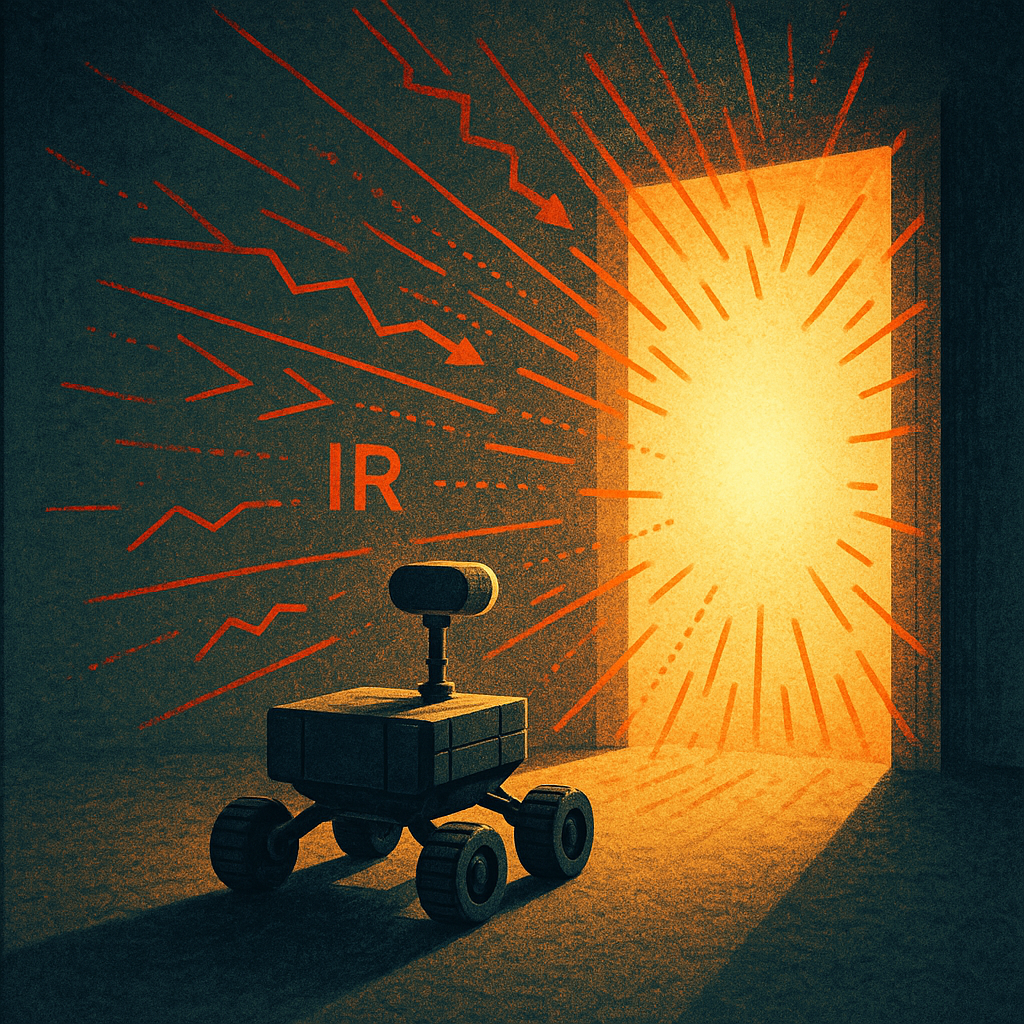
Plan your blind spots. Gate sensors by state: rolling forward? Scan a 120° arc. Turning left? Favor right-side checks. Parked? Stop scanning. This saves power and brain cycles. It also respects privacy—no need to capture the whole room to miss the coffee table.
Mix a few simple cues. A bump switch confirms contact. An IMU (motion sensor) spots slips. A single-point IR keeps distance. Each sensor does one job. Together, they feel smart without getting nosey. Like a jazz trio, not a marching band in your kitchen.
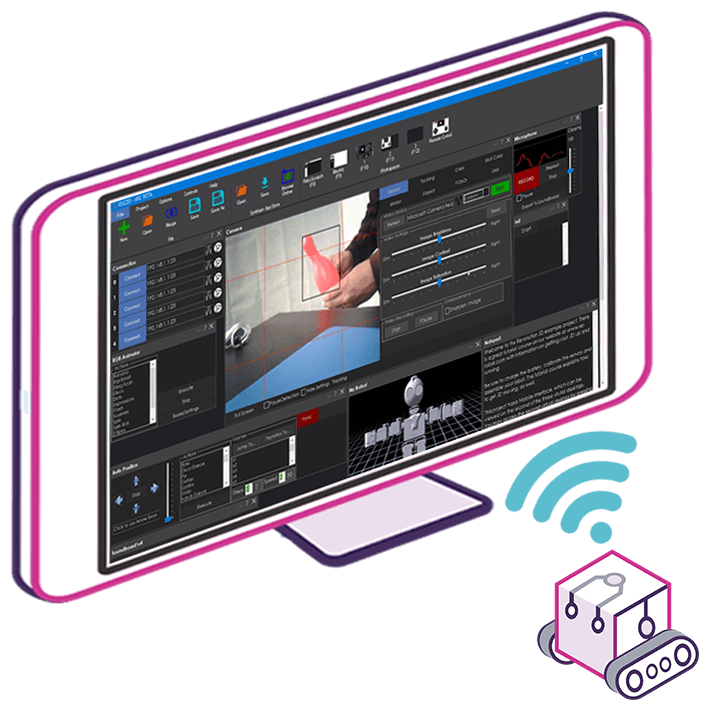
How Synthiam ARC Leans Into “Half-Closed” Vision
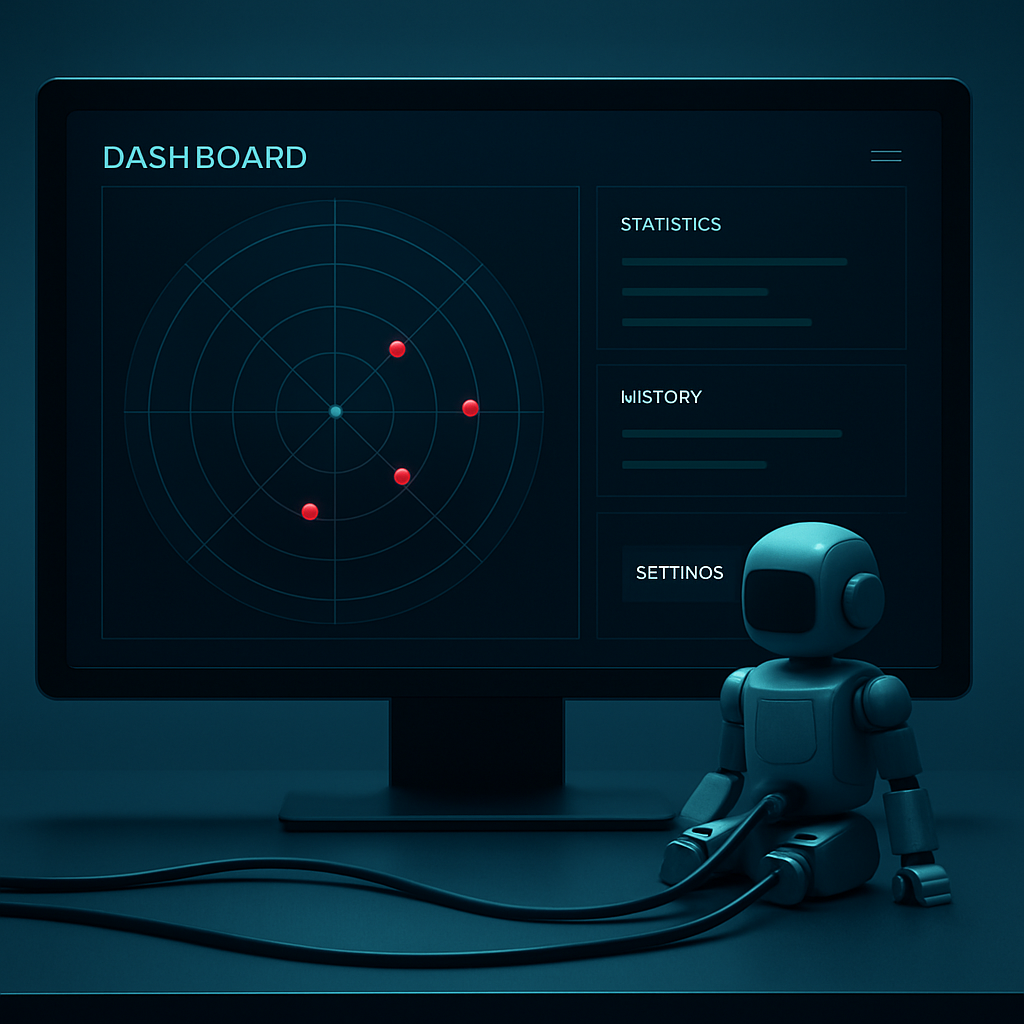
Synthiam ARC makes selective seeing easy. The Sharp IR Radar Robot Skill sweeps a Sharp IR sensor and plots red-dot returns like a tiny submarine movie. Hook the sensor to an EZB ADC port, pick a servo, and you’ve built a polar map with one point of light. Flip on “Scan only when moving forward,” and tie it to a Movement Panel for quick avoidance.
Because ARC treats these pieces as Robot Skills, you can script behaviors, set thresholds, and fuse quick checks without drowning in data. Need 5 V for the sensor? Power it right from your setup or a regulator. In short: ARC lets you choose your ignorance on purpose—and still look brilliant. The Synthiam community shares patterns for filters, sweeps, and recovery moves, so your robot learns the right kind of modesty.
Your Move
Before adding a giant camera or a heavyweight model, ask: what tiny truth would solve this task? A single dot, swept with care, might be enough—and faster, safer, and kinder to everyone in view.
So here’s the dare: pick one room, one path, one goal. Close your robot’s eyes a little. See what it learns by not seeing.
If intelligence is choosing what to ignore, what will your robot choose to leave unseen?
- Single-point IR + servo sweep = polar map
- ADC turns volts into numbers
- Scan less, react faster
- Shade beats sunlight glare
- ARC Robot Skills wire it all up fast
Key Thought
A focused sensor is a polite sensor. It solves the task and leaves your living room out of it.
Big Idea
Design blind spots on purpose. Use ARC to choreograph when, where, and how your robot pays attention—no more, no less.