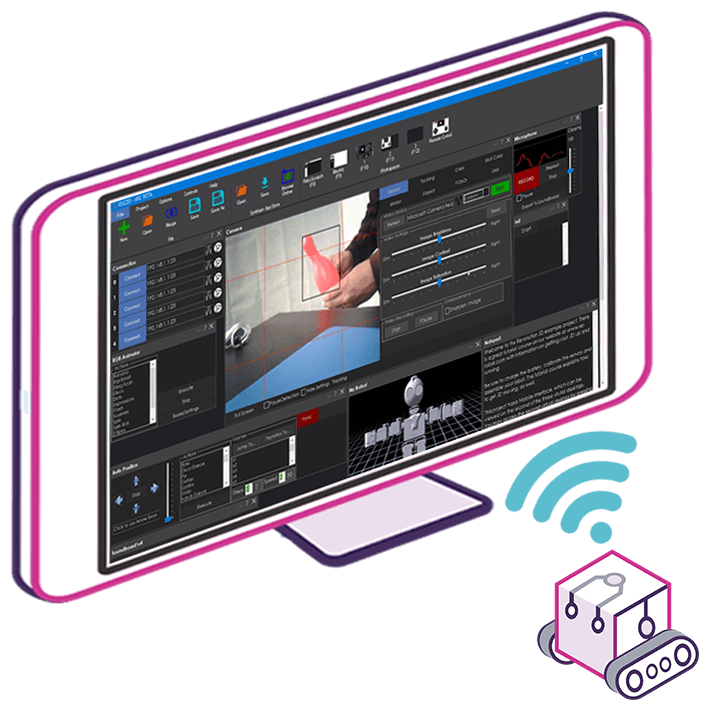
Manual Mode Is the Killer Feature: Robots Should Beg for Your Hands
We talk like autonomy will replace humans. What if the best robots admit they still need you—and get smarter because of it?
Teleoperation is not cheating. It’s shared intelligence. When you hold the joystick, the robot borrows your eyes, your judgment, and your weird superpower of not driving into the cat. Everybody wins. Even the cat.
Idea 1
Manual mode is not a fallback. It is a feature that keeps robots honest, useful, and safe—especially when the world is messy.
Idea 2
Latency, jitter, and shared autonomy decide if teleoperation feels magical or mushy. Tuning them is real engineering, not vibes.
Idea 3
With Synthiam ARC, old robots learn new tricks. The Wowwee Rovio skill shows why borrowing human hands still matters in 2026.
The Button That Outlives Autonomy
There is a button every robot should keep forever: Take Over. It is humble. It says, “You drive.” It is also the most honest line of code a robot can ship. Because the world is surprising. Your hallway becomes a maze of laundry. The dog learns parkour. Your robot did not train on any of that in the lab.
Manual mode is not surrender. It is bandwidth. When you steer, the robot borrows your perception and taste. You can predict a person’s next step. You notice a slippery shadow that a depth camera misses. Think of manual mode as a superhero cape the robot can wear when the plot gets weird.
Also, let’s admit: it is fun. Taking the wheel reminds you there is a machine moving in the real world because of your hands. Like switching off autocorrect when you type “duck” for the tenth time, it feels like freedom.
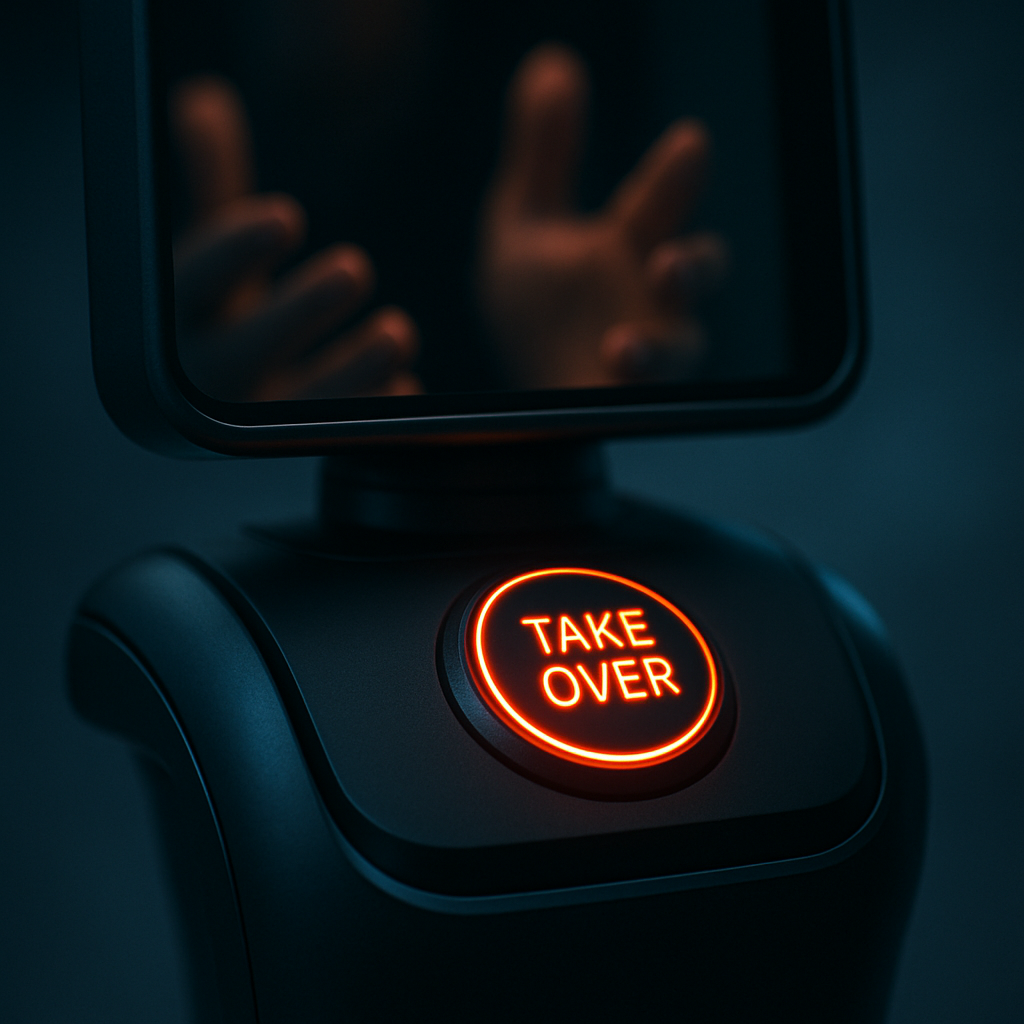
How It Actually Works: Teleoperation Without Tears
Teleoperation is simple to grasp: you move controls here, the robot moves there, and a video stream comes back. The details decide if it feels like a magic arm or a soggy noodle.
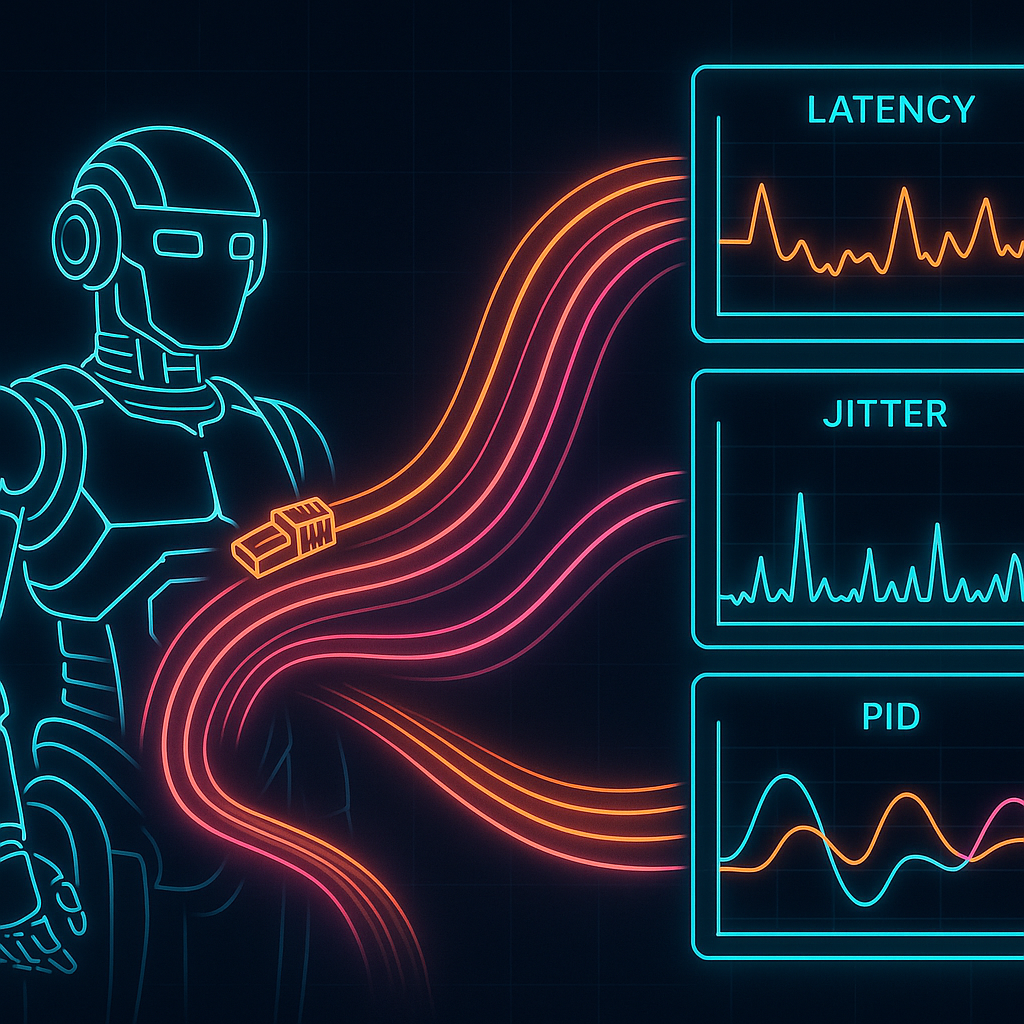
Latency is the delay from your command to what you see back, measured in milliseconds (ms). Under 150 ms feels snappy. Over 300 ms, you start guessing the future. Jitter is how much that delay wiggles. Even small jitter makes steering feel wobbly, like a shopping cart with opinions.
A local control loop helps. Many robots run a PID loop for speed or heading. PID stands for Proportional, Integral, Derivative—three ways to correct error. P reacts to how wrong you are now. I fixes small errors that build up over time. D looks at how fast the error is changing and smooths it. Tuned well, PID turns your joystick blips into steady motion and less wall-kissing.
Shared autonomy adds guardrails. The robot keeps you from doing clearly bad things—like ramming a chair—while you stay in charge. It can use depth from a stereo camera to block unsafe moves, or a simple ultrasonic sensor to slow near obstacles. Vision can help too: an object detector like YOLO draws boxes around things and gives a confidence score (a 0–1 guess of how sure it is). The robot can soften your commands near boxes it is sure about.
Video settings matter. Lower resolution and higher frame rate often beat 4K lag. Adaptive bitrate keeps the stream smooth when Wi‑Fi hiccups. Many systems send control at 50–100 Hz but video at 15–30 fps. That keeps steering crisp even if the picture blurs for a moment. Your brain can fill in the gaps; it has been doing that since cartoons were invented.
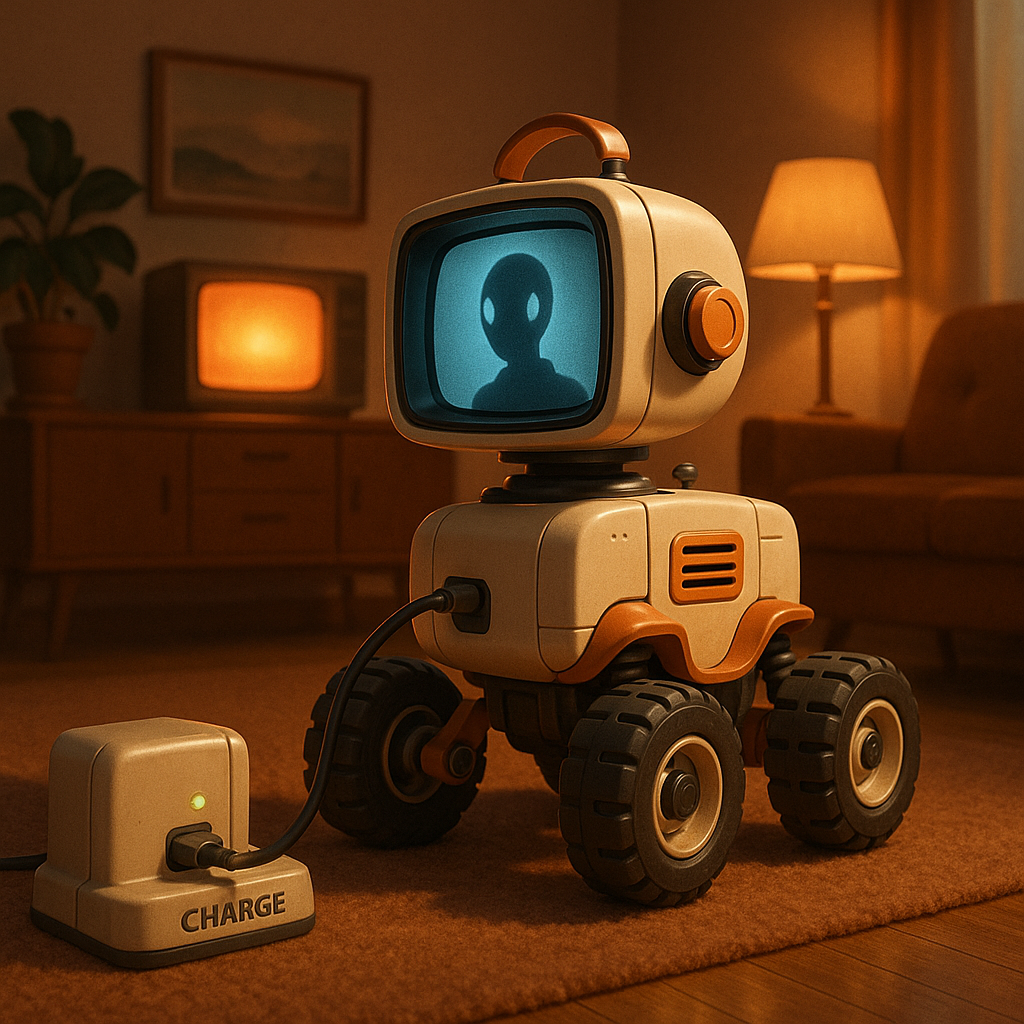
A 2008 Time Machine That Proves the Point
Remember the WowWee Rovio? A telepresence rover from 2008 with a camera, two-way audio, and a dock. It was the robot you sent down the hall when you were too cozy to get up. Not perfect. Limited battery. Minimal obstacle sense. But it nailed one big idea: put a human in the loop.
Today, you can drop that idea into modern software with ARC. The Wowwee Rovio Robot Skill is a movement panel inside Synthiam ARC that lets you drive, script, and extend a Rovio from your PC. Map keys, write scripts with ControlCommand calls, and even read replies from a $RovioResponse variable. It is a museum piece that still teaches: manual mode ages well.
“Old robots with new software remind us: the future is often a firmware update away.”
What Synthiam Is Building Toward
Synthiam ARC treats manual mode and autonomy as teammates. In ARC, you can stack Robot Skills—vision, mapping, speech, joysticks—so a human can take over anytime, or let the bot assist when the path is clear. Add an object detector to highlight hazards while you drive. Use a simple color tracker (HSV color space, which splits hue, saturation, value) to follow a bright tag only when you hold Shift. Drop in a docking script that grabs control for 10 seconds, then hands it back. Your robot becomes a dance partner, not a control freak.
Have older hardware? The EZB hardware ecosystem and the ARC community make it feel new. People share scripts, tuning tips, and small superpowers. The result is a robot that can ask for help without feeling broken. That is humility by design—and it scales.
So yes, we chase autonomy. But we are also embracing the button that says Take Over. Because the real intelligence is not just in the model. It is in the handshake between you and the machine.
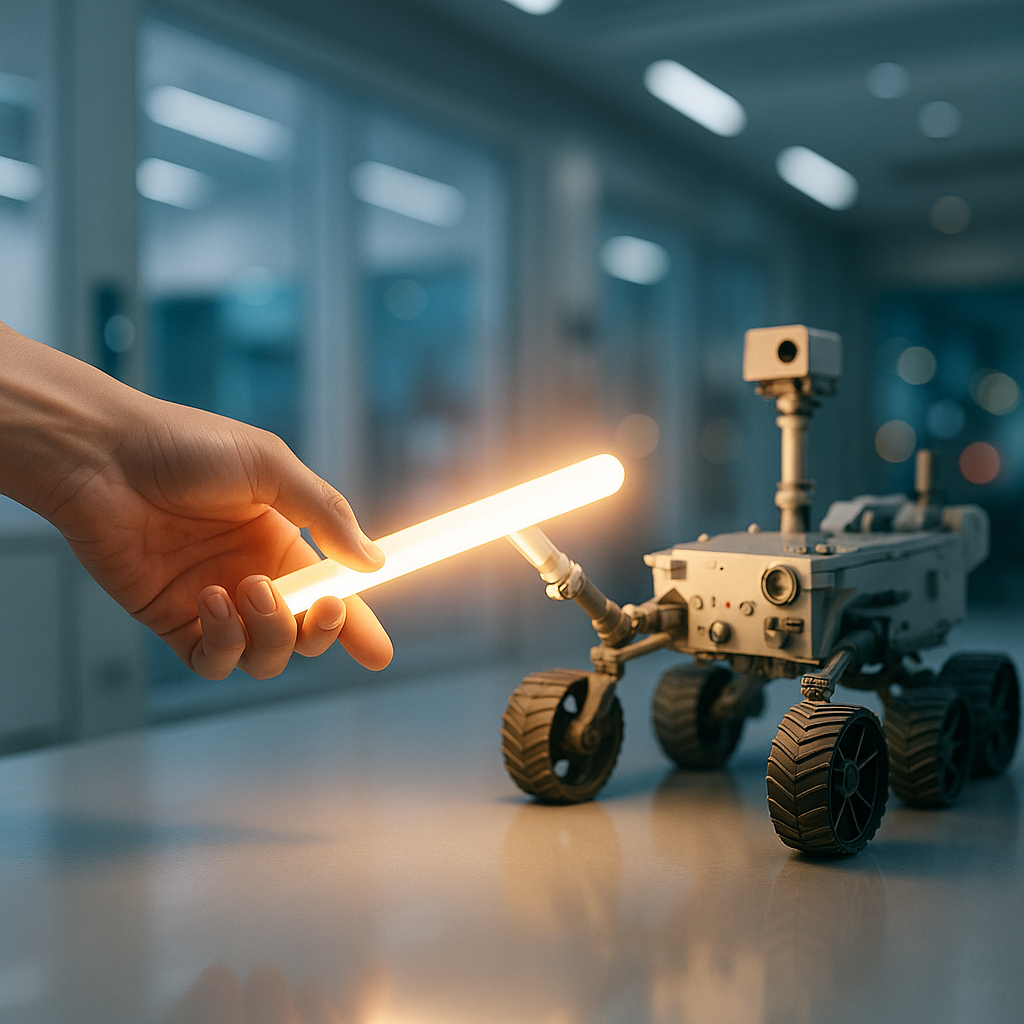
Question: When a robot can share control with you at any moment, who is really moving—your hands, the machine, or the space between?
- Manual mode = honest, fast problem-solving
- Latency and jitter shape teleop feel
- PID loops smooth human inputs
- Shared autonomy adds safe guardrails
- ARC + Rovio skill shows the blend in action
Key Thought
Autonomy is a promise; manual mode is a promise kept. A robot that lets you help is a robot you trust.
Big Idea
Blend human control with robot assists in ARC. Try a movement panel, add vision skills, and script a smooth handoff. Start with the Wowwee Rovio skill and feel how the past and future can drive together.