The Most Polite Robot Speaks SMTP
Robots can shout with push alerts. Or they can write letters. I vote for letters.
In a world of instant pings, a robot that emails is weirdly kind. It waits. It gives you space. It keeps a paper trail. Also, yes, your toaster should not live-tweet your bread.
Slow beats loud
Email is "slow data" on purpose. It respects attention and creates a record you can search later.
Inbox as memory
Robots that email leave receipts: images, timestamps, and context for when you weren’t watching.
Technology with manners
Designing latency on purpose makes machines feel considerate—like the friend who texts before calling.
Slow Robots Beat Fast Notifications
Most robots try to be live. Every sensor change becomes a ping. That works for smoke alarms. It does not work for door creaks, coffee levels, or your cat’s third hallway performance of “Zoomies at Dawn.” Real-time is not always real-helpful.
Email is different. It’s the quiet lane. It lets your robot wait, group events, add a picture, and speak in full sentences. A message like: “Motion seen three times near the garage between 2–3 PM—see photo—no alarms triggered.” That is useful. It’s also polite. It’s your robot using an inside voice.

The Inbox Is a Time Machine
When a robot sends email, it leaves breadcrumbs you can sort by date, subject, or keyword. It’s a map of choices and moments—what was seen, when, and why it cared. Later, when something odd happens, your inbox becomes the black box recorder.
Search beats memory. Try remembering what your kitchen camera saw last week. Now try searching “kitchen motion Thursday image.” That’s the difference. The inbox doesn’t forget when you do.

Nerd Corner: How It Actually Works
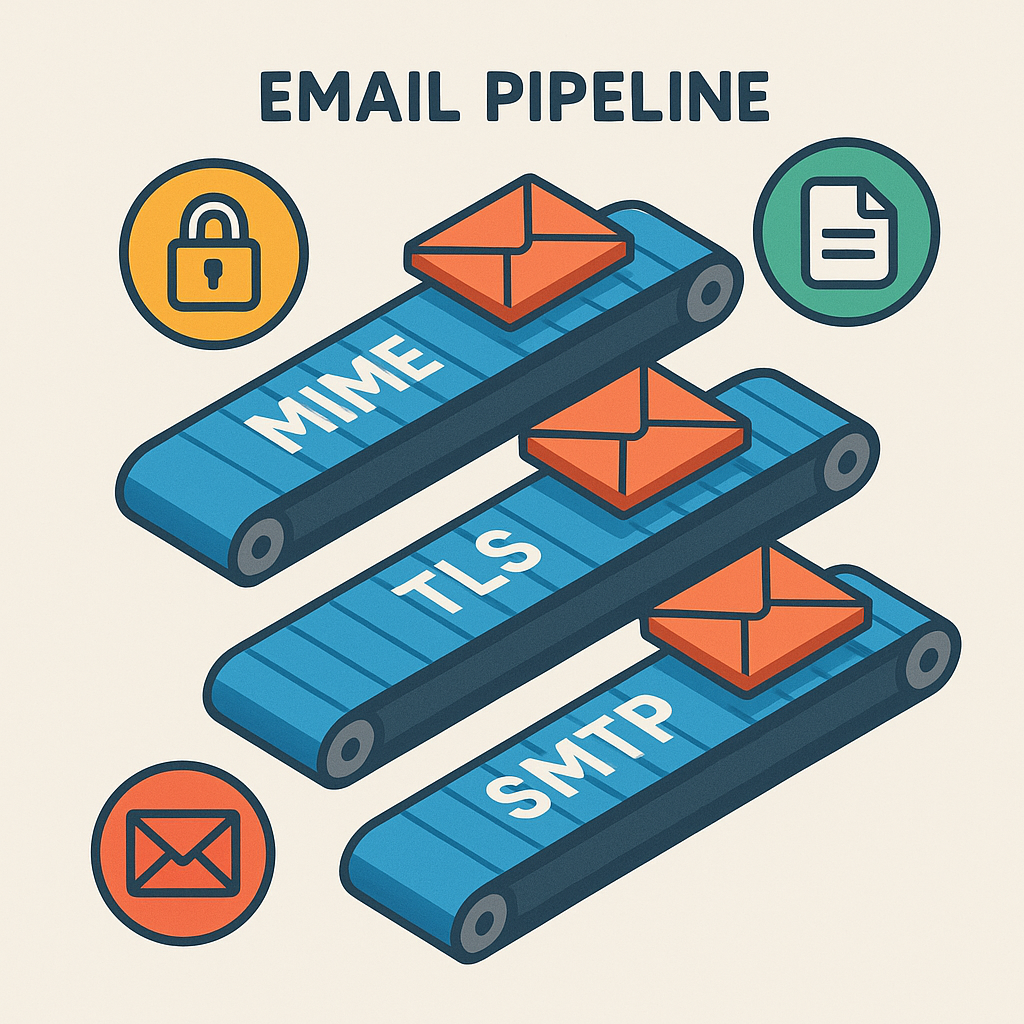
SMTP stands for Simple Mail Transfer Protocol. It’s how mail moves across the internet. Think of it like a postal conveyor belt. Your robot hands an envelope to an SMTP server. That server might pass it to another server, and so on, until it reaches the inbox. This “store-and-forward” chain is why email is reliable even if one stop is slow.
Ports 587 or 465 are common. 587 usually uses STARTTLS, which means the connection starts plain and then upgrades to encryption. 465 is wrapped in TLS from the start. TLS is the lock on the mailbox so nosy neighbors can’t peek. Attachments ride along with MIME, a format that packs images and files using Base64 so they can pass through systems that only understand text. It’s like rolling a poster into a tube for shipping.
In Synthiam ARC, the SMTP Client Robot Skill gives your project that conveyor belt. You set the server, port, and login, then call it from scripts. A line like ControlCommand("SMTP Client", Send, recipient, name, subject, body) sends text. ControlCommand("SMTP Client", SendImage, "Camera", ...) snaps a photo from your camera skill and mails it. Many providers require the login username to match the From address, and you may need to enable SMTP/IMAP access in your email settings. Pro tip: give your robot its own email account—because, yes, it now has pen pals.
Designing a Respectful Robot: Latency as a Feature
Good robots pace themselves. They collect a little, think a little, then speak. In control theory, we call this backoff: wait longer when things are noisy, talk more when things are clear. It’s like a traffic light for messages so the road (your brain) doesn’t jam.
Practical tip: batch events into a digest. For motion detection, wait 10 minutes, group sightings, attach one best frame, and send one email. For status, send a daily summary: battery, room temps, errors. Less beeping, more meaning. Your coffee will taste better when it’s not spiced with panic.

How Synthiam ARC Makes This Real
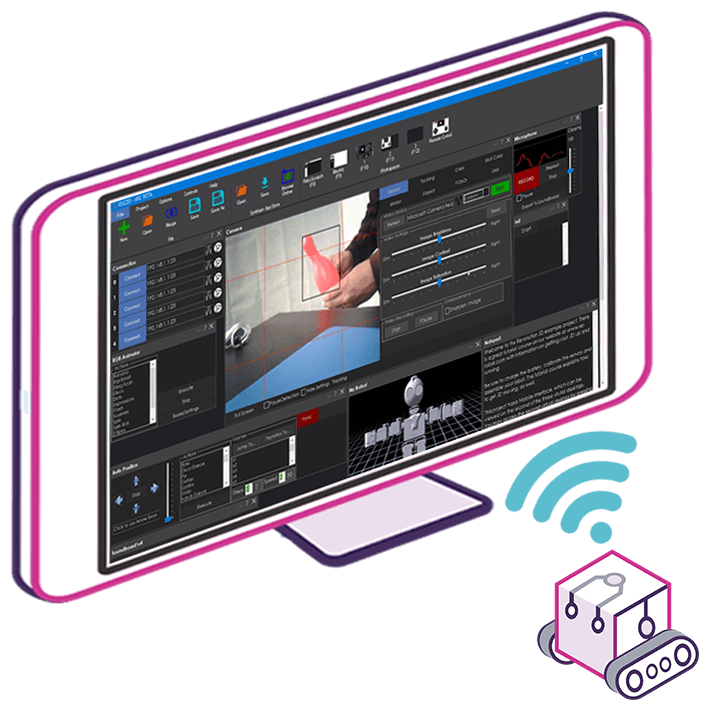
Synthiam ARC is built for this kind of humane robot behavior. You combine Robot Skills like Camera, Speech, and the SMTP Client, then glue them with scripts and ControlCommand calls. Need the robot to email a picture only if it recognizes your dog? Add a vision skill, set a confidence threshold, and send the mail when the score passes the bar. The outbox becomes part of the brain.
ARC also plays well with EZB hardware and a huge library of Robot Skills from the Synthiam community, so your design can live on tiny microcontrollers or beefy PCs. You can make a calm gardener-bot that sends a Sunday plant health digest, or a workshop sentry that emails tool movement snapshots with timestamps. And because it’s all in ARC, you can tweak the flow as your needs change—no rewiring your life.
Maybe the future of friendly machines isn’t louder. Maybe it’s better manners, better timing, and a tidy sent folder. So, what would you trust your robot to say only when it’s worth saying?

- Use email for "slow data" your brain can handle
- Create an audit trail with images and timestamps
- ARC’s SMTP Client turns ideas into messages
- Batch, digest, and back off when noisy
- Secure credentials; match From with login
Key Thought
Real-time is a tool, not a rule. The best signal is the one you’ll actually read.
Big Idea
Design robots that respect attention. Use latency as a feature and the inbox as shared memory. ARC gives you the switches.